
Buy PDF guide

Buy PDF guide — 4.28 USD

PDF — 4.28 USD

Hamburg canals bridges and a walk along the Alster

Hamburg canals bridges and a walk along the Alster

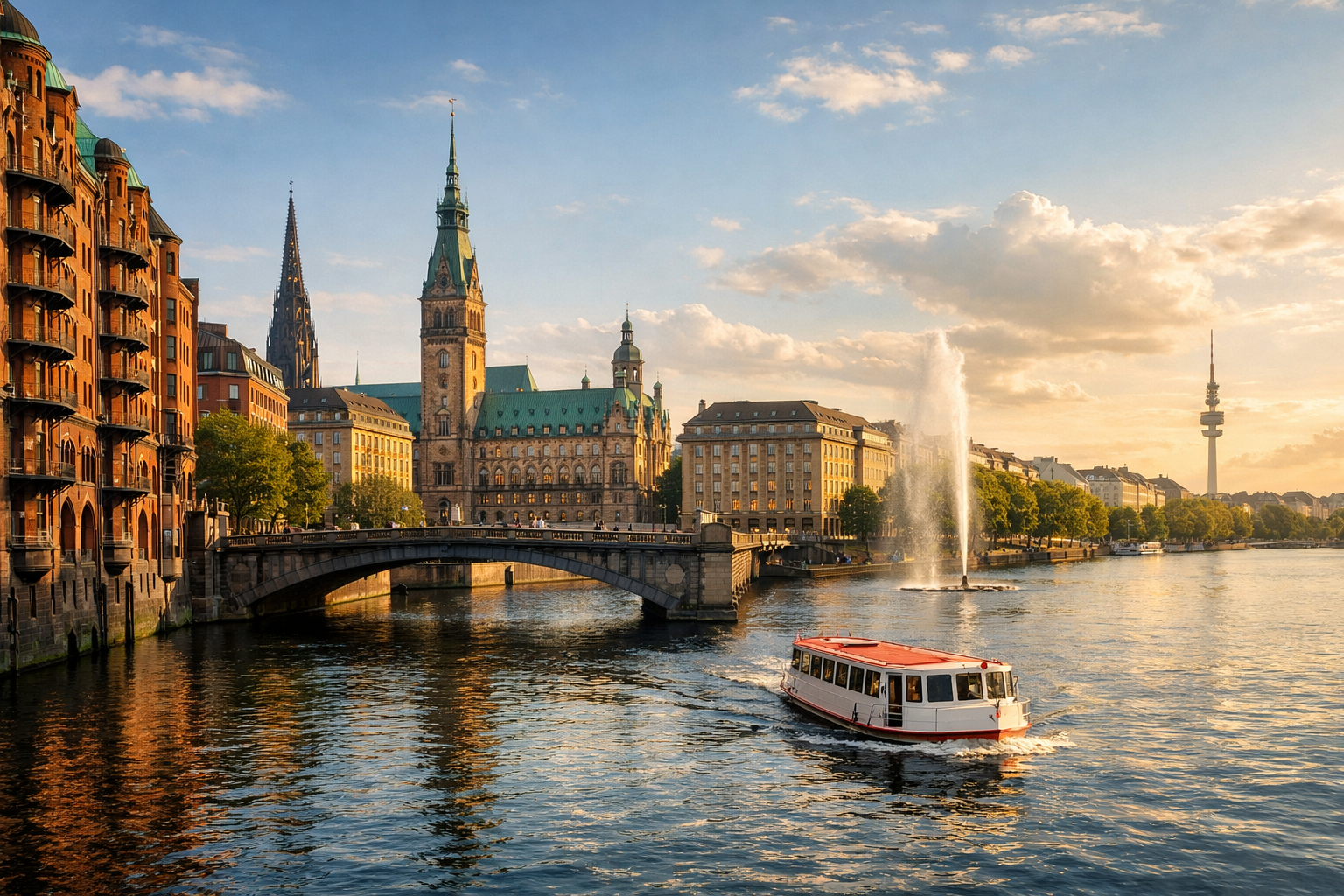
Hamburg charms with elegant waterfront promenades, iconic bridges, and canals that wind through the heart of the city. Stroll from the Alster along Jungfernstieg into the historic Speicherstadt, where red-brick facades and shimmering waterways make every step feel cinematic.

🧭 DAY-BY-DAY ROUTE

Ready-made country and city routes with daily plans, sights, transport and accommodation. Buy PDF guides for independent travel.

🧭 DAY-BY-DAY ROUTE


Day 1 — Hamburg: Alster, Jungfernstieg, and the bridges of the historic center

  • 🚶 The first day is best devoted to the Hamburg that immediately explains the character of the city: water, light, elegant embankments, and a constant sense of movement. Start your route at Binnenalster and the Jungfernstieg promenade — this is one of the city’s most postcard-perfect spots, where the central facades are reflected in the water, boats gently cut through the smooth lake surface, and the rhythm of the space itself sets the tone for an unhurried introduction to Hamburg. From here it is convenient to walk along the embankments around the Alster, making short stops at viewpoints and bridges: in good weather it becomes especially clear why Hamburg residents see water not as decoration, but as the natural framework of the city. Allow 2–2.5 hours for this opening walk, including a coffee and photo break.

  • 🌉 After the Alster, head toward the bridges and the old center: it makes sense to walk through the Rathausmarkt area and then descend toward the city canals, where the center becomes more textured and a little less ceremonial. In Hamburg, bridges are not separate “points” but part of the everyday urban fabric: small crossings over canals, scenic stretches by the Fleete, connections between business quarters and historic areas. This walk works especially well on foot, because it lets you feel how the city constantly opens up in layers — first as an elegant northern center, then as a merchant city of water, brick, and a stricter geometry of space. For the stretch from Jungfernstieg through Rathaus and the central canals to Deichstraße and Nikolaifleet, allow about 1.5–2 hours at a relaxed pace.

  • ⛵ In the second half of the day, make the key highlight of the route a boat trip on the Alster. If you want a gentle and very “Hamburg” experience, choose a classic water tour departing from the Jungfernstieg area: from the water, the city reads differently — calmer and more spacious. You can see the green shores of the Außenalster, boat stations, graceful villas, and that special northern light that makes even a simple line of water feel almost cinematic. Depending on the format you choose, allow about 50–90 minutes for the trip itself and another 20–30 minutes for boarding, waiting, and an easy walk to the pier.

  • 🌆 In the evening, don’t try to squeeze in too many more points: it’s better to return to the water. A good end to the day is to go back out to Jungfernstieg or one of the scenic spots by the Binnenalster, when facades and lanterns begin to reflect in the water and the center becomes quieter and more atmospheric. If you still have energy, you can do a short loop along the Außenalster, but without overloading yourself: this day is already full of walking. In total, the walking part of the route with stops, coffee, photos, and the boat ride is realistically 7–8 hours, after which it’s convenient either to have dinner in the center or return to the hotel by S-Bahn/U-Bahn in 10–20 minutes within the central districts.


Day 2 — Hamburg: Speicherstadt, canals, Elbphilharmonie, and the water city

  • 🚶 Dedicate the second day to a more “brick-built” and port-oriented image of Hamburg — the Speicherstadt district and the adjacent HafenCity quarters. Start early in the morning so you can walk along the canals before the main flow of visitors: red-brick warehouses, narrow waterways, bridges with wrought-iron details, and the rhythm of old facades create one of the most recognizable urban landscapes in Europe. Unlike the open Alster, the space of Speicherstadt is more intimate and dramatic: the water seems darker, the bridges closer, and the perspective constantly compresses and opens up again. For a thoughtful walk through the district with stops at key bridges and viewpoints, allow about 2 hours.

  • 🏛️ Next, choose 1–2 museums without trying to cover everything at once. For this area, Miniatur Wunderland and Internationales Maritimes Museum Hamburg are especially logical: the first offers a surprisingly vivid, almost childlike look at the world in miniature; the second gives you maritime scale, the history of shipping, and a sense of how deeply the port and the sea are woven into the city’s identity. If museums are secondary for you, you can limit yourself to one visit of 1.5–2 hours and leave the rest of the time for walking the bridges and canals. That is better than rushing between buildings and losing the atmosphere of the district itself.

  • 🌉 After lunch, move on to HafenCity and the Elbphilharmonie. This section beautifully shows how Hamburg can connect heritage and modernity: from warehouse blocks and old canals, in just a few minutes you move to glass, large volumes, open sky, and a more modern line of waterfronts. The route from Kehrwieder through the bridges of Speicherstadt to Elbphilharmonie is easy to do on foot in 25–40 minutes, but it’s better to leave at least 1.5 hours so you are not just passing through, but actually looking around. Here Hamburg is no longer intimate, but broad, windy, and very much shaped by water.

  • 🛥️ If on the first day you chose only the Alster, on the second you can add one more water accent — a short urban route by water or a public harbor ferry on the Elbe, if you want to feel the scale of the harbor without complicated logistics. But even without a second boat trip, the day will remain complete: simply finish the route with a long evening walk along the HafenCity waterfronts and a return to the center. On the second day, at a real pace — with a museum, rest, lunch, and a long walk — it is sensible to plan for 8–9 hours. It’s a full but quite comfortable rhythm for a 2-day introduction specifically to the Hamburg that stands on canals, bridges, and water.

Flight tickets

eSIM for travel

Buy PDF guide

Buy PDF guide — 4.28 USD

PDF — 4.28 USD