
Buy PDF guide

Buy PDF guide — 8.57 USD

PDF — 8.57 USD

France, Lille. A budget-friendly introduction to northern France, Flemish architecture, markets, museums, and inexpensive trips to neighboring cities.

France, Lille. A budget-friendly introduction to northern France, Flemish architecture, markets, museums, and inexpensive trips to neighboring cities.

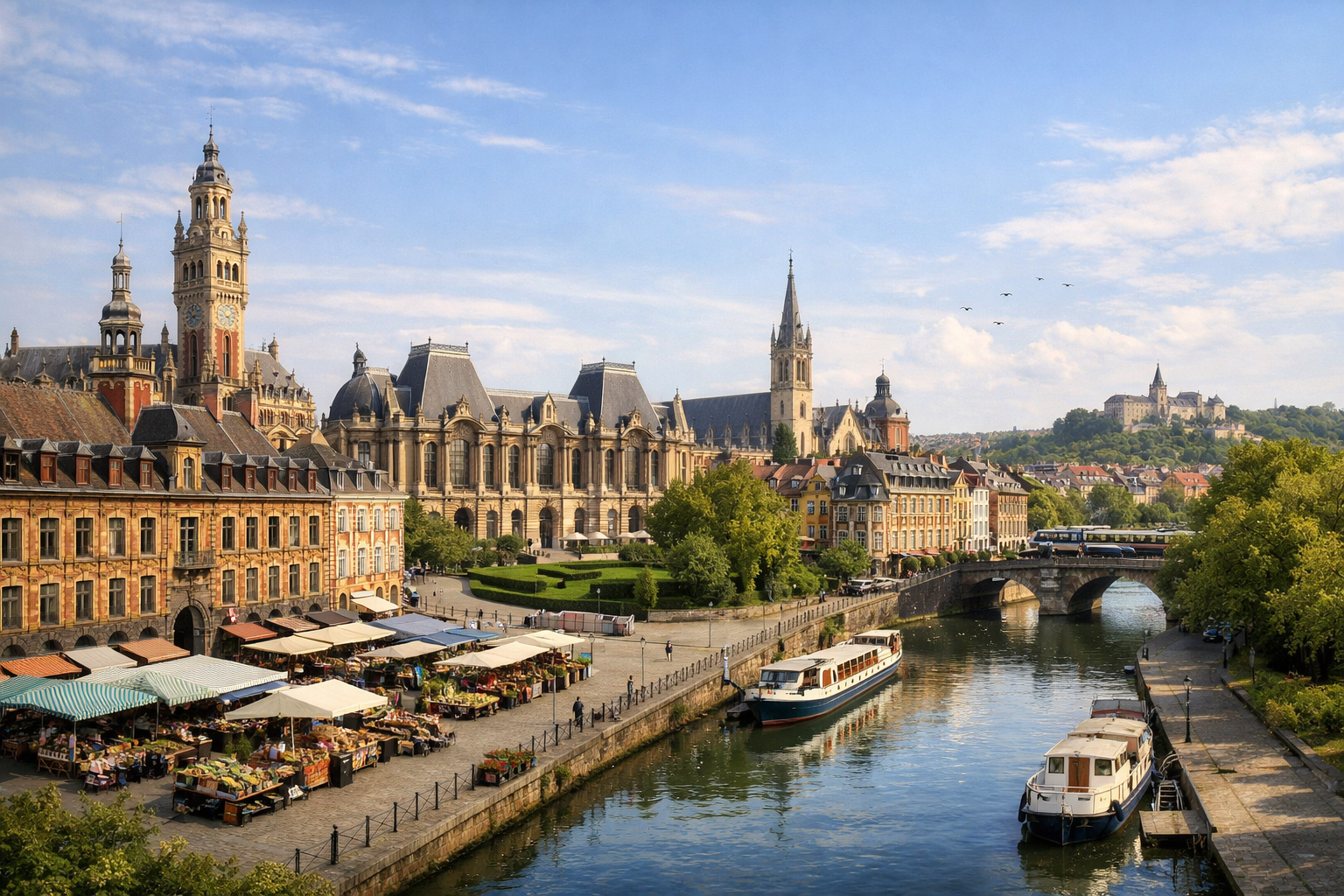
Lille is a budget-friendly gateway to northern France, where Flemish facades, lively markets, and excellent museums give the city its warm, creative character. It’s also an easy base for inexpensive day trips through Roubaix, Croix, and Villeneuve-d'Ascq, with plenty to see just beyond the center.

🧭 DAY-BY-DAY ITINERARY

Ready-made country and city routes with daily plans, sights, transport and accommodation. Buy PDF guides for independent travel.

🧭 DAY-BY-DAY ITINERARY


Day 1 — Lille: Old Town, Grand'Place, and Flemish facades

  • 🚶 Start your budget introduction to Lille in the historic center, which is easiest explored on foot: from Gare Lille Flandres or Rihour to Vieux-Lille is a short walk, and the density of beautiful places here is very high. Old Lille is a rare blend of French urban rhythm and Flemish decorative richness: narrow streets, red-brick and ochre facades, shutters, stone details, small squares, and shop windows behind which you can feel the region’s old trading history. Here it becomes especially clear that northern France is historically connected not only with Paris, but also with Flanders, Antwerp, the textile industry, and borderland culture. It makes sense to build your morning walk around Grand'Place and Vieille Bourse: the square still feels like a living center of city life, while the 17th-century old stock exchange with its inner courtyard, bookstalls, and rich decoration is one of the city’s most expressive scenes. This is a very “visual” day without major expenses: the main impressions come from the architecture, atmosphere, street details, and unhurried stops for coffee and inexpensive pastries.

  • 🚶 After Grand'Place, walk to Vieille Bourse, then go deeper into the quarters of Vieux-Lille, especially around Rue de la Monnaie, Rue Esquermoise, and Rue de Gand. Here Lille reveals itself as a city of wealthy merchants and craftsmen: stucco, gables, arcades, and brick-and-stone facades create an almost theatrical backdrop, yet the area does not feel like a museum set — it is alive, with bakeries, affordable brasseries, grocery shops, and everyday urban movement. For a budget route, this is an especially rewarding part of the trip: you get a very full day with almost no entrance fees. If you want a cultural pause indoors, you can stop by the Musée de l’Hospice Comtesse — a city history museum in a former hospital that helps you better understand Lille’s Flemish past, daily life, religious traditions, and the region’s old material culture.

  • 🍽️ Budget food for the day: breakfast at a bakery or chain pastry café, at midday a set menu, soup, quiche, sandwich, or a Flemish dish at a simple brasserie. Budget guide: breakfast €4–8, lunch €10–16, dinner €12–20. In the center, you can save money by buying water and snacks at a supermarket or market rather than at tourist spots.

  • 💤 Overnight in Lille. For a short and economical route, it is better not to change your accommodation base: this reduces costs, avoids extra transfers with luggage, and lets you make radial trips to nearby cities by public transport.


Day 2 — Lille: Wazemmes market, Palais des Beaux-Arts, and the urban rhythm of the north

  • 🚶 Dedicate your second day to a more “everyday” Lille, to feel not only the grand center but also the city’s real character. In the morning, head to the Wazemmes district — one of the city’s most energetic and layered neighborhoods. Here the market and Halles de Wazemmes provide exactly the kind of introduction to northern France that is hard to get in museum halls: fresh produce, spices, cheeses, bread, inexpensive street food, a mix of languages and accents, the district’s working-class history, and a very lively atmosphere. This place helps you see Lille not only as a postcard of Flemish facades, but as a big northern city where old local traditions, migration influences, and everyday trading culture coexist. For the budget traveler, the market is also practical: it is a convenient place to put together an inexpensive breakfast or picnic lunch.

  • 🏛️ After Wazemmes, head to the Palais des Beaux-Arts de Lille. It is one of the largest art museums in France outside Paris, and for a short trip it is especially valuable because it offers a very concentrated cultural experience. Inside, you can see European painting, sculpture, decorative arts, and large relief maps of cities, which make it particularly interesting to understand northern France as a space of trade, fortifications, and urban evolution. Even if you do not plan to spend half a day in the museum, 1.5–2.5 hours work very well here: after a busy walk outdoors, the museum sets a calmer pace and adds historical depth to the route. The République area around the museum is also good in itself: broad avenues, administrative architecture, student life, and a more “big city” scale contrasting with the intimate streets of Vieux-Lille.

  • 🚶 In the evening, you can finish the day with a walk to Porte de Paris, Hôtel de Ville, and the quarters around the center, or return to Vieux-Lille for an inexpensive dinner. This route remains budget-friendly and logical: market and cheap food in the morning, one major museum in the afternoon, and an evening walk without extra spending. Daily budget guide: city transport €0–6 depending on the number of rides and the ticket chosen, food €18–35, museum — according to the current museum rate or as part of a city tourist product, if that is truly worthwhile for your day’s plans.

Day 3 — Roubaix and Croix: La Piscine and Villa Cavrois

  • 🚆 Day 3 is best made into an outing day, but without expensive long-distance travel: Roubaix and Croix are perfect for a budget day trip from Lille. In the morning, take the tram or a metro/tram combination toward Roubaix. Travel time is usually around 30–45 minutes depending on your starting point and any transfer, so this trip is not tiring and does not “eat up” the day. Roubaix is one of the cities through which the industrial history of northern France is especially readable: textiles, working-class districts, large factories, bourgeois homes of industrialists, and the gradual reinterpretation of heritage. The main highlight of the day is La Piscine, one of the most memorable museums in the region. It is housed in a former municipal swimming pool in the art deco style, and the space itself already makes a strong impression: a long central hall, water, sculptures, light, ceramics, and the feeling that the industrial north knows how to turn utilitarian architecture into poetic cultural space.

  • 🏛️ After La Piscine, head to Croix to Villa Cavrois — a modernist masterpiece by Robert Mallet-Stevens. This is a completely different layer of northern France: not medieval-Flemish and not industrial-working-class, but bourgeois-avant-garde, connected with taste, status, and the aesthetics of the interwar period. The villa looks like a “modern castle” of the early 20th century: strict geometry, long horizontals, expensive materials, carefully planned lighting, and an astonishing sense of space. For a route around the Lille metropolitan area, this is an excellent addition to La Piscine, because in one day you see how the region’s textile wealth was expressed both in industrial culture and in elite architecture. Travel between the sights also remains realistic in terms of time: there is no need to rent a car, the urban public transport network and short walks are enough.

  • 🍽️ To keep within budget, it is best to have lunch in Roubaix at a simple café or bakery, or bring a snack with you. For such an outing, it is reasonable to budget: transport around the metropolitan area €2–8 depending on the ticket, museum admissions — according to the current rates of the sites, food €15–30. If you want to save even more, you can choose only one paid museum and devote the second half of the day to the surroundings, architecture, and a walk around Villa Cavrois and the residential districts of Croix.

Day 4 — Villeneuve-d'Ascq: LaM and a calm finale before departure

  • 🚆 It is best to make the final day calmer so you do not have to rush before leaving, while still ending the route with a strong cultural highlight. For this, Villeneuve-d'Ascq and the LaM museum are a good fit — Lille Métropole Musée d'art moderne, d'art contemporain et d'art brut. The journey from central Lille by metro and on foot/bus usually takes around 25–40 minutes, which is convenient even on departure day with reasonable planning. LaM is not just another museum, but an important place for understanding how the Lille metropolitan area engages with modernity: after old Lille, the market, industrial Roubaix, and the modernist villa, here you see the language of the 20th and 21st centuries — contemporary art, art brut, open space, a sculpture park, and a more meditative atmosphere. It is a good finale for the route because it does not duplicate the previous days, but gathers them into a broader cultural context.

  • 🌿 If the weather is good, leave time not only for the exhibitions but also for a walk around the museum grounds: the combination of park and art makes this day less tiring than a dense urban program. For a budget trip, this is again beneficial: less spending on extra transport and spontaneous purchases, more time in one meaningful location. After the museum, return to Lille, collect your luggage, and finish the trip with a short walk or an early dinner near the station. If you have an evening train, you can walk through the center once more and take with you a final gastronomic touch of northern France — a waffle, tarte au sucre, or a selection of local cheeses from a grocery shop.

  • ⚠️ Before the trip, be sure to double-check the weather forecast, museum opening hours, possible temporary gallery closures, strikes, and changes in transport operations. Information about safety, weather, road conditions, and route accessibility may change. No destination can be considered completely safe. For a short route, this is especially important: if one site is closed, it is better to have a backup option in central Lille in advance.

Flight tickets

eSIM for travel

Buy PDF guide

Buy PDF guide — 8.57 USD

PDF — 8.57 USD