
Buy PDF guide

Buy PDF guide — 8.57 USD

PDF — 8.57 USD

France, Alsace. A driving route from Colmar through Riquewihr, Ribeauvillé, and Kaysersberg with visits to Maison Trimbach, Hugel & Fils, and Domaine Weinbach, tastings of Riesling, Gewürztraminer, and Pinot Gris.

France, Alsace. A driving route from Colmar through Riquewihr, Ribeauvillé, and Kaysersberg with visits to Maison Trimbach, Hugel & Fils, and Domaine Weinbach, tastings of Riesling, Gewürztraminer, and Pinot Gris.

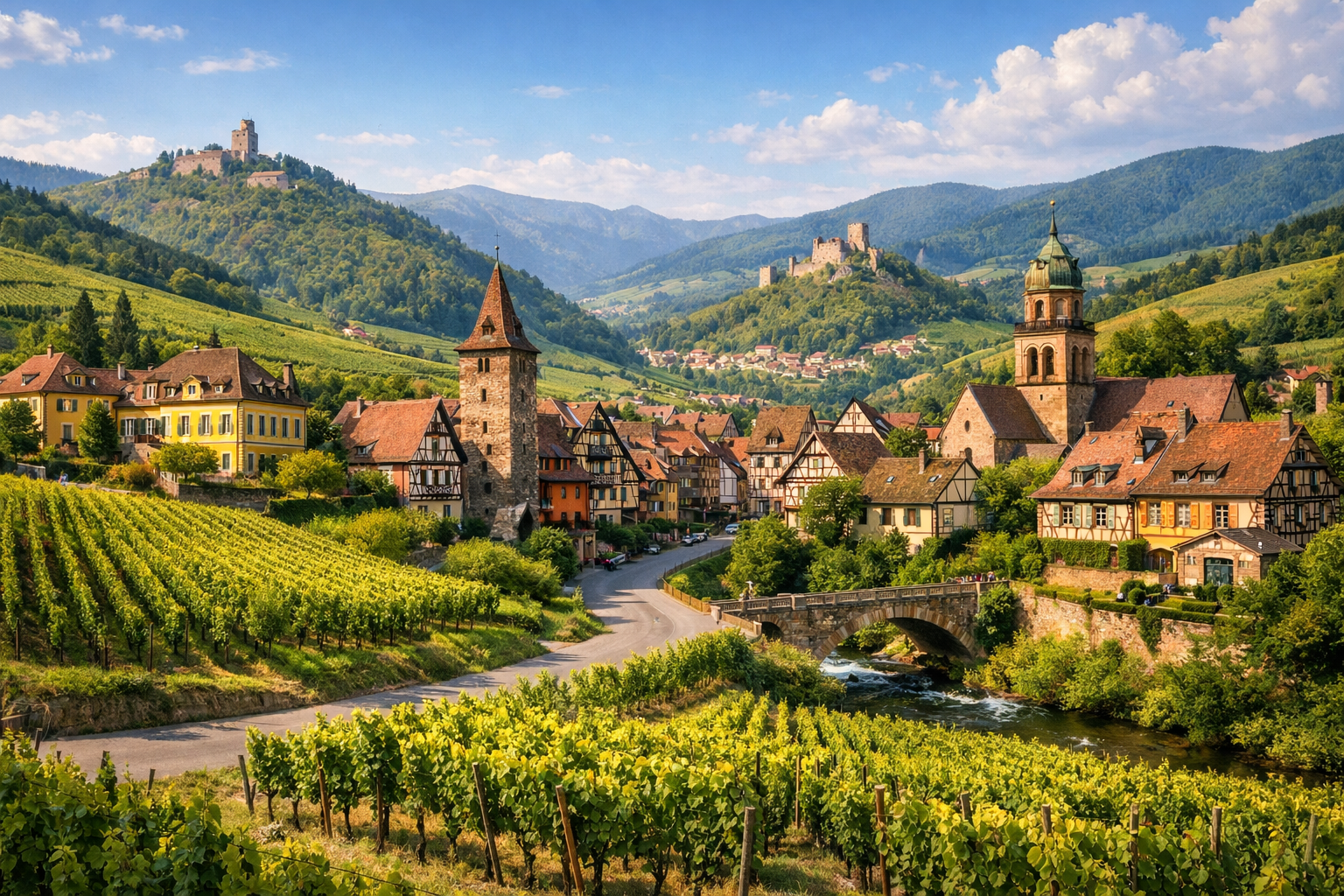
Wind through the storybook villages of Alsace from Colmar to Riquewihr, Ribeauvillé, and Kaysersberg, where half-timbered houses, vine-covered hills, and cobbled lanes feel lifted from a painting. Along the way, sip elegant Riesling, aromatic Gewürztraminer, and silky Pinot Gris at iconic estates like Maison Trimbach, Hugel & Fils, and Domaine Weinbach.

🧭 DAY-BY-DAY ROUTE

Ready-made country and city routes with daily plans, sights, transport and accommodation. Buy PDF guides for independent travel.

🧭 DAY-BY-DAY ROUTE


Day 1 — Colmar: arrival, tuning into the Alsatian rhythm, and a gentle introduction to the wine region

  • 🚆 Colmar is one of the most convenient bases for a short wine trip through Alsace: the town sits almost at the center of the famous Alsace Wine Route, and the distances to Riquewihr, Ribeauvillé, and Kaysersberg are so compact that the itinerary feels easy and free of tiring transfers. After arrival, check into your hotel and don’t rush to get behind the wheel right away: it’s better to devote the first day to adjusting, walking through the old center, and calmly immersing yourself in the region’s aesthetics. Colmar is often called “postcard Alsace” — the canals of Little Venice, colorful half-timbered facades, geraniums on the windows, and the soft golden light in the evening create exactly the atmosphere that draws lovers of wine, gastronomy, and beautiful European villages.

  • 🏛️ For a beautiful and meaningful start, stop by the Musée Unterlinden. Although it is not a wine museum, it helps you feel the cultural scale of the region: medieval art, monastic architecture, and the atmosphere of old Alsace provide important historical context before the wine days begin. After the museum, it’s pleasant to walk through central Colmar on foot or take the small tourist train to see the old quarters, canals, and squares without rushing. This is especially convenient on the first day, when you want a gentle pace without heavy logistics.

  • 🍽️ Dedicate the evening to Alsatian gastronomy without overloading yourself with tastings. The ideal scenario is an early dinner with tarte flambée, baeckeoffe, seasonal asparagus in spring, or local cheeses like munster and tomme, and at the table have just one glass of wine or even postpone alcohol until the following days. To get into the mood for the route, choose dishes that pair well with the key varieties of the trip: Riesling usually shines with river fish, seafood, and lighter sauces; Gewürztraminer works with spicy cuisine, foie gras, and aromatic cheeses; and Pinot Gris suits richer dishes, white meat, and mushrooms.

  • 🚗 If you are renting a car, today is a good day to pick it up and leave it parked until tomorrow. Important: this route is designed as a driving itinerary, but tastings must not be combined with self-driving. For all days with winery visits, appoint a sober driver in advance, book a taxi, private transfer, or join organized wine tours. For an easy rhythm, it’s best not to change your base at all and spend all 4 nights in Colmar: that way you won’t have to pack every day, and returning after wine visits will be as simple and safe as possible.


Day 2 — Colmar → Riquewihr → Ribeauvillé: Hugel & Fils, a walk along the wine route, and Maison Trimbach

  • 🚗 Transfer: Colmar → Riquewihr — about 20–25 minutes on an easy drive. It’s best to leave in the morning so you can walk around Riquewihr before the main flow of visitors arrives. This village is one of the jewels of the Route des Vins d’Alsace: cobbled streets, towers, fortified walls, wine signs, and an almost theatrically beautiful medieval silhouette make it an ideal point for your first full wine day. Riquewihr is especially lovely from April to October: in spring there is fresh greenery and blooming slopes all around, in summer the village lives in a bright tourist rhythm, and in early autumn everything begins to glow with the gold of the vineyards.

  • 🍇 The main wine event of the first half of the day is a visit to Famille Hugel & Fils in Riquewihr. This is one of the most recognizable historic names in Alsace, closely linked to local grand cru terroirs and the classic style of the region. Here it makes perfect sense to focus on the three grape varieties around which the entire tour is built: Riesling, Gewürztraminer, and Pinot Gris. During the tasting, pay attention to the contrast in styles: Alsatian Riesling often shows precision, dryness, citrus freshness, and mineral rigor; Gewürztraminer offers lush aromatics, rose, lychee, exotic spices, and roundness; Pinot Gris brings a fuller texture, ripe fruit, and gastronomic depth. Be sure to book the tasting and any possible tour in advance, and separately confirm the language, visit format, and current opening hours.

  • 🚶 After the tasting, spend time in the village itself: Riquewihr is wonderful not only for its wine, but also for the feeling that you are walking inside a living stage set of old wine-growing Alsace. Explore the area around the Dolder, notice the old winemakers’ houses, wooden galleries, stone arches, and small gourmet boutiques. For lunch, it’s better to choose a calm format without additional alcohol: Alsatian cuisine is quite hearty, so a light salad with local cheese, tarte flambée, country pâté, or seasonal market produce is ideal. After the first tasting, the day should continue only with safe transport if no one in your group is staying completely sober.

  • 🚗 Transfer: Riquewihr → Ribeauvillé — about 10–15 minutes. In the second half of the day, the route leads to Ribeauvillé, home to Maison Trimbach — one of Alsace’s most authoritative estates. The Trimbach house is especially famous for its great Rieslings, and a visit here provides a very important counterpoint after Hugel: even within one region, wine style can change noticeably depending on the house philosophy, aging, and work with vineyard sites. Here it is especially interesting to taste Riesling in a more focused, precise, and long-lived interpretation, and also compare it with Pinot Gris or Gewürztraminer if they are available in the current tasting format. At Trimbach, tastings are held by prior appointment, and opening schedules may change by season; in high season and during certain periods of summer, closures should be checked in advance.

  • 🌄 End the day with a walk through Ribeauvillé — a town that feels less “staged” than Riquewihr, but more lively and authentically wine-growing. Its long main street, old winemakers’ houses, views of the hills, and overall atmosphere of a large wine village with centuries of history are especially pleasant. For dinner, it is sensible to return to Colmar by taxi or with a sober driver. The evening is best kept calm: plenty of water, a substantial dinner, no self-driving after tastings, and an early night before the third day.

Day 3 — Colmar → Kaysersberg → Kientzheim: Domaine Weinbach, wine museum, and gastronomy

  • 🚗 Transfer: Colmar → Kaysersberg — about 20–25 minutes. Kaysersberg is one of the most poetic little towns in Alsace: a stone bridge over the river, castle ruins on the slope, tiled roofs, flowers on the facades, and surrounding vineyards create an almost perfect setting for a slow wine day. Unlike the more “postcard-like” Riquewihr, here you feel more strongly the combination of old town, rural wine landscape, and proximity to the Vosges. It’s worth starting the morning with a short walk through the historic center before moving on to the day’s main visit.

  • 🍷 Domaine Weinbach is one of the most prestigious wine stops on the entire route and a true must for a wine tour through Alsace. The estate is located on the Route du Vin and is known for refined, expressive wines connected to the great vineyard sites around Kaysersberg and the neighboring slopes. Here it is especially interesting to taste Riesling, Gewürztraminer, and Pinot Gris in a more terroir-driven, nuanced, and often very elegant style. It is best to treat a visit to Weinbach not as “just another tasting,” but as the culmination of the journey: listen carefully to the explanations about soils, slope exposure, house style, and the differences between the basic and more prestigious cuvées. All details — opening hours, guest availability, languages, booking conditions, and tasting lineup — should be confirmed directly before the trip.

  • 🍽️ After the winery, a long lunch in Kaysersberg or the surrounding area works very well. For the pairing logic of the journey, you can choose dishes that highlight the tour’s grape varieties: pike-perch, trout, or river fish with Riesling; dishes with eastern spices, foie gras, or aromatic cheeses with Gewürztraminer; veal, poultry in cream sauce, porcini mushrooms, or richer dishes with Pinot Gris. But even if the restaurant offers an impressive wine list, after a morning tasting it is better to limit yourself to non-alcoholic drinks. This helps preserve a fresh perception of the region and keeps the wine trip from turning into an overloaded marathon.

  • 🏛️ In the second half of the day, drive to Kientzheim, which is effectively part of the commune of Kaysersberg Vignoble. The road from Kaysersberg to Kientzheim takes about 10 minutes. Here you will find the Musée du vignoble et des vins d’Alsace — one of the most appropriate museums on the entire route. This place helps you not just drink wine, but understand its cultural context: old tools, materials about vineyard work, the history of winemaking, the traditions of the Alsace Wine Route, and the region’s everyday life make the trip deeper and more meaningful. It is especially valuable to visit after two tasting days: many details about grape varieties, style, and wine culture start to come together into a coherent picture.

  • 🌙 In the evening, you can add a calm walk through Kaysersberg or return to Colmar to rest. If you want one more cultural touch, a short visit to the Centre Schweitzer in Kaysersberg, dedicated to Albert Schweitzer, a native of the town, is appropriate; it adds human and historical depth to the route without disrupting the day’s wine theme. The final principle remains unchanged: after tastings, return only safely with a sober driver, taxi, or pre-booked transfer.

Day 4 — Colmar and surroundings: a gentle finale, unhurried vineyards, and departure

  • 🌿 It’s best to make the final day of the route as light as possible and free of an overloaded program. After two intensive wine days and a rich cultural component, it makes sense to leave the morning for a slow breakfast, a walk through Colmar, or a short panoramic drive along a section of the Alsace Wine Route without mandatory tastings. If you want to see the vineyards one more time, you can drive along scenic roads toward Bennwihr, Hunawihr, or viewpoints between Colmar and the villages you already know. This format lets you enjoy the landscape one last time: rows of vines, soft hills, villages with bell towers, and the overall feeling of one of France’s most elegant wine regions.

  • 🧺 If your departure is not early, devote a few hours to gourmet shopping: Alsatian jams, pain d’épices, farmhouse cheeses, local terrines, and while bredele cookies are less common outside the Christmas season, you can still find excellent gourmet shops with regional products year-round. As wine souvenirs, it is best to take bottles that you actually tasted at the wineries and whose style you understand. That kind of choice is far more valuable than a random purchase “because of a pretty label.”

  • 📌 Practically speaking, this day is also good as a backup plan: if a tasting did not happen the day before because of schedule, tour language, closure, or the need for prior booking, today is when you can carefully rearrange the program. However, keep the route lightly paced: do not try to add many new wineries in a single day. It is much better to leave with the impression of a coherent, beautifully experienced region than to turn the finale into a race.

  • ⚠️ Important conditions for the whole tour: the optimal travel season is from April to October; before departure, always recheck the official websites of wineries, museums, and transport services; tours and tastings may require reservations and are not always held daily; the visit language may vary depending on the date and staff availability; tasting participants must be at least 18 years old; tastings are incompatible with self-driving. If you are specifically planning a driving format, appoint a sober driver in advance, order a taxi, private transfer, or use organized wine tours.

Flight tickets

eSIM for travel

Buy PDF guide

Buy PDF guide — 8.57 USD

PDF — 8.57 USD