
Buy PDF guide

Buy PDF guide — 6.43 USD

PDF — 6.43 USD

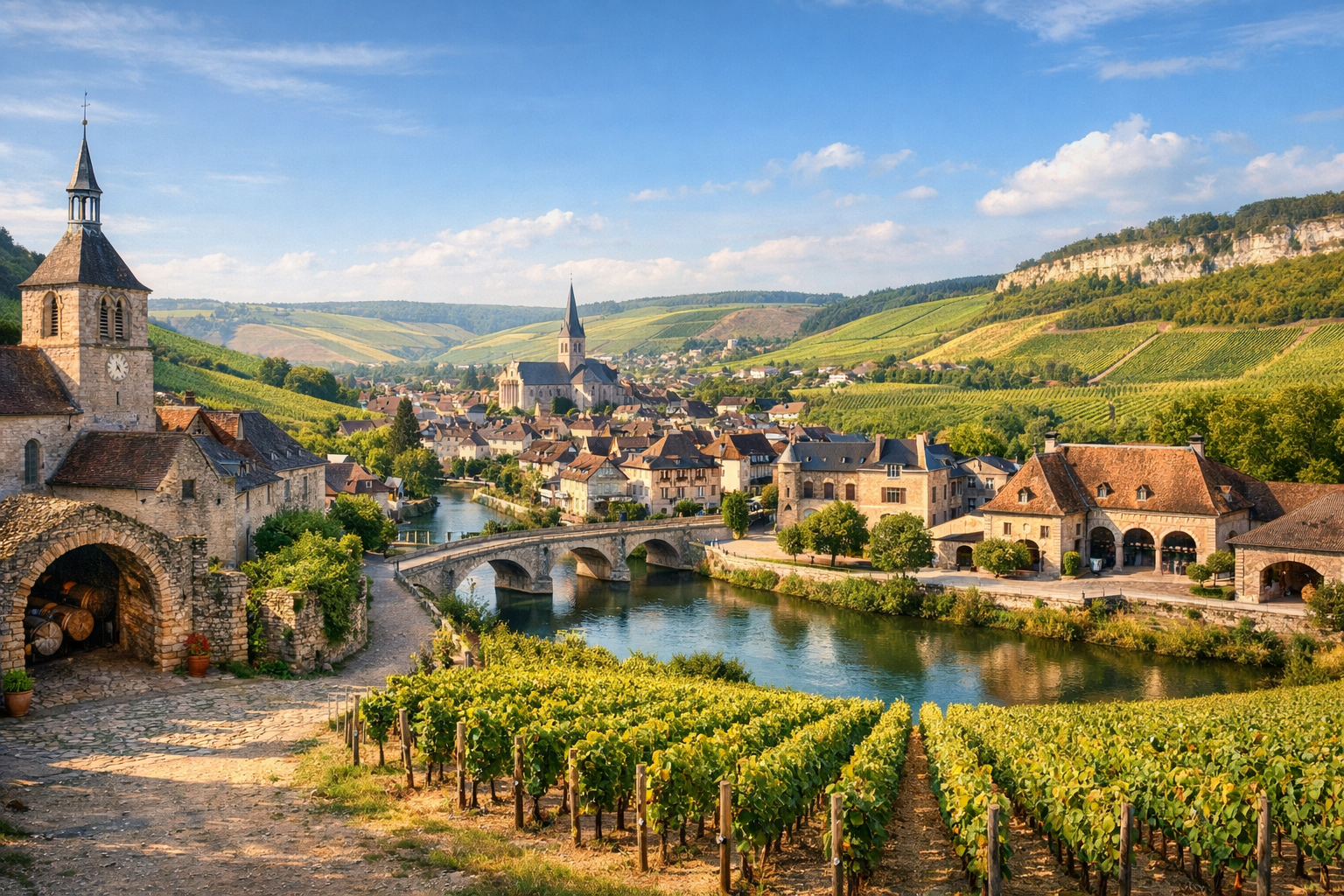
France, Burgundy, Chablis. A route through the Chardonnay vineyards around the town of Chablis with visits to Domaine Laroche, Maison Régnard and La Chablisienne, historic cellars and Premier Cru classified plots.

France, Burgundy, Chablis. A route through the Chardonnay vineyards around the town of Chablis with visits to Domaine Laroche, Maison Régnard and La Chablisienne, historic cellars and Premier Cru classified plots.

Discover Chablis through a scenic route winding between sunlit Chardonnay vineyards and the elegant wine estates that define this legendary corner of Burgundy. From the historic cellars of Domaine Laroche and Maison Régnard to the celebrated Premier Cru plots and tastings at La Chablisienne, this is a journey into the pure, mineral heart of Chablis.

🧭 DAY-BY-DAY ROUTE

Ready-made country and city routes with daily plans, sights, transport and accommodation. Buy PDF guides for independent travel.

🧭 DAY-BY-DAY ROUTE


Day 1 — Chablis: historic center, Domaine Laroche, and an introduction to terroir

  • 🚆 Recommended arrival: via Auxerre-Saint-Gervais or Tonnerre station, followed by a short transfer to Chablis. From the wine town to the region’s railway stations, it is usually less than 20 minutes by car, so for a short 3-day route it is convenient to book a taxi or private transfer right away and not rent a car on the first day. If arriving via Paris, it makes sense to continue by rail and finish the journey with a transfer, so that you are not dependent on driving from the very first evening.

  • 🏨 After check-in, begin exploring Chablis on foot. The town center is compact, and it is especially pleasant to walk here without rushing: pale limestone facades, bridges over the Serein, narrow streets of the old wine village, and the feeling that all the architecture here has grown from a single theme — wine. For a short tour, it is best to stay in Chablis itself so you can move between tastings on foot and follow the principle of responsible consumption.

  • 🍷 The first key stop is Domaine Laroche. It is one of the most famous names in Chablis, and it is here that the connection between wine and the history of the place is revealed especially beautifully. It is worth booking the visit in advance on the official website, especially in high season, on weekends, and during harvest periods. The historic highlight of the visit is the Obédiencerie and the cellars, dating back to the city’s medieval heritage; the atmosphere here is not museum-sterile but almost monastic: cool stone, silence, thick walls, and a sense of centuries-long continuity in the wine tradition. The tasting helps you understand in practice how, within one comparatively small region, the style of Chardonnay changes from a more direct and fresh expression to layered Premier Cru and Grand Cru examples.

  • 🚶 After the visit, stroll through the center past old streets and the Serein riverbanks, then head to the Cité des Climats et vins de Bourgogne in Chablis. This is a very successful place specifically for the first day: the exhibition helps bring together into one picture the geology of Kimmeridge, the classification of appellations, the structure of Burgundian climats, and the place of Chablis within Burgundy’s wider wine culture. For a traveler who wants not just to drink wine but to understand what is in the glass, this is almost an essential introductory block. The location is in the village itself, near the vineyards, and fits perfectly into a calm walking day.

  • 🧀 In the evening, arrange a gastronomic dinner in the spirit of the region: gougères, jambon persillé, Burgundy snails, local cheeses, and dishes with butter and cream sauces especially highlight the acidity and minerality of Chablis. If wine pairing is planned, the return to the hotel should only be on foot or by pre-booked taxi. Self-driving after tastings is not part of this route.


Day 2 — Premier Cru around Chablis: Maison Régnard, vineyards, and La Chablisienne

  • 🍇 Dedicate the morning to a route through the Chardonnay vineyards around the town. The best format is a walk along the edges of Chablis or a trip with a sober driver/private transfer to scenic viewpoints to see the logic of the relief, the slope exposures, and the famous Premier Cru parcels. Be sure to look at the landscapes around Montmains, Vaillons, Montée de Tonnerre, and Fourchaume: it is here that it becomes especially clear that Chablis is not just “white wine from France,” but a precise mosaic of slopes, valleys, and limestone soils. In clear weather, the rows of vines seem to draw the hills in graphic lines, and the light on the pale soils makes the whole landscape almost silvery.

  • 🍷 During the day, plan a visit to Maison Régnard, one of the oldest and most prestigious wine houses in Chablis, founded in the 19th century. The historic cellars and cuverie are still located in the town center, and the tasting takes place in the house’s showroom with a sommelier. This is a good contrast to the first day: if Laroche impresses with the depth of its historic setting, Régnard lets you feel the style of a classic Chablis house working with a wide range of appellations, including the main Premiers Crus and all seven Grands Crus. Booking in advance is also advisable, and it is worth уточнять the language of the tour before arrival, as not every slot may be conducted in English or another language convenient for you.

  • 🥖 For lunch, choose a light, unhurried format: a plate of local cheeses, terrine, seasonal vegetables, chicken in cream sauce, or river fish. Another tasting is planned for the second half of the day, so it is best not to overeat. Leave at least 1–1.5 hours between visits for rest, water, and a walk; for a wine tour, this is not a formality but an important part of comfortable flavor perception.

  • 🍷 Toward evening — La Chablisienne, one of the key players in the region and a very convenient place for a comparative tasting of the entire Chablis appellation ladder. Formats are offered by advance booking: tastings accompanied by Burgundy specialties, and in some options, sensory and educational elements. It is especially useful that the lineup lets you try Petit Chablis, Chablis, Premier Cru, and Grand Cru in sequence and literally feel how depth, texture, and finish increase. For the second day, this is the ideal finale, because by this point you have already seen the slopes and can relate the glass to the real landscape.

  • 🚕 After two tasting stops in one day, self-driving is completely excluded. The right logistics for today are walking within the center, taxi, private chauffeur, or a pre-booked organized wine transfer. If you want to drive through the vineyards between sessions, appoint a sober driver for the whole day without exceptions.

Day 3 — wine museum, Route des vignobles de l’Yonne, and a calm finale in Chablis

  • 🏛️ Start the third day with the Musée de la vigne et du tire-bouchon at Domaine Alain Geoffroy in Beine. This is a very fitting conclusion to the wine route: after two days of tastings, the museum perspective helps you see wine culture not only through the bottle, but also through tools, gestures, craft, and the everyday life of the winemaker. The eight rooms contain a large private collection of objects related to the vineyard and wine, including antique corkscrews and working tools. It is easiest to get there by pre-booked taxi or private transfer; if a tasting is also planned for that day, do not drive yourself.

  • 🌿 Then devote a few hours to the scenic part of the regional wine road Route des vignobles de l’Yonne. For a short 3-day format, do not try to cover too many villages; it is better to choose a slow loop around Chablis with stops at viewpoints above the vines and short walks near Premier Cru parcels. During the growing season, the vines create a vivid, almost theatrical green geometry; in autumn the slopes turn gold and copper, and in winter the landscape becomes graphic and especially clear for understanding the shape of the relief. Spring and early autumn are considered some of the most pleasant periods for wine tourism, but the exact tour times and tasting availability should always be checked in advance.

  • 🍷 If you want to add one more wine touch without overload, leave for the finale a short intimate tasting in one of Chablis’s tasting rooms or the purchase of bottles in the boutique of houses you have already visited. It is better not to try to squeeze too much alcohol into the third day: this day is designed to be more thoughtful and panoramic, with an emphasis on understanding the area rather than the number of glasses.

  • 🧺 For a farewell lunch, classic regional pairings work well: gougères, pâté, local cheeses, fresh bread, Burgundy parsley ham, and for a more substantial finale — boeuf bourguignon or poultry in cream sauce, if your onward transfer is not immediate. When buying gastronomic souvenirs, focus on products that travel well, and choose wines with transport rules and temperature in mind.

  • 📌 Important rules for the whole route: tasting visits are intended only for adults according to local law; opening hours, seasonality, tour languages, access conditions for historic cellars, and cancellation rules must be checked directly on the official websites of each winery before the trip. After tastings, do not get behind the wheel: choose walking days, taxi, chauffeur service, or an organized wine tour. For the return transfer to Auxerre or Tonnerre station, it is better to book a safe transfer in advance for a specific time.

Flight tickets

eSIM for travel

Buy PDF guide

Buy PDF guide — 6.43 USD

PDF — 6.43 USD