
Buy PDF guide

Buy PDF guide — 8.57 USD

PDF — 8.57 USD

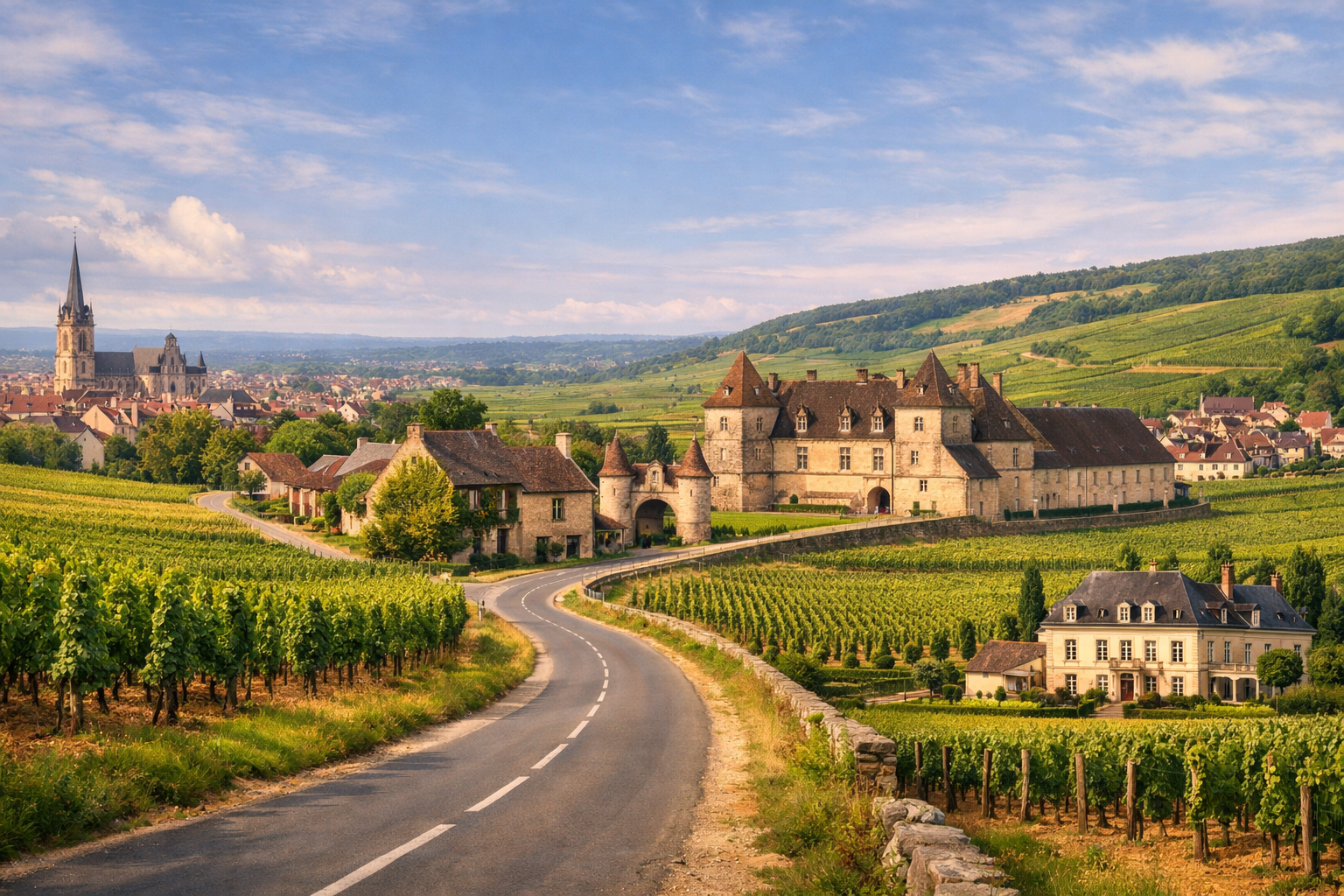
France, Burgundy, Côte de Nuits. Driving route from Dijon through Gevrey-Chambertin, Vougeot, and Nuits-Saint-Georges with visits to Château du Clos de Vougeot, Domaine Quivy, and Maison Moillard.

France, Burgundy, Côte de Nuits. Driving route from Dijon through Gevrey-Chambertin, Vougeot, and Nuits-Saint-Georges with visits to Château du Clos de Vougeot, Domaine Quivy, and Maison Moillard.

Follow the vine-lined road south from Dijon into the heart of the Côte de Nuits, where storied villages like Gevrey-Chambertin, Vougeot, and Nuits-Saint-Georges unfold among some of Burgundy’s most celebrated vineyards. Along the way, step into the medieval grandeur of Château du Clos de Vougeot and linger over refined tastings at Domaine Quivy and Maison Moillard.

🧭 DAY-BY-DAY ROUTE

Ready-made country and city routes with daily plans, sights, transport and accommodation. Buy PDF guides for independent travel.

🧭 DAY-BY-DAY ROUTE


Day 1 — Dijon: arrival and a gentle introduction to Burgundy

  • 🚆 Arrival in Dijon — the most logical starting point for a compact wine trip through Côte de Nuits. This is the gateway city to the Route des Grands Crus, the historic “road of great wines” that runs south from the outskirts of Dijon through Burgundy’s legendary villages. If you are not flying directly into Burgundy, the easiest option is usually to reach Dijon by train, then either rent a car here or arrange a transfer with a sober driver in advance for your wine days.

  • 🚗 The driving segments over the next few days are very compact: Dijon → Gevrey-Chambertin takes about 20–25 minutes, Gevrey-Chambertin → Vougeot about 15–20 minutes, Vougeot → Nuits-Saint-Georges about 10 minutes. That is exactly why the region is ideal for a relaxed 4-day tour without exhausting transfers. But the key rule of wine travel here is strict: do not drive after tastings. In practice, it is safer either to assign a sober driver for each tasting day or to use taxis, a private transfer, or an organized wine tour.

  • 🍷 On the first day, it is best not to overload the schedule and instead devote it to settling in, strolling around Dijon, and getting acquainted with Burgundy’s gastronomic culture. Dijon is not just the administrative center of the region, but also an important gastronomic capital, where it makes perfect sense to begin with local cuisine: boeuf bourguignon, oeufs en meurette, jambon persillé, Burgundy snails, Époisses and Citeaux cheeses, as well as dishes with blackcurrant and Dijon mustard. This is a good moment for a calm dinner with a glass of regional wine and no long drives.

  • 🏛️ If you still have energy after the road, spend the evening in Dijon’s historic center and the International City of Gastronomy and Wine. It makes a great cultural prologue to the trip: here it is easier to understand why Burgundy sees wine not as a separate drink, but as part of a complex union of terroir, cuisine, craftsmanship, and history. The evening should stay gentle in format: an early dinner, rest at the hotel, and preparing bookings for the next two days.

  • 📌 Practical tip for the day: today is the right moment to confirm all of tomorrow’s visits. For wineries and Château du Clos de Vougeot, check opening hours in advance, availability of tours in your preferred language, age restrictions for tastings, cancellation terms, and whether advance booking is required. In high season, on weekends, and during wine events, open slots fill up quickly.


Day 2 — Gevrey-Chambertin: great red Burgundies and Domaine Quivy

  • 🚗 Transfer: Dijon → Gevrey-Chambertin, about 20–25 minutes by road. It is best to leave in the morning so you can spend the day among the finest vineyards of the northern Côte de Nuits and leave enough time for walks, tasting, and a leisurely lunch.

  • 🍇 Gevrey-Chambertin is one of the most famous wine names in France, a village where the landscape is almost entirely shaped by vines, stone walls, small domaines, and the quiet of roads running along the climats. It is here that the Burgundian philosophy of micro-parcel differences is felt most sharply: neighboring rows of vines may produce wine of a different character, and the names of Grand Crus sound like legends of their own. Even a simple walk along the edge of the village among the vineyards feels like entering a living encyclopedia of Pinot Noir.

  • 🍷 The main visit of the day is Domaine Quivy, a real family-run estate in Gevrey-Chambertin. The visit format is usually intimate and especially valuable for those who want not just to “taste wine,” but to see a more human-scale Burgundy: small volumes, conversation about grapes, aging, soils, and the character of the appellations. Such visits often require prior arrangement, and the tasting language should be clarified in advance, since not all family domaines consistently offer visits in English or accept guests without a reservation.

  • 🥖 After the tasting, it is nice to take a gastronomic break in the village itself or return toward Nuits-Saint-Georges for a late lunch. It is better to structure the day so that a substantial tasting is not combined with active self-driving. If your group does not have a designated sober driver, it is wiser to use a taxi or a pre-booked wine transfer after Domaine Quivy. This is especially important because even “just a few samples” during a professional tasting are not compatible with safe driving.

  • 🌿 Devote the second half of the day to the vineyard route and the village itself: scenic stops around plots near Gevrey-Chambertin, short walks along the vines, and quiet contemplation of the landscape without rushing. In spring and summer the vineyards are especially photogenic, in autumn the atmosphere becomes almost theatrical because of the leaf colors and the rhythm of harvest, and in winter the architecture, relief, and terroir structure come to the forefront. During the vendanges season, some visits may shift in timing, and some estates limit guest access, so checking schedules in autumn is essential.

  • 🏨 For the night, it is convenient to base yourself either in Dijon, if you want a wider choice of hotels and restaurants, or already in Nuits-Saint-Georges, to reduce distances for the following days. For a wine tour, the second option is often more convenient: fewer transfers, easier taxi logistics after tastings, and a calmer overall pace.

Day 3 — Vougeot: Château du Clos de Vougeot and the heart of the Route des Grands Crus

  • 🚗 Transfer: Gevrey-Chambertin → Vougeot, about 15–20 minutes. Today is the cultural climax of the journey: if Gevrey-Chambertin reveals the power of the vineyard, Vougeot shows the historical and symbolic side of Burgundian wine.

  • 🏰 Château du Clos de Vougeot is one of the most iconic wine landmarks in all of Burgundy, a famous château in the middle of the vines, closely tied to the history of the Cistercians, the development of monastic winemaking, and the region’s modern wine image. It is best understood not as an ordinary castle, but as a place where architecture, wine memory, and Burgundy’s ceremonial culture merge into a single image. Inside, the old winemaking spaces, presses, and grand halls are especially impressive, while outside, the fact that the historic core of the wine landscape can still be read literally around the walls is striking in itself.

  • 🍷 A visit to Château du Clos de Vougeot should be booked in advance, especially if you care about a tour in a specific language and a particular entry time. In peak months, on holidays, and during special events, the schedule may differ from the standard one. It is important not only to confirm opening hours, but also to understand whether the chosen format includes a tasting, a museum-style tour, or a combined program.

  • 🚶 After the château, devote some time to the Clos de Vougeot landscape itself and the neighboring sections of the Route des Grands Crus. This is one of the best points on the route to feel the scale of the Burgundian idea of climats: not an endless sea of vines, but a disciplined mosaic of parcels, walls, roads, domaines, and villages. Even a short walk here gives more understanding of the region than a long driving loop without stops.

  • 🍽️ For lunch today, a “local cuisine + optional glass” format is especially appropriate, but again only if the car is being handled by a sober driver or if a transfer is planned after lunch. A great pairing for this day is traditional Burgundian dishes that highlight the structure of local red wines: beef bourguignon, coq au vin, terrines, cheeses, and bread from local bakeries.

  • 🌙 It makes sense to spend the night in Nuits-Saint-Georges. This is a convenient base for finishing the route: a compact town with its own wine identity, a convenient railway station, museum stops, and good logistics for departure the next day. If there was a tasting after the cultural visit, do not plan an independent evening drive beyond a short, pre-arranged transfer.

Day 4 — Nuits-Saint-Georges: Maison Moillard, museum, and the wine finale of the route

  • 🚗 Transfer: Vougeot → Nuits-Saint-Georges, about 10 minutes. The final day is busy but very logical: Nuits-Saint-Georges gives the route a sense of completion by combining a wine house, museum context, and the region’s gastronomic specialties.

  • 🍷 The main wine visit of the day is Maison Moillard, a historic Burgundian house founded in Nuits-Saint-Georges in the 19th century. For the traveler, this is a good format for discovering Burgundy through a broader overview of appellations and styles. Unlike a very small family domaine, the tasting experience here is often better structured for guests who want to gain a coherent picture of regional wines — from village and premier cru levels to more prestigious labels, depending on the program selected.

  • 📌 Maison Moillard also requires advance booking: visit formats, the number of wines in the flight, the language of the experience, and the price may vary by season. Be sure to confirm whether the tasting takes place in Nuits-Saint-Georges, in exactly which space you will be received, and whether the program is available at your preferred time. For participants below the legal age, alcohol tastings are not available; minors are usually offered a non-alcoholic or accompanying format without wine consumption.

  • 🏛️ After the wine visit, it is worth stopping by the Musée de Nuits-Saint-Georges. This is a small but substantial museum located in a former wine house, where archaeology and regional history complement the impressions of the route. This kind of finale is especially good because it brings the journey back from the level of “I tasted good wines” to the level of understanding the place: the wine landscape here is inseparable from the ancient history of settlements, trade, craftsmanship, and community life.

  • 🍇 If you would like to add one more local touch, Nuits-Saint-Georges is also a good place to visit Cassissium — a museum-tasting space dedicated to blackcurrant, liqueurs, and the gastronomic identity of the region. This is no longer classical winemaking, but a pleasant expansion of Burgundy’s flavor context. Such a visit is especially good for groups where not everyone is equally passionate about wine.

  • 🚆 End of the route: Nuits-Saint-Georges is conveniently connected to Dijon by TER train, and if you are returning a car, it makes sense to do so either in Nuits-Saint-Georges or back in Dijon. On departure day, it is best to leave extra time: after tastings, do not plan urgent long drives yourself. A safe end-of-trip plan is an early tasting, lunch, a short rest, and then a transfer or train.

Flight tickets

eSIM for travel

Buy PDF guide

Buy PDF guide — 8.57 USD

PDF — 8.57 USD