
Buy PDF guide

Buy PDF guide — 6.43 USD

PDF — 6.43 USD

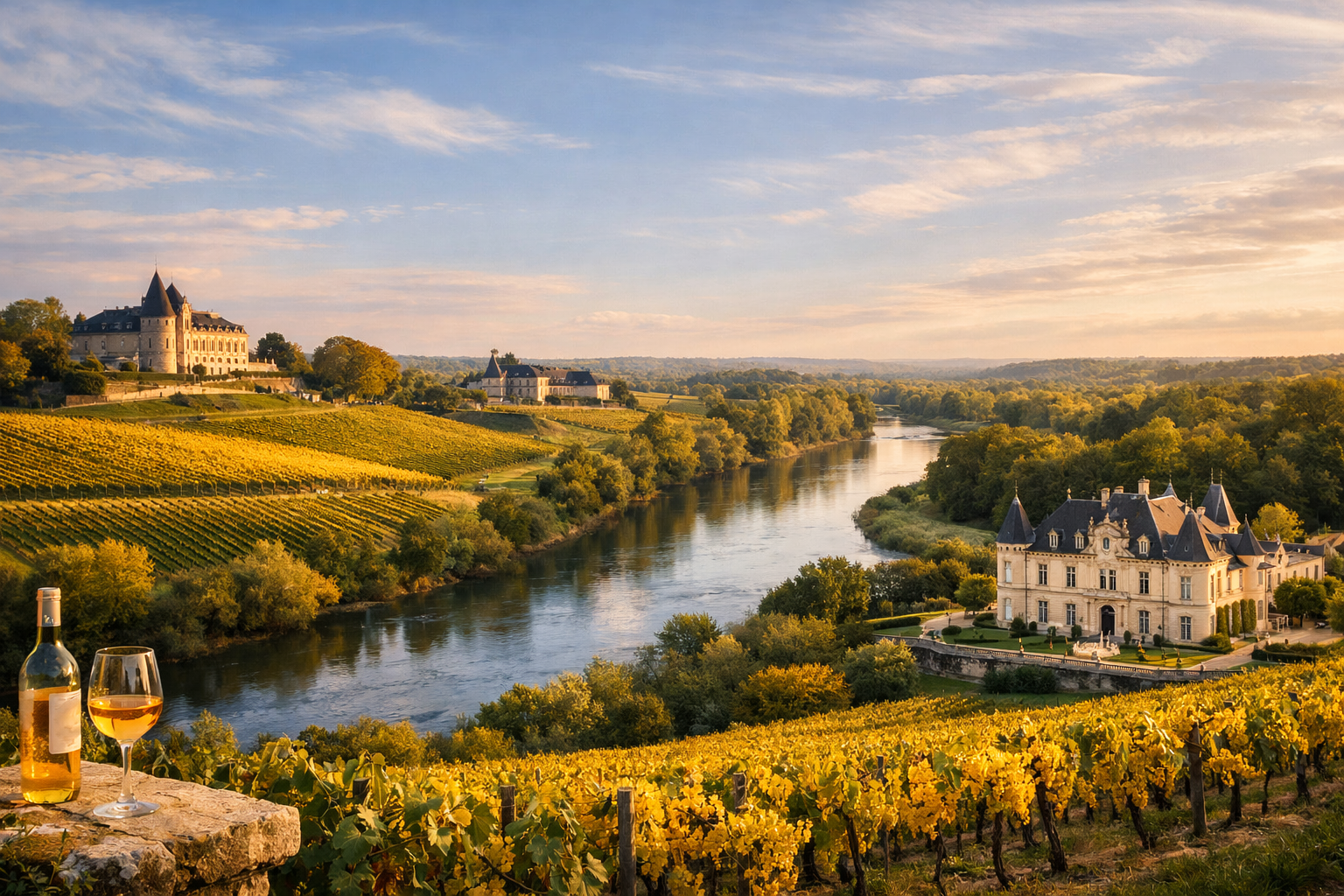
France, Bordeaux, Sauternes and Barsac. A journey to the region of sweet wines with a visit to Château de Rayne Vigneau, Château Guiraud, and Château Coutet, a tasting of wines made from grapes affected by noble rot, and walks along the Ciron River.

France, Bordeaux, Sauternes and Barsac. A journey to the region of sweet wines with a visit to Château de Rayne Vigneau, Château Guiraud, and Château Coutet, a tasting of wines made from grapes affected by noble rot, and walks along the Ciron River.

Follow the sweet wine trail from Bordeaux into the sunlit vineyards of Sauternes and Barsac. Visit Château de Rayne Vigneau, Château Guiraud, and Château Coutet, taste the golden complexity of noble rot wines, and wander the quiet banks of the Ciron River.

🧭 DAY-BY-DAY ITINERARY

Ready-made country and city routes with daily plans, sights, transport and accommodation. Buy PDF guides for independent travel.

🧭 DAY-BY-DAY ITINERARY


Day 1 — Bordeaux: getting in tune with the wine region and discovering the style of sweet wines

  • 🚶 Begin your journey in Bordeaux — a city where wine feels not like tourist décor, but like part of the city’s DNA. For the first day, it’s ideal to choose a gentle immersion without rushing: a walk along the Garonne embankments, through the Chartrons district and the city’s wine spaces helps you understand why the trade in barrels, harvests, ageing and the reputation of the region’s best estates has been managed from here for centuries. In the old merchants’ mansions, the 18th-century stone façades and the unhurried rhythm of the streets, you can still read the story of the négociants thanks to whom Bordeaux wines became a global language of status, gastronomy and terroir.

  • 🏛️ Cité du Vin is Bordeaux’s main modern wine space and is especially appropriate to visit on the first day of the itinerary. It is not a classic museum with dry display cases, but a large-scale center dedicated to wine civilizations, aromas, landscapes, tasting culture and the links between wine and human history. It’s a convenient place to build your “foundation” before the trip to Sauternes and Barsac: refresh the differences between styles, understand the role of climate and water in winemaking, and then the next day see with your own eyes how the Ciron River and autumn mists create the conditions for the development of noble rot, Botrytis cinerea — that very natural miracle without which the region’s great sweet wines would be impossible.

  • 🍷 After that, it’s worth continuing the theme at the Musée du Vin et du Négoce de Bordeaux — an intimate museum in the Chartrons district where the focus shifts from global wine culture to Bordeaux’s own history: merchants’ cellars, trade routes, old storage methods and the role of the wine négociant. This museum is valuable because it provides a more down-to-earth context: you do not simply taste wine, you understand how the very system was formed in which classifications, châteaux, appellations and the reputation of winemaking communes carry so much weight.

  • 🍽️ In the evening, arrange a dinner in the style of southwestern France: foie gras, duck terrine, poultry with a spiced sauce, aged blue cheeses, apricot tart or a dessert based on caramelized fruits. These are exactly the pairings that best prepare the palate for Sauternes and Barsac: here, sweet wines work not only as dessert wines but also as gastronomic wines, especially when paired with something salty, rich or slightly spicy. If a tasting is planned for this day, do not drive: it’s better to get around on foot, by taxi, tram or with a pre-booked transfer.

  • 🚆 Day logistics: Bordeaux–Mérignac Airport → central Bordeaux by public transport takes about 45 minutes; hotels in the central part of the city are also conveniently reached by official airport taxi. It is best to plan the day without a car so you can calmly visit the wine venues and avoid any risk after tastings.


Day 2 — Sauternes: Château de Rayne Vigneau and Château Guiraud, the road into the world of botrytis

  • 🚆 Transfer: Bordeaux → Sauternes/Bommes area. By car or private transfer, the journey usually takes about 50–60 minutes from central Bordeaux; from the airport area, about the same or slightly less depending on traffic. Since the day includes tastings, self-driving afterward is out of the question: the optimal option is a pre-booked driver, private transfer, organized tour from Bordeaux or a designated sober driver in the group.

  • 🍇 The first main stop of the day will be Château de Rayne Vigneau in the commune of Bommes — one of the historic estates of Sauternes, known not only for its classified status but also for a strong wine tourism program. The approach to the château itself already creates the feeling of entering a special world: hills, vineyards stretching in one continuous mass, soft golden light over the vines and that very sense of space so important for great sweet white wines. This is an especially good place to talk about terroir: noble rot does not appear “on demand”; it needs a very precise natural balance of humid morning mists and drier, sunnier daytime hours. It is the proximity of the Ciron and the Garonne that makes this part of Bordeaux almost alchemical.

  • 🍷 Château de Rayne Vigneau usually offers visits and tasting formats, and the estate welcomes guests year-round; seasonal opening hours are listed on the official website, so before your trip be sure to double-check the date, tour language and whether booking is required. What is especially convenient is that the estate explicitly emphasizes wine tourism and offers several themed visit formats. For a 3-day itinerary, it is better to choose a lighter option: a tour of the estate and cellars focused on Sauternes, an explanation of how botrytis-affected berries are selected, and a calm comparative tasting to sense honey, saffron, candied citrus, apricot, zest, floral notes and the characteristic lively acidity that keeps the wine from becoming overly heavy.

  • 🌿 After the first tasting, it is good to pause for some fresh air and walk around the surroundings without rushing. If the weather allows, include a short walk along the Ciron River or in its green surroundings: it is here that you especially clearly understand that great sweet wine is born not only in the cellar, but in the landscape. The Ciron is a small river with a huge reputation in the wine world; its cool water helps form the mists that wrap around the vines in autumn and trigger the development of noble rot. There is a rare charm to such a walk: after theory and tasting, you literally move into the physical sensation of the place.

  • 🍽️ For lunch, choose light but expressive local gastronomy: foie gras, country pâté, duck breast, chicken with cream sauce, goat cheese, fresh bread, seasonal fruits. It is important not to overload your senses before the second tasting. If you can book a gastronomic format at the estate or nearby, that is the ideal scenario; in any case, it is better to reserve a table in advance, especially in high season and on weekends.

  • 🍇 In the second half of the day, head to Château Guiraud — another iconic name in Sauternes, known not only for the quality of its wines but also for its attention to ecological practices and biodiversity. It makes sense to place this visit second, when your palate is already a little “tuned” and you can distinguish subtle stylistic nuances: where the wine seems more honeyed and velvety, where more spicy, where the zest, exotic fruit, white flowers or a saline mineral line come through more strongly. It is precisely in such comparisons that Sauternes truly opens up: not as one sweet style, but as a whole spectrum of characters.

  • ⚠️ An important practical point: all château visits should be confirmed in advance on the official websites. Before your trip, be sure to check opening hours, available tour languages, age restrictions for alcohol tastings, program length and cancellation policies. In France, tastings are intended for adults; minors can be included in the walking and educational part of the day, but without alcohol. After two wine visits, the return should only be with safe transport.

Day 3 — Barsac: Château Coutet, the quiet elegance of the appellation and return to Bordeaux

  • 🚆 Transfer: Sauternes/Bommes area → Barsac takes about 10–20 minutes depending on your starting point, so the third day is especially comfortable and free from exhausting drives. This is a rare advantage of a short wine itinerary: in 3 days, you do not need to scatter across the whole Gironde, but can focus on one of the most poetic parts of Bordeaux, where each stop reinforces the previous one.

  • 🏰 Château Coutet in Barsac is a wonderful culmination of such a journey. Here you especially feel the aristocratic, almost quiet side of sweet Bordeaux wines: less outward theatricality, more depth, freshness and precision. This historic château with long traditions and its own style offers the chance to understand why Barsac is often perceived as a slightly more airy and nervy expression of sweet wine compared with the denser and more opulent interpretations of neighboring Sauternes. In tasting, this may reveal itself through a sense of brighter acidity, delicate limestone energy, a crisp citrus line and a remarkable balance between sweetness and freshness.

  • 🍷 The official tourism page of Château Coutet presents real wine tourism formats, including an introduction to the appellation’s grape varieties and tasting programs. This makes the visit especially valuable not only for a romantic trip, but also for those who want to understand the subject more deeply: Sémillon, Sauvignon Blanc and Muscadelle work here not as abstract names, but as living participants in the style. During the visit, pay attention to how the aroma changes in the glass: from acacia honey and candied lemon to dried flowers, saffron, orange zest, dried apricot and sometimes an almost imperceptible smoky or waxy note.

  • 🌿 After the tasting, give yourself time not to rush straight to the next point, but to experience Barsac at a slow pace. An unhurried walk through the village and the surrounding vineyards helps bring the route to a beautiful close: pale stone architecture, quiet roads between the vines, the play of light on the leaves and a feeling of almost rural silence create exactly the contrast with Bordeaux that makes a trip to the wine appellations worthwhile. If the weather allows, you can add one more short walk toward the green areas connected with the Ciron valley, but without overloading the program.

  • 🍽️ For the final lunch or early dinner, choose pairings that emphasize the style of Barsac: blue cheeses, poultry, foie gras, baked fruits, desserts with pear, apple, almond or citrus. A good finale is to compare how the same gastronomic accompaniment works differently with the wines of Rayne Vigneau, Guiraud and Coutet. This is exactly what makes a wine tour complete: not a set of “checkmarks,” but a coherent story of taste.

  • 🚆 Return: Barsac → Bordeaux usually takes about 45–60 minutes by car or organized transfer. If you are flying out the same day, allow additional time for the road to Bordeaux–Mérignac Airport. After the final tasting, do not plan to drive yourself: it is safer to pre-book a transfer to the city, hotel or airport.

Flight tickets

eSIM for travel

Buy PDF guide

Buy PDF guide — 6.43 USD

PDF — 6.43 USD