
Buy PDF guide

Buy PDF guide — 6.43 USD

PDF — 6.43 USD

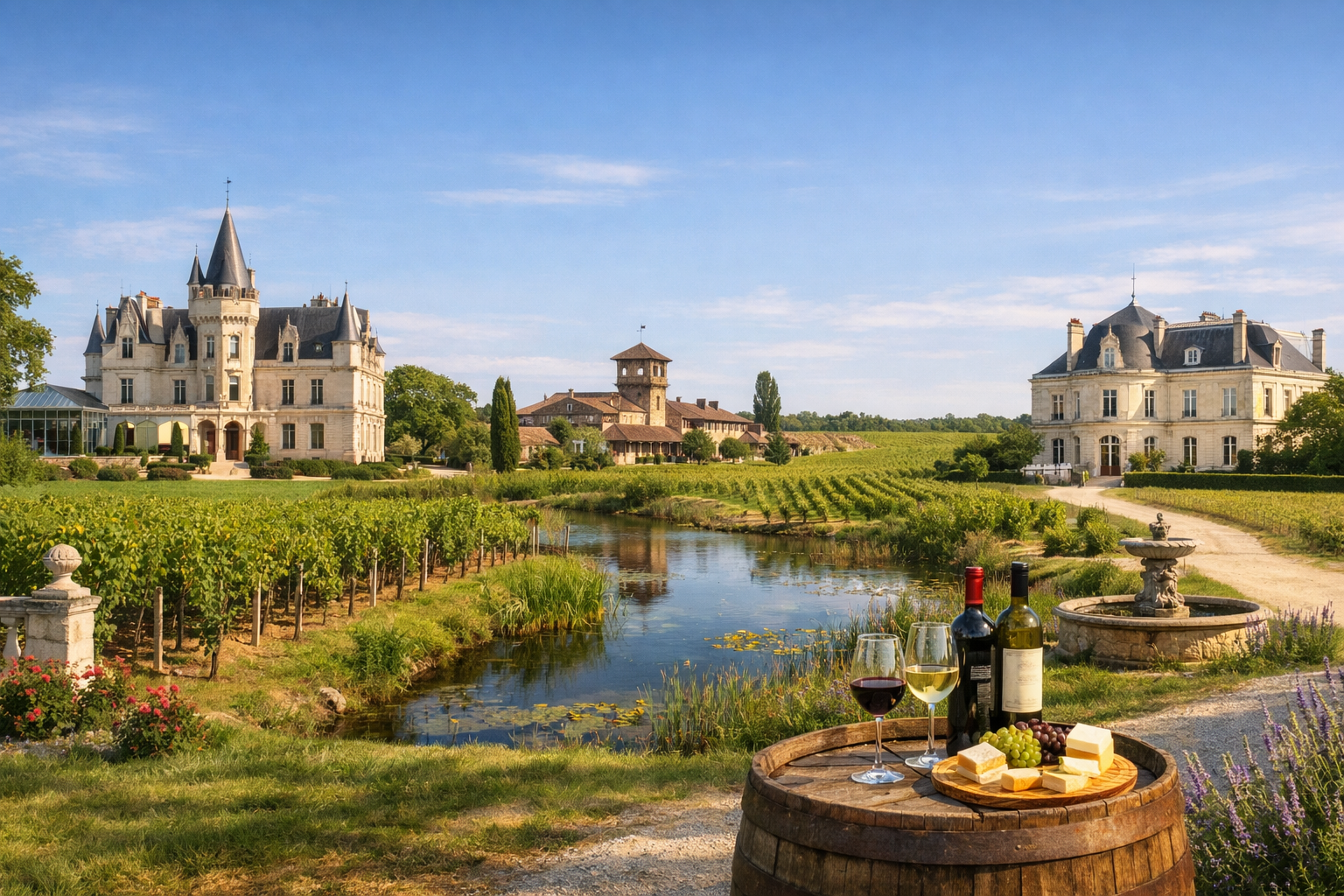
France, Bordeaux, Pessac-Léognan. A route through historic wine estates Château Pape Clément, Château Smith Haut Lafitte, and Château de Rouillac with tastings of red and white Bordeaux wines.

France, Bordeaux, Pessac-Léognan. A route through historic wine estates Château Pape Clément, Château Smith Haut Lafitte, and Château de Rouillac with tastings of red and white Bordeaux wines.

Discover the elegant vineyards of Pessac-Léognan just outside Bordeaux, where grand estates and centuries of winemaking shape every glass. Follow a refined route through Pessac, Martillac, and Canéjan, stopping at Château Pape Clément, Château Smith Haut Lafitte, and Château de Rouillac for memorable tastings of both red and white Bordeaux wines.

🧭 DAY-BY-DAY ROUTE

Ready-made country and city routes with daily plans, sights, transport and accommodation. Buy PDF guides for independent travel.

🧭 DAY-BY-DAY ROUTE


Day 1 — Bordeaux and Pessac: wine introduction + Château Pape Clément

  • 🚶 Start your journey in Bordeaux with La Cité du Vin — it is not just a museum, but one of the strongest entry points for any wine route in the region. This contemporary building on the Garonne riverfront was conceived as a cultural space where wine is presented not only as a drink, but as part of civilizations, trade, climate, gastronomy, and rituals. Before heading out to the châteaux, this is especially useful: you will better understand why Bordeaux became a global wine benchmark, how the left and right banks differ, how the concepts of terroir, assemblage, and millésime work, and why Pessac-Léognan is valued not only for red wines, but also for dry whites. It is easy to spend 2–3 hours here without rushing, then go up to the observation deck with a glass of wine or grape juice and look at the city as the gateway to a great wine region.

  • 🚗 Transfer: Bordeaux → Château Pape Clément, Pessac — about 20–30 minutes by taxi or pre-booked transfer, depending on traffic. After the tasting, self-driving is not recommended: it is best to plan right away for a driver, taxi, or organized private transfer.

  • 🍷 Château Pape Clément in Pessac is one of the most famous and atmospheric estates of the Pessac-Léognan appellation, where the sense of historical depth appears literally from the first minutes. The château is linked to the future Pope Clement V, and for this reason a visit here feels not simply like a tasting, but like an encounter with the long unbroken tradition of Bordeaux winemaking. The grounds feel ceremonial: historic buildings, perfectly ordered avenues, decorative gardens, warmly colored stone, and the sense of a great wine estate that knows how to impress not with showy luxury, but with mature style. During the visit, it is especially interesting to focus on comparing the estate’s red and white profiles: the reds usually open with depth, structure, and spicy-fruit complexity, while the whites offer noble texture, freshness, and layered aromatics. For lovers of detail, this is an excellent place to talk about the gravel soils of Graves, the role of aging, and how the same terroir can give rise to such different yet equally convincing wines.

  • 🍽️ After the visit, devote the evening to Bordeaux gastronomy. In Pessac or in central Bordeaux, it is worth choosing a dinner focused on local pairings: entrecôte à la bordelaise, duck breast, terrine, mature French cheeses, seasonal mushrooms, and with the region’s white wines — Arcachon oysters, seafood, fish with beurre blanc, or mild goat cheese. If the tasting was substantial, it is wiser to make dinner early and unhurried, with water and a full meal, rather than continuing the wine program. The best rhythm for the first day is one major tasting, one thoughtful dinner, and a taxi ride back to the hotel.

  • ⚠️ Practical note for the day: visiting Château Pape Clément usually requires advance booking; before your trip, be sure to check the official website for current opening hours, available visit formats, tour language, age restrictions for tasting, and cancellation rules. For participants below the legal drinking age, it is best to book a format without wine tasting. In the hot season, it is useful to have water, headwear, and extra time to rest between locations.


Day 2 — Martillac: Château Smith Haut Lafitte, vineyards, and gastronomy among forest and vines

  • 🚗 Transfer: Bordeaux or Pessac → Château Smith Haut Lafitte, Martillac — about 25–35 minutes by car with driver or transfer. If you are staying near the winery, the day can be made almost entirely walkable and relaxing, without extra logistics.

  • 🍷 Château Smith Haut Lafitte is one of the most expressive addresses in the entire region, where the classic style of Pessac-Léognan meets the feeling of a living, contemporary, environmentally attentive wine estate. The property is surrounded by a patchwork landscape of vineyards and woodland, and it is precisely this combination of “vine + nature + silence” that makes the visit especially beautiful. Here it is easy to feel that wine is born not only in cellars and vats, but also in the landscape itself: gravel soils, light, air, biodiversity, and the way the terrain is worked all shape the estate’s recognizable signature. For guests, the contrast between the château’s white and red wines is especially interesting: the whites often impress with delicate smoky minerality and energy, while the reds show density, noble texture, and long development in the glass. If you enjoy wine visits where not only tasting notes matter, but also the philosophy of the house, Smith Haut Lafitte is practically an essential stop.

  • 🌿 After the main tour, it is worth setting aside time for a walk around the grounds and vineyard surroundings. In this part of the route, you can really sense that Pessac-Léognan is not an open-air museum, but a very living wine-producing area where old traditions coexist with modern approaches to soil, biodynamic and ecological practices, the use of oak, and precision winemaking. A day like this is especially good in the warm season — from late spring to early autumn, when the landscape is at its most photogenic and the walk among the vines feels like part of the tasting experience itself.

  • 🍽️ For lunch or an early dinner, it makes sense to choose gastronomy right in the wine setting of Martillac. The ideal format for the second day is local cuisine with a well-paced service rhythm: seasonal vegetables, fish, poultry, veal, mushrooms, pâtés, artisan bread, Bordeaux desserts, and cheeses matched to Graves white and red wines. If the budget allows, you can make this day the gastronomic highlight of the whole trip and choose a fine-dining table near the vineyards; if you prefer something more intimate, a cozy restaurant dinner at the hotel or near the château is enough. The main thing is not to overload the program with additional tastings that same evening.

  • 💤 The second half of the day is perfect for gentle rest at a wine hotel-spa. The Martillac area is especially good because here you can combine a serious tasting with recovery: a walk, water, a slow dinner, and an early night. This makes the tour not only beautiful, but also physically comfortable: the taste of wine is perceived better when you are not tired from transfers and not trying to “fit everything in” in a single day.

  • ⚠️ Practical note for the day: Château Smith Haut Lafitte receives visitors by advance reservation; before your visit, you should check the official website for availability of the desired tour format, language, duration, price, and whether tasting of both white and red wines is possible in one set. After the visit, rule out self-driving. If you still use a car for daytime logistics, appoint a sober driver in advance who does not take part in the tasting.

Day 3 — Canéjan and the Graves wine road: Château de Rouillac, a calm finale, and regional culture

  • 🚗 Transfer: Martillac/Bordeaux → Château de Rouillac, Canéjan — usually about 20–30 minutes by taxi or private transfer. The final day is best built as gently as possible: no early departures, a late breakfast, and extra time between locations.

  • 🍷 Château de Rouillac in Canéjan is a very successful final point for a three-day tour of Pessac-Léognan. Unlike the big names that impress with scale and reputation, Rouillac often feels more intimate and human: here it is easier to focus on nuances, ask questions, carefully compare the estate’s style with previous tastings, and feel how the tones of wine shift within a single appellation. This is especially valuable on the third day of the journey: you already have a tasting foundation after Pape Clément and Smith Haut Lafitte, so the visit turns into a real comparative analysis of the region. Pay attention to how fruitiness, woody nuances, tannin structure, and the freshness of the white wines are expressed here — the final tasting helps firmly consolidate your understanding of the Pessac-Léognan signature as an appellation that speaks equally convincingly in the language of reds and dry white Bordeaux.

  • 🛣️ After the château, devote part of the day to the very idea of the Route des Vins de Bordeaux en Graves et Sauternes — the regional wine route south of Bordeaux. Even if in three days you do not go far beyond Pessac-Léognan, it is important to feel the context: these are the historic lands of Graves, the oldest part of Bordeaux’s wine legend, where gravel terroirs, proximity to the city, Atlantic influence, and gastronomic culture create a rare combination of accessibility and depth. Such a route does not necessarily have to be lived in kilometers; sometimes a few well-chosen stops are enough to form a complete impression of the region.

  • 🏛️ If your flight or departure is not too early, end your trip in Bordeaux with a visit to the Musée du Vin et du Négoce. This is a very fitting finale specifically after château visits: the museum shows how the international fame of Bordeaux wine was built not only by vineyards and castles, but also by merchant houses, trade, underground cellars, river logistics, and the culture of négociants. After three days of tastings, such a museum “stitches together” personal experience with the larger history of the region and gives the route a beautiful, almost literary ending.

  • 🍽️ The final dinner should be gastronomic but not overloaded. A good option is to choose a Bordeaux restaurant with a local wine list and order dishes that let you work with pairings one more time: white Pessac-Léognan with seafood, red with duck, lamb, veal, or a classic entrecôte. As souvenirs, it is better to buy bottles after the tastings, when the style of your favorite estate is already clear, and to use protective wine sleeves for transport. If you have a flight ahead, leave time for packing and do not plan another tasting on the way.

  • ⚠️ Practical note for the day: Château de Rouillac and the museum should also be checked before departure on their official websites — opening hours, working days, tour languages, and booking formats may change by season. All tastings are intended for adult guests; minors are usually offered non-alcoholic alternatives or an accompanying format without wine. After the final tasting, use a taxi, private transfer, or return by public transport only to a point from which you do not need to get behind the wheel yourself.

Flight tickets

eSIM for travel

Buy PDF guide

Buy PDF guide — 6.43 USD

PDF — 6.43 USD