
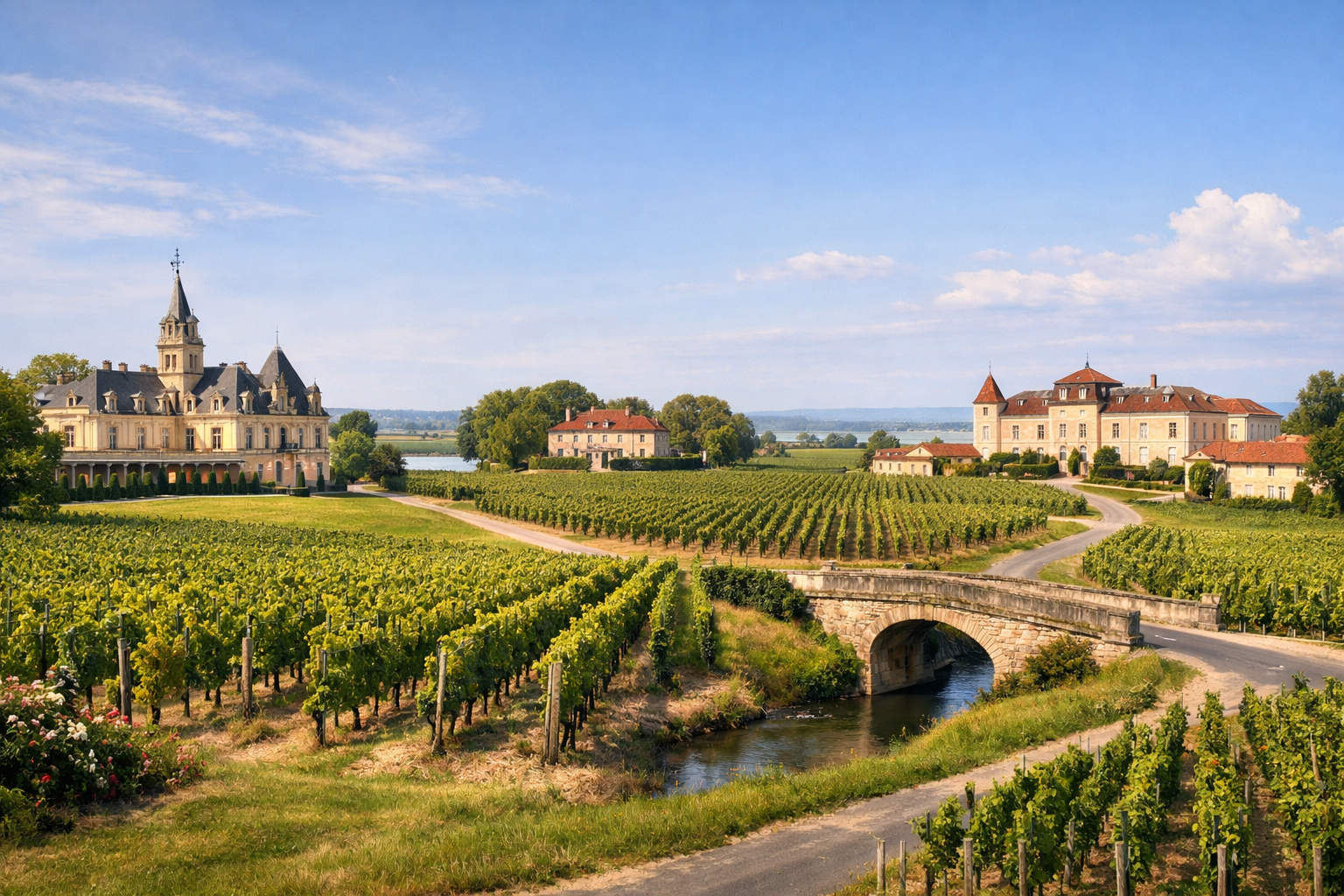
Day 1 — Bordeaux: entering the world of Bordeaux wine
🚶 Begin your wine journey in Bordeaux — a city that for centuries lived by trade, aging, and the reputation of great wines. The ideal first day here is not about rushing between locations, but about tuning your palate and building context: before heading to Margaux and Pauillac, it helps to understand why the names of appellations, châteaux, and classifications in Bordeaux sound almost like a language of their own. The morning is best devoted to the Chartrons district, historically linked to négociants, cooperage, and the wine trade. The atmosphere of old warehouses, elegant façades, and quiet streets introduces the theme perfectly: Bordeaux is not only about beautiful bottles, but also a vast system of terroirs, blends, family estates, export traditions, and a strict reputation.
🏛️ Then head to Cité du Vin — Bordeaux’s largest modern wine museum, where it is especially easy to get a full picture of the region: from grape varieties and aromatic profiles to the history of wine civilization, gastronomy, and the art of tasting. This is the right entry point before Médoc, because after the museum the names Margaux, Pauillac, the 1855 classification, and the role of cabernet sauvignon, merlot, and oak aging stop feeling abstract. Plan at least 2.5–3 hours with a break to rest: the exhibition is large and dense, and it is best experienced without rushing.
🍷 In the second half of the day, it is convenient to continue the theme at the Musée du Vin et du Négoce de Bordeaux on rue Borie. This museum is smaller and more historical in mood: here it is easier to feel specifically the Bordeaux commercial side of wine — the connection between the port city, merchant houses, warehouses, underground cellars, and the evolution of winemaking practices. This contrast with the ultra-modern Cité du Vin makes the first day especially successful: in the morning — global wine culture, in the afternoon — the specific history of Bordeaux as the trading capital of wine.
🥘 Leave the evening for a gastronomic introduction to the region: order classic local pairings — entrecôte à la bordelaise, duck magret, terrine, aged cheeses, and cannelé for dessert. Important: if you have already taken part in tastings that day, do not plan to drive yourself, even within the city. For the whole Médoc route, it is best to choose a safe arrangement in advance: a sober driver, a private transfer with chauffeur, an organized wine tour, or a TER + pre-booked local taxis combination. Before visiting any château, always recheck the official websites: opening hours, seasonality, tour language, tasting formats, and whether booking is required. For visits involving alcohol, the route must be organized so that you do not get behind the wheel after tastings.