
Buy PDF guide

Buy PDF guide — 29.99 USD

PDF — 29.99 USD

Fenway and the Museum Quarter

Fenway and the Museum Quarter

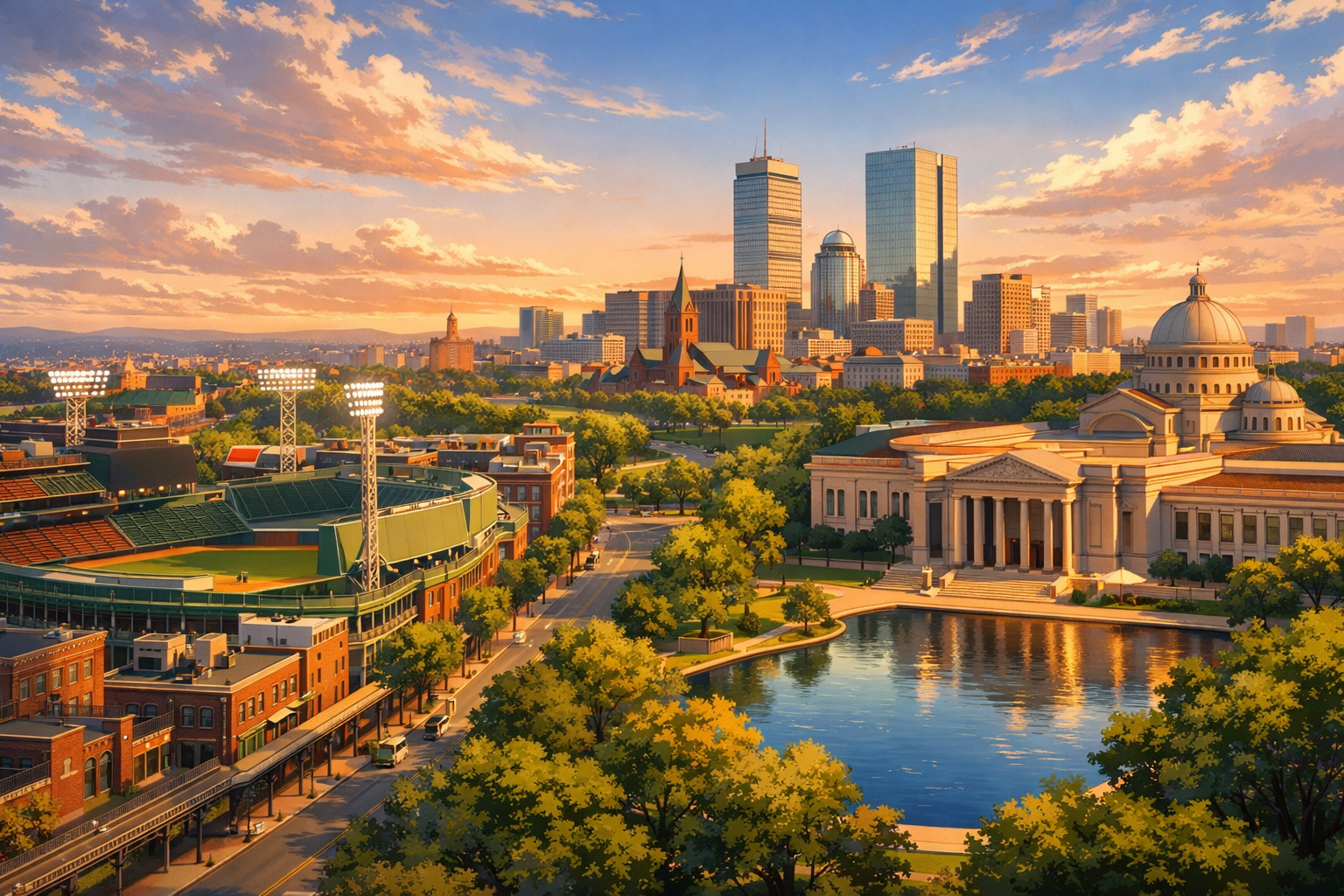
Fenway and the Museum Quarter blend big-game energy with leafy park paths and some of Boston’s finest culture. Wander from Kenmore through the Back Bay Fens and the Avenue of the Arts to Longwood, where ballpark buzz gives way to galleries, gardens, and grand institutions.

🧭 DAY-BY-DAY ROUTE

Ready-made country and city routes with daily plans, sights, transport and accommodation. Buy PDF guides for independent travel.

🧭 DAY-BY-DAY ROUTE


Day 1 — Getting to know Fenway: Kenmore Square, Beacon Street, and an easy introduction to the area

  • 🚶 The first day is best used to "tune your eye" to the neighborhood. Start at Kenmore Square — it is an important gateway to Fenway: here you can feel Boston’s urban rhythm, the flow of students, concert venues, baseball history, and the constant movement along Commonwealth Avenue. From here, it’s convenient to walk toward Beacon Street and farther into Fenway’s residential and semi-park blocks. Distances between key points are short here: from Kenmore Square to Fenway Park it’s usually an 8–12 minute walk, and to the museum corridor about 20–30 minutes at an easy pace. Don’t try to see everything on the first day: it’s better to take in the neighborhood in broad strokes, stop for coffee, notice the brick architecture, the green stretches of Back Bay Fens, and how Boston’s sports, university, and cultural worlds literally stand side by side.


Day 2 — Fenway Park and surroundings: the area’s sports and music energy

  • 🚶 Today, take in Fenway’s most recognizable face. Start at Fenway Park — even without a game, the stadium works as a city symbol, and the neighborhood around it is full of visual detail: historic facades, signs, club atmosphere, street food, and the dense flow of fans and tourists. Allow 1.5–2 hours without rushing for the outer perimeter and a relaxed walk along the surrounding streets. Then it makes sense to continue to Jersey Street and Lansdowne Street, where the area opens up not only as a sports district but also as a concert, evening, and lively one. This day is great because it does not require long transfers: everything is compact, and it’s easy to take breaks every 45–60 minutes in a café or in open public spaces.

Day 3 — Back Bay Fens: the neighborhood’s green framework and a walk without overload

  • 🚶 After a noisier day, it’s worth switching to a more scenic rhythm. Back Bay Fens is not just a park but an important part of Boston’s Emerald Necklace, where the area suddenly becomes softer, quieter, and more spacious. It’s a great place to walk without a strict plan: bridges, paths, open lawns, water features, and transitions between the urban and almost garden-like environment create a very cinematic feeling. Allow 2–3 hours for a walk through the Fens with photo stops and a short rest. It’s easy to build the route so you don’t get tired: 30–40 minutes of walking, then a break, then another slow section. This is the day when Fenway shows not its stadium side, but an almost contemplative one.

Day 4 — Museum of Fine Arts, Boston: a big museum day

  • 🏛️ A day for the area’s main artistic anchor — the Museum of Fine Arts, Boston. This is not the kind of museum you just pop into “for an hour”: even with a very disciplined route, it makes sense to give it at least 3–5 hours, or better, half a day. Inside, it’s easier not to try to cover everything, but to choose 2–3 major directions: for example, European art, ancient collections, and the American galleries. From most hotels in Fenway, walking here takes about 15–25 minutes, so the day can be planned comfortably without complicated logistics. After the museum, leave yourself time to rest: don’t jump straight into a new stream of sights, but let your mind “settle” — a short walk along Huntington Avenue or a calm dinner in the area works better here than another packed attraction.

Day 5 — Isabella Stewart Gardner Museum: an intimate museum experience and courtyard

  • 🏛️ After the scale of the MFA, it makes perfect sense to go to the Isabella Stewart Gardner Museum — it feels completely different: more intimate, personal, almost theatrical. This museum is less about a linear visit and more about atmosphere and the internal rhythm of the space. The Venetian courtyard, soft light, unusual arrangement of works, and the feeling of a private collection create the impression that you have entered not a “museum machine,” but someone’s very carefully assembled universe. Allow 2–3 hours for the visit, and after that at least 45 minutes for a rest or coffee, because this is a place you want to absorb rather than rush through. From the MFA to the Gardner Museum is only a few minutes on foot, so these two days form a very logical cultural pairing without the fatigue of constant movement.

Day 6 — Avenue of the Arts: Symphony Hall, Huntington Avenue, and the city’s cultural facade

  • 🚶 Today, walk along Huntington Avenue as if following the area’s cultural axis. Here, museums, academic buildings, concert spaces, and an expressive urban perspective line up one after another. Even without planning a packed indoor program, the walk itself along Avenue of the Arts gives a sense of classic intellectual Boston — formal, beautiful, and slightly academic. A comfortable rhythm for the day is 1–1.5 hours of walking, then a long lunch break, then another short outing. Transitions between points here are usually 5–15 minutes on foot, which makes the day comfortable and not exhausting. A great ending is an evening concert or simply a leisurely walk at dusk, when the lights along Huntington Avenue add a special depth to the area.

Day 7 — MassArt and contemporary art: a lighter cultural day

  • 🏛️ In the middle of the trip, it’s worth planning a day with a contemporary focus and a slightly lighter museum load. The area around Massachusetts College of Art and Design is well suited to this format: you can feel the student, experimental, working artistic environment here. A visit to the MassArt Art Museum combines well with a slow walk through the neighboring blocks, short pauses, and an unhurried lunch. Unlike the “big museums,” this day does not require full immersion for many hours straight: 1–2 hours in the museum, then rest, then a park or café. This rhythm helps prevent burnout and makes the trip not only rich, but sustainable.

Day 8 — Longwood and academic Boston: a walk among science, campuses, and greenery

  • 🚶 Longwood is nearby, but in mood it’s already a slightly different world: medical, university-oriented, more calmly organized, and less touristy. From the museum district, you can walk here in about 10–20 minutes depending on your starting point. It’s best to build the day as an exploratory one: fewer “checkmarks,” more observation of how the neighborhood lives. Walk along Avenue Louis Pasteur and the neighboring streets, feel the change of scale, and then return to the greener stretches near the Fens. This is a good day to finish earlier: there is no need for long walks, and the value here lies precisely in the contrast with noisy Fenway Park and the museum concentration of the previous days.

Day 9 — The Fenway ↔ Back Bay link: from the stadium district to elegant Boston

  • 🚶 Make this a transition day between Fenway and Back Bay. It is less about a single attraction and more about the feeling of how the city changes over a relatively short distance. From Fenway toward Prudential and Back Bay, you can walk about 20–30 minutes, and during that time the area changes tone: from more informal and event-driven to more polished, classic, and urbane. Along the way, it’s easy to make short stops without overloading the day with tasks. This kind of route is especially good after several busy days: it gives your mind fresh air and a sense of the whole city, not just a tourist cluster.

Day 10 — Free day in Fenway: favorite places, food, a repeat museum visit, or a game

  • 🚶 It’s worth keeping the tenth day more open. By this point, you will almost certainly have your own “anchors”: a favorite part of the park, a café, a museum, a street near the stadium, or a pleasant stretch of Huntington Avenue. Returning to a place you liked is an important part of a good city itinerary: the neighborhood begins to feel not like a set of points, but like an environment you already know a little. If the schedule lines up, this is also a great place to fit in a game, an evening program, or a return visit to a museum you want to explore more deeply. Don’t overload the day — one strong episode with plenty of air around it is better.

Day 11 — A day of water, parks, and gentle transitions: the Fens and neighboring walking corridors

  • 🚶 Return to the green part of the neighborhood, but in a different way — not as a first overview walk, but as a space you have begun to know. Take a longer loop through Back Bay Fens and the neighboring pedestrian connections, moving slowly, with pauses on benches and moments to observe city life. For a day like this, it’s convenient to allow about 3–4 hours of total activity, but with plenty of rest. This is one of the best formats for the middle or second half of a two-week trip: fewer dense interiors, more light, air, and slow movement.

Day 12 — Cultural encore: a second major museum or a more intimate program depending on your mood

  • 🏛️ By the twelfth day, it often becomes clear whether you want more scale or more intimacy. That’s why it makes sense to keep this day flexible. If you are drawn to a systematic, collection-rich experience, return to the MFA. If you want atmosphere and slow contemplation, choose the Gardner Museum again. In both cases, plan the visit so that you still have at least 1–1.5 hours afterward to rest. The museum district is especially good precisely because here you can allow yourself a “second reading” of the space without spending much energy on the road.

Day 13 — Small neighborhood discoveries: local streets, bookstores, coffee, and evening Fenway

  • 🚶 This day is best devoted not to the main sights, but to small discoveries. Fenway opens up especially well through secondary streets, short courtyards, coffee shops, local stores, and unexpected views of the urban fabric. Walk without a rigid grid, leaving yourself the option to turn wherever it feels beautiful, quiet, or simply pleasant. In the evening, you can return closer to Fenway Park: the area is especially lively before a concert or game, and even without an event on the calendar, there is a rare combination here of historic character and completely alive everyday energy.

Day 14 — Final loop: the best points of Fenway and the museum district without rushing

  • 🚶 The last day should not turn into a race to catch what you missed. It’s better to make a “final lap of respect”: your favorite part of Kenmore Square, a short walk to Fenway Park, a calm pass through Back Bay Fens, perhaps a farewell look at the facades along Huntington Avenue. The whole point of the finale is not the number of places, but to feel how the neighborhood has come together into a complete story: sport, art, university life, green corridors, and a very distinctive Boston urban rhythm. End the trip with an unhurried dinner and leave yourself a time buffer for packing and the trip to the airport without nervous rushing.

Flight tickets

eSIM for travel

Buy PDF guide

Buy PDF guide — 29.99 USD

PDF — 29.99 USD