
Buy PDF guide

Buy PDF guide — 4.28 USD

PDF — 4.28 USD

Ermoupoli, Syros - Neoclassical city, Miaouli Square, port, island urban style

Ermoupoli, Syros - Neoclassical city, Miaouli Square, port, island urban style

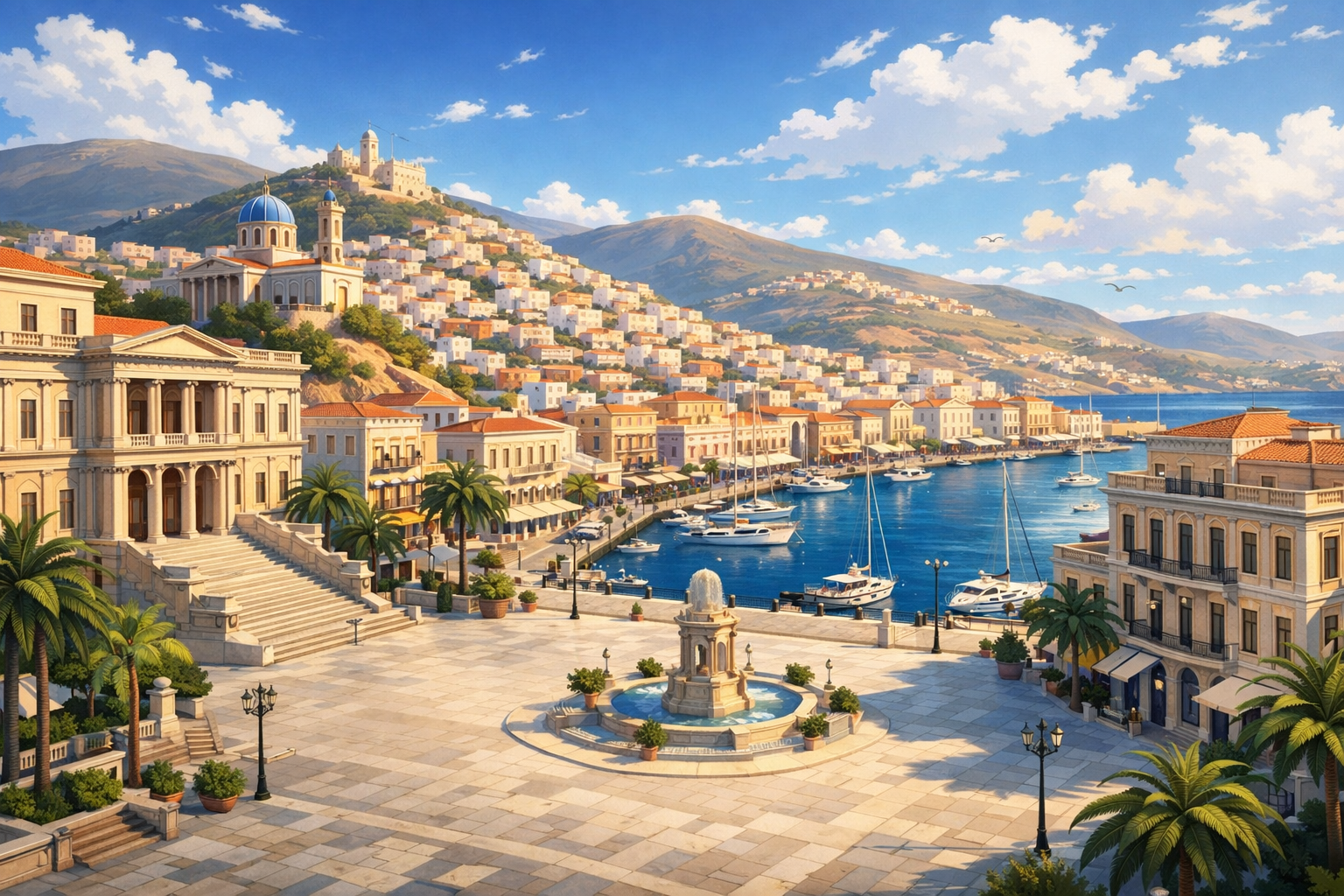
Ermoupoli, the elegant capital of Syros, blends island charm with a distinctly urban rhythm. Stroll through grand neoclassical streets, linger in Miaouli Square, and watch the port life unfold against one of the Aegean’s most stylish backdrops.

🧭 DAY-BY-DAY ROUTE

Ready-made country and city routes with daily plans, sights, transport and accommodation. Buy PDF guides for independent travel.

🧭 DAY-BY-DAY ROUTE


Day 1 — Ermoupoli: port, Miaouli Square, Apollon, and Vaporia

  • 🚢 Start your route from the waterfront and port of Ermoupoli — this is the best place to feel the character of Syros as a Cycladic island that is “not quite typical.” Instead of the familiar white-and-blue village picture, you are greeted here by a true island city with urban scale, broad streets, rows of neoclassical facades, arches, balconies, and the atmosphere of an old commercial center of the Aegean. In the 19th century, Ermoupoli grew into a major port, industrial and commercial hub of the new Greek statehood, and that history is still visible in its appearance: the houses do not hide from the sea but open theatrically toward the harbor, like a whole amphitheater of stone, marble, and light. It is worth allowing about 45–60 minutes for the first walk along the waterfront without rushing: admire the vessels, have a coffee by the water, and ease calmly into the city’s rhythm after the ferry or a short transfer from the airport.

  • 🚶 From the port to Miaouli Square it is an easy walk of about 8–12 minutes, with no difficult terrain. This is the heart of Ermoupoli and probably the most expressive urban stage on the whole island. The square creates an impression that is rare for islands: it is not intimate and not resort-like, but almost metropolitan — spacious, solemn, made for meetings, city life, and ceremonial architecture. It is framed by palm trees, cafés, and administrative buildings, while the main accent is the monumental town hall, which makes the space feel not just beautiful but genuinely civic. Here you can especially feel the route’s central theme — island urban style: Syros is simultaneously maritime, sunny, and refinedly urban. It is pleasant to linger in the square for at least an hour, simply sitting in the shade, watching local life, and seeing how the neoclassical city lives not as a backdrop but as a real administrative and cultural center.

  • 🏛️ The Archaeological Museum of Syros is located in the town hall complex, and it fits naturally into the route right after Miaouli Square. It is a small museum, but very important for understanding the island’s depth: behind the ceremonial facade of Ermoupoli lies the history of the Cyclades stretching back to prehistoric times. Here the route shifts its focus — from the brilliance of the 19th century to much older cultural layers. Plan about 30–45 minutes for the visit: the museum is small, so it does not overload the day and works perfectly as an intellectual pause between city walks.

  • 🎭 Then walk to the Apollon Theater — the distance from the square is short, usually about 5 minutes on foot. This theater is often called one of the architectural jewels of Ermoupoli, and rightly so: it reminds you that the island was not only a port and trading hub, but also a place of cultural ambition. Around the theater, the city’s European tone is especially noticeable — Italian and French influences can be felt here, and the walk itself turns into a journey through a small island version of a great Mediterranean city. Even if there is no performance, the area around the theater is worth exploring slowly, with stops for photos and facade details.

  • 🍽️ After that, enjoy a relaxed lunch and rest in the central part of Ermoupoli. It makes sense to allow 1.5 hours for food and a break: this helps keep the day from turning into a rush and saves energy for the second half of the route. The best format here is unhurried, with a view of the street or the sea, because Syros reveals itself not only through sights but through the very atmosphere of island city life: passersby, stone stairways, conversations at neighboring tables, sunlight on pale facades, and the constant sense of the port being close by.

  • 🌊 In the second half of the day, head to the Vaporia quarter, about a 10–15 minute walk from the center. This is one of the most atmospheric areas of Ermoupoli, where the stately houses of former shipowners and industrialists literally hang above the sea. Here you understand especially clearly why Syros is considered a unique island: instead of the image of a “settlement by the beach,” what appears before you is an aristocratic maritime city. Narrow streets, grand mansions, light on stone, views of the water, and a sense of the dignity of the old port era create an almost cinematic scene. It is worth setting aside 1–1.5 hours for the quarter and an unhurried walk toward Asteria, and more if you want a swim or a long photo stop.

  • ⛪ End the day around the Church of Saint Nicholas and the viewpoints of Vaporia. In the evening the light becomes softer, and neoclassical Ermoupoli is especially beautiful: the marble no longer dazzles, the sea darkens, and the facades take on a warm golden tone. If you still have energy, you can return to the port along the same walking route in about 15–20 minutes and spend the evening on the waterfront. Such an ending is logical: the day begins by the sea and closes the circle there as well, linking the port, Miaouli Square, cultural buildings, and island urban style into one coherent image.


Day 2 — Ermoupoli and Ano Syros: industrial history, upper town, and panoramas

  • ☀️ Start the morning of the second day without early stress: after the compact first day, this route is designed to connect historic Ermoupoli with the upper town of Ano Syros and still leave time for rest. First, head to the Industrial Museum of Ermoupoli. If you are staying in the center or near the port, the walk usually takes about 15–20 minutes; alternatively, you can take a short taxi ride of 5–10 minutes, which is especially convenient in hot weather. This museum is no less important than the ceremonial architecture because it explains where the city’s scale comes from: Ermoupoli was not only beautiful, but also active, wealthy, productive, and tied to shipbuilding, factories, and the maritime economy.

  • 🏭 You should allow about 60–75 minutes for the museum itself. It helps you see another side of Syros — not decorative, but working and modern for its time. After walking through Miaouli Square and Vaporia, it becomes especially interesting to understand what economic forces stood behind all that splendor. It was precisely the combination of port, trade, industry, and culture that made Ermoupoli a rare phenomenon among the Cyclades: not just a beautiful island center, but a full-fledged urban organism with pronounced historical depth.

  • 🚕 After the museum, go up to Ano Syros. Climbing on foot is possible, but it takes noticeably more time and effort, so taking a taxi is more practical: usually about 10–15 minutes from the lower town, after which it is much more pleasant to explore the upper quarter on foot and then descend. Ano Syros sharply changes the rhythm of the journey: if Ermoupoli is neoclassical elegance, broad squares, and port grandeur, then the upper town offers a labyrinth of narrow passages, steps, arches, and an almost medieval density. This contrast makes the two-day route especially successful.

  • 🚶 A walk through Ano Syros is an encounter with several layers of island identity at once. There is less ceremony here, but more intimacy and elevation: whitewashed walls, tight alleys, small squares, unexpected turns, and views over the harbor of Ermoupoli below. From here it becomes especially clear how the city is arranged like an amphitheater and why the port remains the visual center of the whole composition. It is worth setting aside at least 1.5–2 hours for the walk through the upper town and stops at the panoramas. This time is not only for the route itself, but also for resting in the shade, drinking water, taking photos, and making short stops at viewpoints.

  • ⛪ If you go without rushing, it makes sense to climb to Saint George Cathedral and look out over the city from above. From this point Ermoupoli opens up especially beautifully: Miaouli Square can be guessed within the dense urban fabric, the port reads as the historical core, and the neoclassical facades below look almost like scenery for an old maritime novel. This is the best moment of the whole tour for a final understanding of the journey’s theme: Syros is an island, but not provincial; maritime, but not only about beaches; elegant, but not museum-like. It lives as a real city.

  • 🍴 Allow about 1–1.5 hours for lunch and rest after the descent. The most convenient option is to return to Ermoupoli, because there is a greater choice of cafés and it is easier to continue the day without extra logistics. After lunch, do not try to overload the route with new points: a two-day format should remain realistic and enjoyable. It is better to devote the second half of the day to a slow walk along the central streets, buying local sweets, or returning once more to Miaouli Square or the port — depending on which part of the city you liked most.

  • 🌇 The final note of the route is a sunset walk between Miaouli Square and the port. It is worth leaving 45–60 minutes for this last stretch. In the evening Ermoupoli looks especially complete: the administrative center, theater, museum buildings, port lines, and noble quarters come together into the image of one of the most expressive neoclassical cities of the Aegean. This tour does not try to scatter itself across the whole island, but consciously focuses on a compact and realistic region — exactly how, in 2 days, you can not just “see Syros” but truly feel Ermoupoli as a rare combination of island, port, and urban culture.

Flight tickets

eSIM for travel

Buy PDF guide

Buy PDF guide — 4.28 USD

PDF — 4.28 USD