
Buy PDF guide

Buy PDF guide — 10.71 USD

PDF — 10.71 USD

Dresden Baroque and galleries

Dresden Baroque and galleries

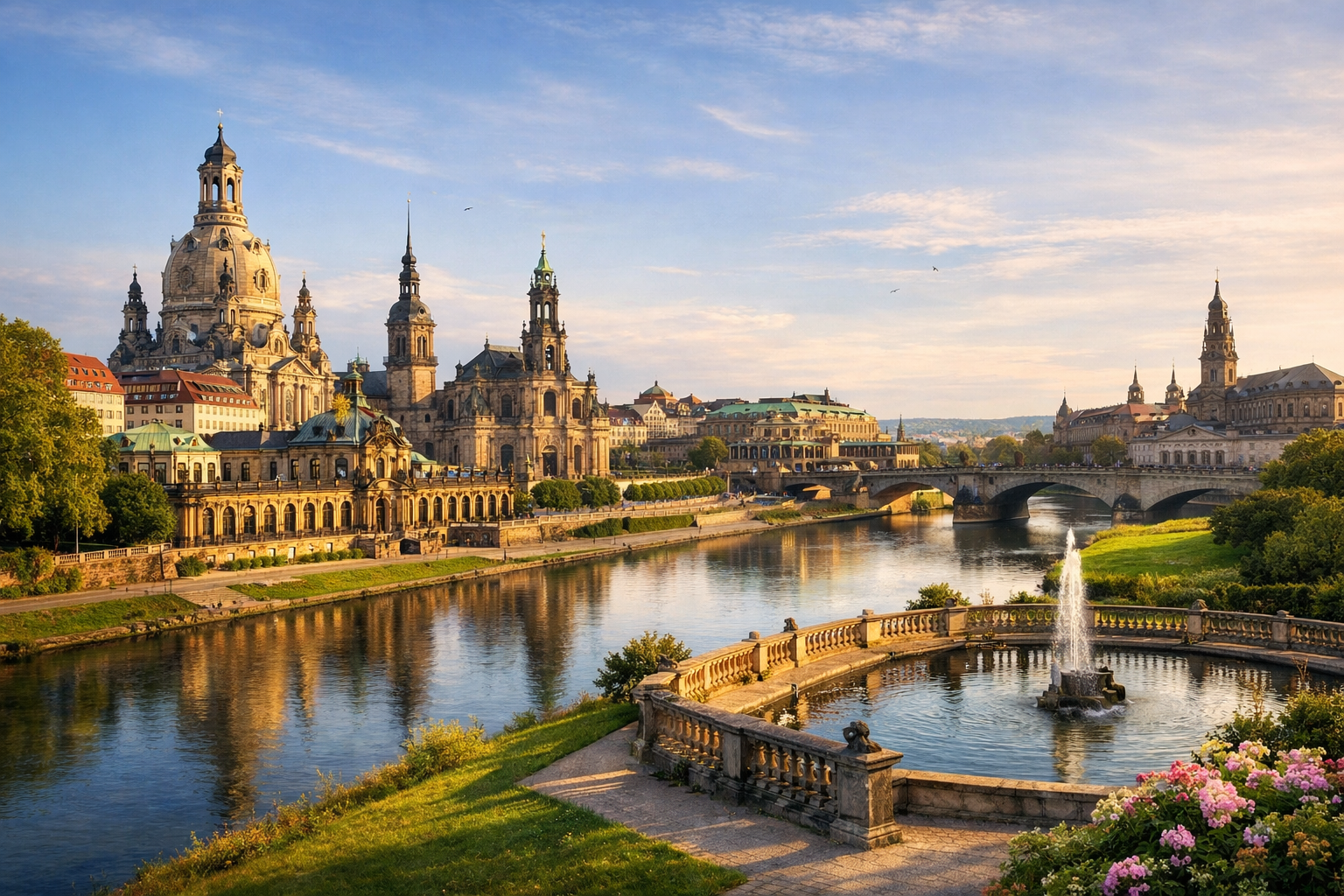
Dresden blends baroque grandeur with an easy riverside charm, from the Altstadt and the art treasures of the Zwinger to the sweeping views along Brühl’s Terrace. Cross into lively Neustadt for a different rhythm, then slow down beneath the trees of the Großer Garten.

🧭 DAY-BY-DAY ROUTE

Ready-made country and city routes with daily plans, sights, transport and accommodation. Buy PDF guides for independent travel.

🧭 DAY-BY-DAY ROUTE


Day 1 — Dresden: Baroque Altstadt and a first introduction to the city

  • 🚶 It’s best to devote the first day to easing into Dresden’s rhythm: start at Neumarkt and the Frauenkirche, where it is especially clear how the city brings together memory, reconstruction, and everyday life. From here, it is easy to walk to the Cathedral, the Residenzschloss, and Theaterplatz — a compact, very beautiful core of the Altstadt where almost every turn looks like a carefully staged theatrical set. Don’t try to cover all the museums on the first day: it is more important to catch Dresden’s visual language — pale stone, domes, arcades, palace facades, and a sense of baroque grandeur. Allow about 4–5 hours for a walk through the center with short stops, including a coffee break and some relaxed time in the square. In the evening, it’s lovely to head to the Elbe embankment and look at the old town from the water side: this is when Dresden is especially convincing — stately, soft, and almost musical.


Day 2 — Dresden: Zwinger and the Old Masters Gallery

  • 🎨 This day should be given over to the main artistic highlight of the trip — the Zwinger and the Gemäldegalerie Alte Meister. The Zwinger ensemble itself already works like a baroque performance in the open air: pavilions, galleries, the inner courtyard, the rhythm of arches, and garden geometry create the feeling of festive architecture conceived not simply for living, but for impression. Inside the Old Masters Gallery, don’t rush: it is better to choose 2–3 hours for thoughtful viewing than to pass quickly through the halls. After the museum, it’s worth taking a break for lunch or coffee right in the Theaterplatz area, then returning to the Zwinger as a walking space to see the facades again in the changing daylight. If you still have energy, you can add the Mathematisch-Physikalischer Salon or simply end the day with a long, unhurried walk through the inner courtyard and surroundings. The whole day is very realistic: 2.5–3 hours for the museum, 1–1.5 hours for the ensemble itself and photo stops, and about 1.5 hours for lunch and rest.

Day 3 — Dresden: Albertinum, Brühl’s Terrace, and the “city of art above the Elbe”

  • 🖼️ After the old masters classics, it makes sense to move to another layer of Dresden art — the Albertinum, where painting and sculpture from the 19th to 21st centuries change the tone of the route. Start the morning at Brühl’s Terrace: this famous “Balcony of Europe” is especially good as a transitional space between the city and the river, between museum Dresden and its panoramic, almost airy side. Then head to the Albertinum and plan at least 2–3 hours for the visit: the pace of perception here is different, more contemplative and modern. After the museum, don’t overload the day with too many stops — it is better to walk along the terrace, go down closer to the Elbe, take a calm break, and leave time for the beautiful evening light. If you like, you can add Kunsthalle im Lipsiusbau nearby if you want one more artistic accent, but only as an option. This is a day when pauses matter especially: the museum itself, the walk to it, and rest on the terrace create a full experience without haste.

Day 4 — Dresden: Residenzschloss, treasuries, and romantic Neustadt

  • 🏰 Dedicate the fourth day to palatial and collection-focused Dresden. The Residenzschloss is not just one museum in the usual sense, but an entire historical layer: ceremonial interiors, museum collections, treasuries, and a sense of the Saxon court as a complex world of displaying power, taste, and wealth. Allow at least 3 hours for the visit, and if you are interested in precious collections and interior details — better to make it the full 4. After such a dense museum block, it’s worth changing the rhythm and crossing the Elbe toward Neustadt: the atmosphere there is already less ceremonial, more lived-in and human. A good end to the day is the Kügelgenhaus, the museum of Dresden Romanticism, or simply a walk through the inner streets of Innere Neustadt with a long dinner. The contrast works beautifully: morning — courtly representation and museum concentration, evening — a more intimate, literary, and relaxed Dresden.

Day 5 — Dresden: Großer Garten, a museum breather, and a beautiful finale

  • 🌿 It’s best to make the final day softer and more spacious. After several days of baroque and museums, it is especially pleasant to retreat into Großer Garten — a large historic park where Dresden reveals itself no longer as a ceremonial capital of art, but as a very comfortable and green city for living. In the morning, you can combine a walk along the avenues with a visit to the Deutsches Hygiene-Museum if you want to add one more strong cultural stop without overloading yourself with classical painting. Then take a long pause in the park: what matters here is not the number of stops, but the air, the light, the paths, and the calm rhythm. If you want one more light museum accent, the Verkehrsmuseum near the Frauenkirche works well — it is convenient to leave it for the second half of the day because it does not require the same emotional intensity as the big art collections. End the trip with a sunset walk back to the Altstadt: the final views of domes, towers, and bridges beautifully gather the whole route into one impression — Dresden as a city of baroque, memory, and art.

Flight tickets

eSIM for travel

Buy PDF guide

Buy PDF guide — 10.71 USD

PDF — 10.71 USD