
Buy PDF guide

Buy PDF guide — 10.71 USD

PDF — 10.71 USD

Chicago — architecture, jazz clubs, and gastronomy

Chicago — architecture, jazz clubs, and gastronomy

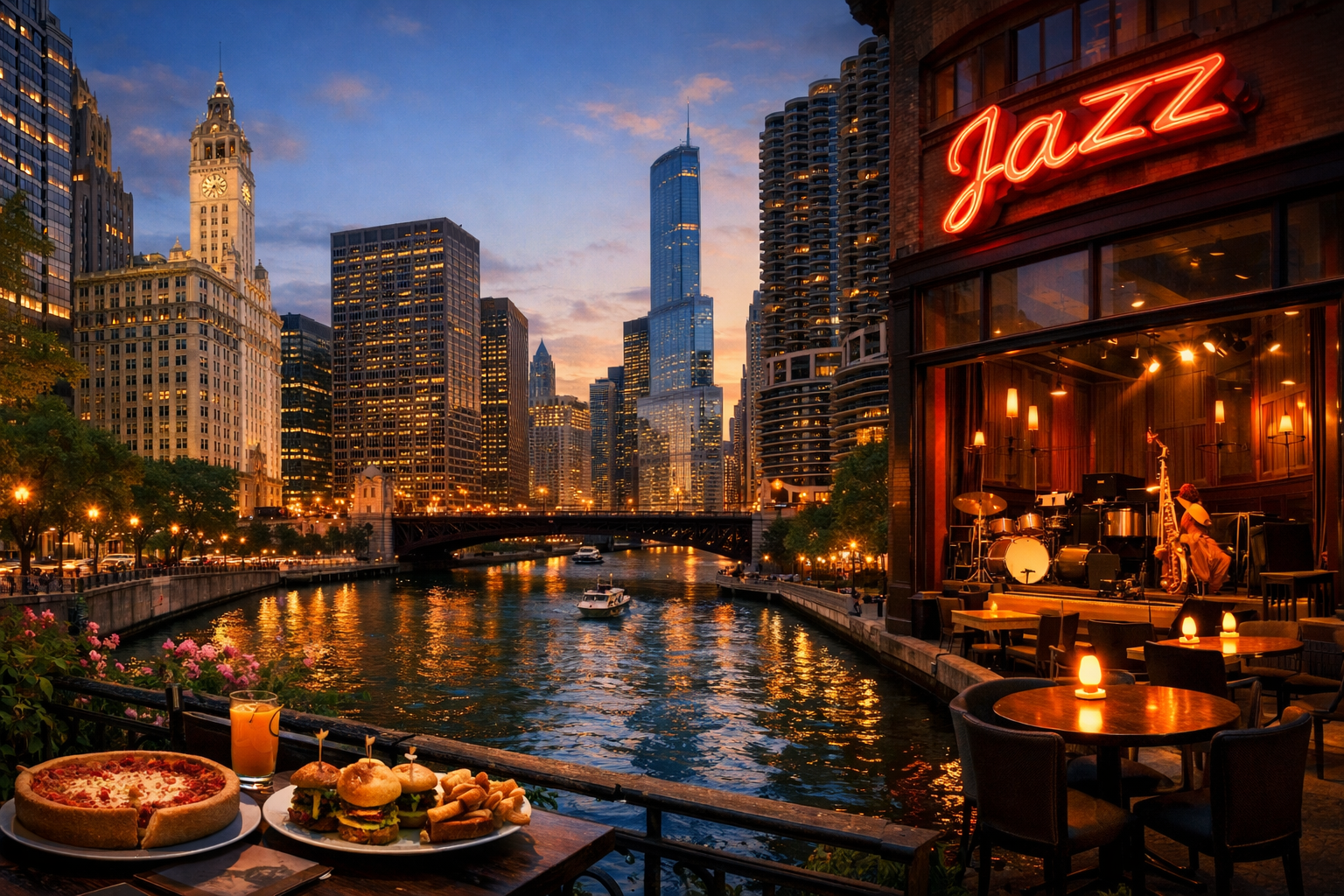
Chicago blends bold architecture, legendary jazz clubs, and a food scene that never stops surprising. Wander from the skyline canyons of the Loop through River North and Streeterville, then head north to Uptown and Lincoln Park for late-night music, lakefront air, and neighborhood charm.

🧭 DAY-BY-DAY ITINERARY

Ready-made country and city routes with daily plans, sights, transport and accommodation. Buy PDF guides for independent travel.

🧭 DAY-BY-DAY ITINERARY


Day 1 — Chicago: The Loop, Millennium Park, and the city's first architectural axis

  • 🚶 Start your trip with The Loop — the historic and visually most “Chicago” part of downtown, where the city immediately reveals itself as the capital of American architecture. In the morning, it’s convenient to walk from the Chicago Cultural Center to Millennium Park: here glass, steel, granite, and the urban landscape work together as a single stage. Be sure to linger at Cloud Gate and Jay Pritzker Pavilion — these are not just photo spots, but a vivid conversation about how Chicago turns public space into a modern urban backdrop. Then continue to the Art Institute of Chicago and the southern edge of the park: even if you are not planning a big museum day right now, the area itself gives a powerful sense of cultural density. After lunch, walk along Michigan Avenue and go deeper into the Loop blocks, where early high-rises, Chicago School-style facades, and the business rhythm of a major city all sit side by side. Build in breaks for coffee and rest throughout the day: with stops and sightseeing, the walking route will take about 6–8 hours, and transitions between key points in this part of downtown are usually 10–20 minutes. In the evening, make it a gentle culinary start: choose a classic steakhouse, a modern American restaurant, or your first local icon such as deep-dish pizza, but don’t overdo it — several full days still lie ahead.


Day 2 — Chicago: Chicago Riverwalk, River North, and architecture from the water

  • 🚶 Dedicate the second day to what brings many people to Chicago for the first time: architecture along the river and a skyscraper panorama that is best appreciated not only from the street, but from the water as well. In the morning, start at the Chicago Architecture Center on Wacker Drive, then walk along the Chicago Riverwalk — one of the most striking urban promenades in the United States, where towers quite literally rise above the river, and the bridges, terraces, and waterfront lines create the feeling of a cinematic city. The strongest move of the day is an architectural river cruise: the official Chicago Architecture Center tours aboard First Lady last about 90 minutes, and this is one of those rare cases when a tour truly changes your perception of the whole city. After the cruise, continue the route on foot through River North: it’s easy here to combine landmark buildings, short coffee stops, and lunch in an area where the food scene is especially strong — from classic Chicago steaks to more contemporary American cuisine. Walking stretches of 10–15 minutes are usually enough to get around the neighborhood, and if you want to reduce the effort, CTA and taxis make it easy to “hop” between points. It makes sense to finish the evening at one of the downtown jazz clubs, for example Andy’s Jazz Club, where it’s easy to combine dinner and live music: after the daytime architectural rigor, this reveals Chicago not as a museum of skyscrapers, but as a warm, lively, and deeply musical city.

Day 3 — Chicago: Streeterville, Magnificent Mile, contemporary art, and evening jazz

  • 🚶 This day is built around a more polished and lakeside side of Chicago — Streeterville and the Magnificent Mile, where the business power of downtown is softened by the proximity of the lake and cultural institutions. Start the morning with a walk along the northern part of Michigan Avenue, then head to the Museum of Contemporary Art Chicago: after the classics and the city’s historic urban fabric, a different layer of Chicago becomes clear here — more experimental, intellectual, and open to the new. After the museum, leave time for a leisurely lunch and a walk toward the water: Streeterville is especially pleasant because you can slow down here, take visual pauses, look at the scale of the city, and rest from the extremely dense program of the first and second days. If you want to add more architectural context, return to the river or walk part of the route across bridges and avenues, watching how the city skyline changes depending on the viewing angle. The walking load on this day can be lighter — about 5–6 hours with a long lunch and breaks. In the evening, choose more intimate jazz: Winter’s Jazz Club is well suited for a beautiful and composed end to the day, and if you want old school and club history, save your energy for a late trip to Uptown to Green Mill on one of the following evenings. For dinner, seafood restaurants, modern American cuisine, and good wine bars work especially well here — this is a day not about a tourist race, but about taste, rhythm, and urban comfort.

Day 4 — Chicago: Uptown, Green Mill, and the city's historic musical pulse

  • 🚶 After downtown and the grand views, it’s time to see a slightly more local and characterful side of Chicago. In the morning, you can start slowly and give yourself more rest: this day is best not overloaded with early wake-ups, especially if there was a late concert the night before. Around midday, head to Uptown — on the CTA Red Line, the ride from downtown usually takes about 25–35 minutes depending on your starting point, while taxi/rideshare most often takes around 20–30 minutes without heavy traffic. The neighborhood is great because Chicago feels not ceremonial here, but real: old theater facades, traces of its jazz heyday, and a rougher but very expressive urban fabric. During the day, you can stroll slowly along Broadway and the surrounding streets, pause for a late lunch, and avoid trying to “cover” too many locations. The main goal of the day is Green Mill, a legendary jazz club with an atmosphere that is sustained not by decor made for tourists, but by the city’s real musical memory. This is an evening best experienced slowly: arrive early, don’t rush, get a drink, and simply let the place open up. If you still have energy after the show, return downtown by taxi; at night, this option is usually more comfortable than a long trip with transfers. In culinary terms, the day can be built around neighborhood dining — small local restaurants where it’s nicer not to hurry and where the atmosphere works just as well as the cuisine.

Day 5 — Chicago: Lincoln Park, the city's history, and a calm culinary finale

  • 🚶 It’s best to make the final day more “airy” so you can gather your impressions without feeling rushed. Head to Lincoln Park — a neighborhood where Chicago becomes brighter, greener, and a little calmer. Here it’s easy to combine the Chicago History Museum with a walk through the park area: the museum helps assemble the city’s historical context, while Lincoln Park itself provides the necessary breathing space after several full days of architecture and music. This is a good moment to look back and see how everything comes together into a complete picture: the Great Fire, industrial growth, the birth of the skyscraper, the jazz scene, cultural institutions, and today’s culinary energy. After the museum, take a long walk without a strict schedule — toward the park paths, the lake, or cozy residential streets with cafés. Getting here from downtown usually takes 20–30 minutes by taxi or 25–40 minutes by public transport, depending on the exact starting point. In the evening, end the trip with a beautiful dinner: either classic Chicago cuisine presented more elegantly, or a contemporary restaurant with a local focus. The finale in Chicago is best built not around one more “must-do” box to tick, but around enjoyment of the city itself — strong, musical, architecturally bold, and at the same time very human in its details.

Flight tickets

eSIM for travel

Buy PDF guide

Buy PDF guide — 10.71 USD

PDF — 10.71 USD