
Buy PDF guide

Buy PDF guide — 25.71 USD

PDF — 25.71 USD

BUKOVINA / CHERNIVTSI

BUKOVINA / CHERNIVTSI

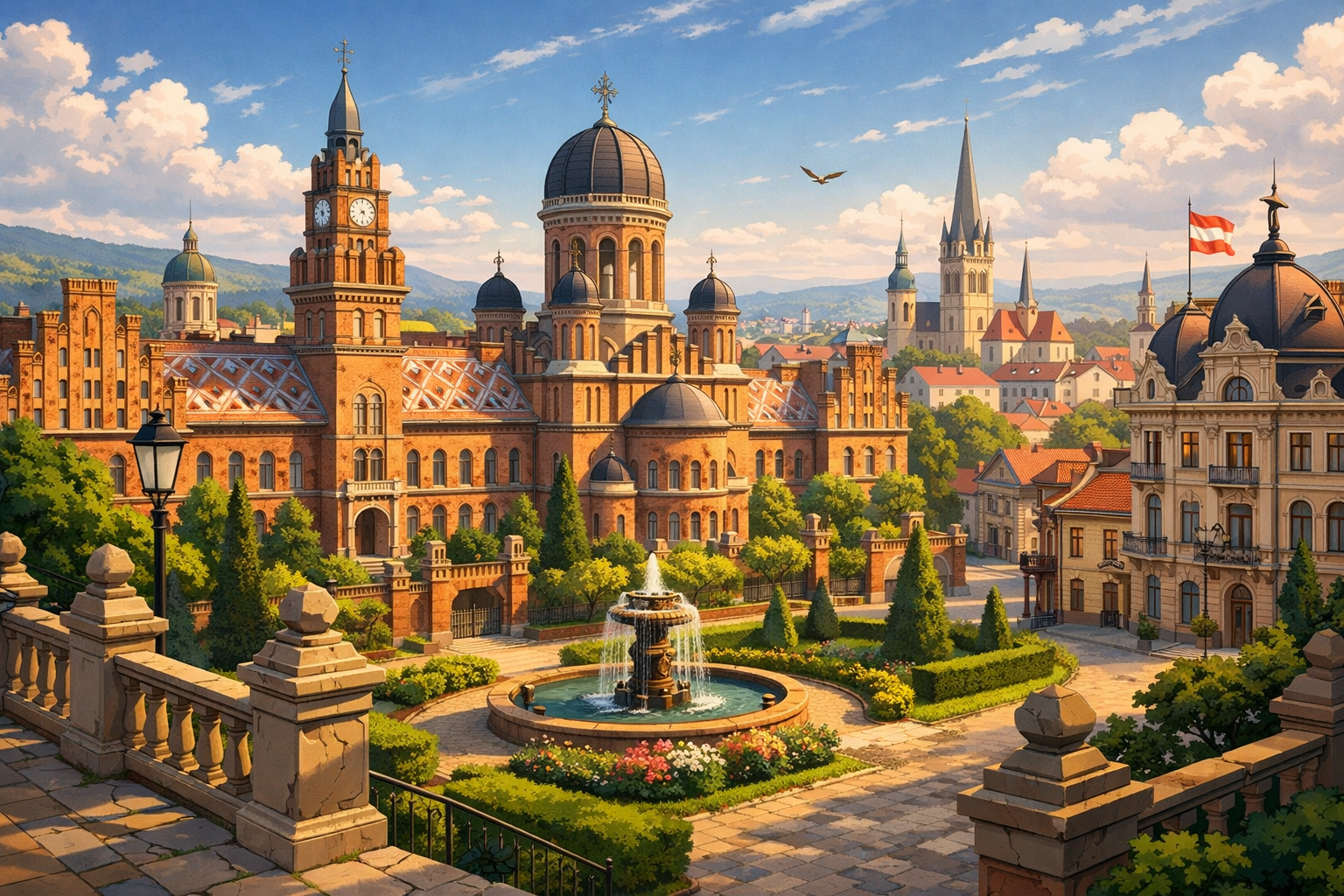
Discover Ukraine’s Bukovinian charm in Chernivtsi, where the UNESCO-listed Metropolitan Residence crowns an elegant Austro-Hungarian center and the Armenian Church resounds as the Organ Hall. Explore the Museums of Bukovina, then venture to the mighty Khotyn Fortress and the dramatic canyon and fortress of Kamianets-Podilskyi.

🧭 DAY-BY-DAY ITINERARY

Ready-made country and city routes with daily plans, sights, transport and accommodation. Buy PDF guides for independent travel.

🧭 DAY-BY-DAY ITINERARY


Day 1 — Arrival in Chernivtsi and “tuning your eye”: Kobylianska Street and Central Square

  • 🚆 Upon arrival — check in and take an easy walk along the pedestrian Olha Kobylianska Street (former Herrengasse): the paving underfoot glides between 19th–early 20th century facades, bay windows, and cast decoration in the spirit of the Vienna Secession. On Central Square, look at the Town Hall (1847) with its tower and trumpeter — the city’s “metronome.” Small cafés and pastry shops around the square are perfect for an unhurried evening after the road.


Day 2 — UNESCO: Residence of the Bukovinian and Dalmatian Metropolitans (CNU)

  • 🚶 The main site is the Residence ensemble (1864–1882) by architect Josef Hlávka, today a building of Chernivtsi National University. Read the ensemble like a “book”: the rhythm of the blocks, brick polychromy, ceramic roofs, transitions between courtyards. Must-sees: the ceremonial halls (Red/Marble), the Three Hierarchs Chapel, and the vista of the Grand Courtyard. The sequence matters: gate → ceremonial courtyard → Empire-style halls — this is how the narrative of power and ceremonial life works in stone.

Day 3 — CNU Botanical Garden + panoramas of the ensemble

  • 🚶 Morning — CNU Botanical Garden at 11 Fedkovycha St.: quiet alleys and collections of introduced species help your eye “cool down” after the ceremonial halls and see the logic of the landscape. The second half of the day — viewpoints of the Residence from the outside: brick ornamentation, cornices, and roof ceramics are especially expressive in raking light. In the evening — overview photos from the university gardens and neighboring streets.

Day 4 — The Austrian heart of the city: Central Square, Art Museum, theater

  • 🚶 Central Square and the Chernivtsi Regional Art Museum building (former Bukovinian Savings Bank, Secession style): stained glass, a mosaic floor, and the sculptural staircases give a “dense” feeling of Art Nouveau. Next — Theater Square and the building of the O. Kobylianska Music and Drama Theater (the Fellner & Helmer school): a classic example of the imperial repertoire for small-capital cities. Finale — courtyards and passages between the squares: here you can clearly see the “Viennese” approach to shaping ground floors and block edges.

Day 5 — Armenian Church (Organ Hall) and a “multilingual” sacred topography

  • 🚶 The Armenian Church of the Holy Apostles Peter and Paul at 28 Ukrainska St. is a late-19th-century European church with a Rieger-Kloss organ; the interior composition and acoustics create a rare experience of the “music of space.” Nearby are the Catholic Church of the Sacred Heart of Jesus (Neo-Gothic) and St. Nicholas Cathedral (“drunken domes”) — three different languages of faith and epochs within one urban relief.

Day 6 — Museums of Bukovina: local lore + Jewish heritage

  • 🚶 Local Lore Museum at 28 O. Kobylianska St.: archaeology, early icons, imperial halls, and chronicles of Bukovina (including the “Habsburg” chapter). Then — Museum of the History and Culture of Bukovinian Jews (Theater Sq., 5/1): documents, photos, and stories of a community that shaped the city’s culture before WWII. On the way — the Jewish National House building and traces of Art Nouveau in the department stores of nearby streets.

Day 7 — “The city as a set”: Kobylianska Street from door handles to cornices

  • 🚶 A detailed “material” walk: cast iron, brass, stucco decor, wrought-iron balconies, ceramics, pre-reform Cyrillic letters, and German inscriptions on signs. The goal is to notice how small elements create the “Viennese-ness” of Chernivtsi: the sculptural portals, lanterns, basement grilles. In the evening — a café with an Austrian pastry tradition.

Day 8 — Trip to Khotyn: medieval fortress above the Dniester

  • 🚌 Transfer Chernivtsi → Khotyn (~65 km, ≈ 1–1.5 h by car; bus ~1 h 20 m–2 h, depends on the service and checkpoints).

  • 🚶 Khotyn Fortress: powerful curtain walls from the 13th–15th centuries, bastions from later reconstructions, and a dramatic panorama of the Dniester canyon. Read the layout along the axis of the gate and courtyard, and track changes in building periods by masonry and embrasures. It’s best to return to Chernivtsi before dark — sunset views over the river are especially striking.

Day 9 — Kamianets-Podilskyi (day trip): the “island city” and defensive ensemble

  • 🚌 Transfer Chernivtsi → Kamianets-Podilskyi (~85–95 km; ≈ 1.5–2 h by car; buses run frequently, 1 h 45 m–2 h 30 m by schedule).

  • 🚶 The Old Castle and the “Turkish Bridge”: a rare example where the terrain dictates the city plan. Focus on towers of different eras, gates, and the bastion line; compare solutions with Khotyn — the evolution of fortification in Upper Podillia becomes clearer. In the evening — return to Chernivtsi.

Day 10 — “A living city”: philharmonic hall, courtyards, Art Nouveau and Secession

  • 🚶 A day for unhurried discoveries: the philharmonic building, courtyards between Universytetska and Holovna, facades with tiles and geometric ornaments, entrances with cast wrought iron. A good angle on the “ship house” and corner bay windows — closer to Independence Avenue. In the evening — an organ concert (per the playbill) at the Armenian Church.

Day 11 — Bukovina beyond the city: wooden churches and ethno-landscape

  • 🚗 A short radial trip along the Prut and Cheremosh valleys (depending on weather and circumstances): panoramic fields, rural churches from the late 19th–early 20th centuries, shingle patterns and “Hutsul” motifs. City alternative — the Skansen (museum of folk architecture and life): 30+ log buildings, farm structures, and the “life” of a traditional homestead.

Day 12 — Finale in Chernivtsi: museum “assembly points” and a farewell promenade

  • 🚶 Return to your favorite spots: the town hall square at dawn, and once more — the Residence ensemble from exterior viewpoints. Put the trip’s line together: medieval fortresses → imperial urbanism → the UNESCO university ensemble. Time for buying books and local publications about Bukovina — the best souvenirs for an architectural tour.

Flight tickets

eSIM for travel

Buy PDF guide

Buy PDF guide — 25.71 USD

PDF — 25.71 USD