
Buy PDF guide

Buy PDF guide — 4.28 USD

PDF — 4.28 USD

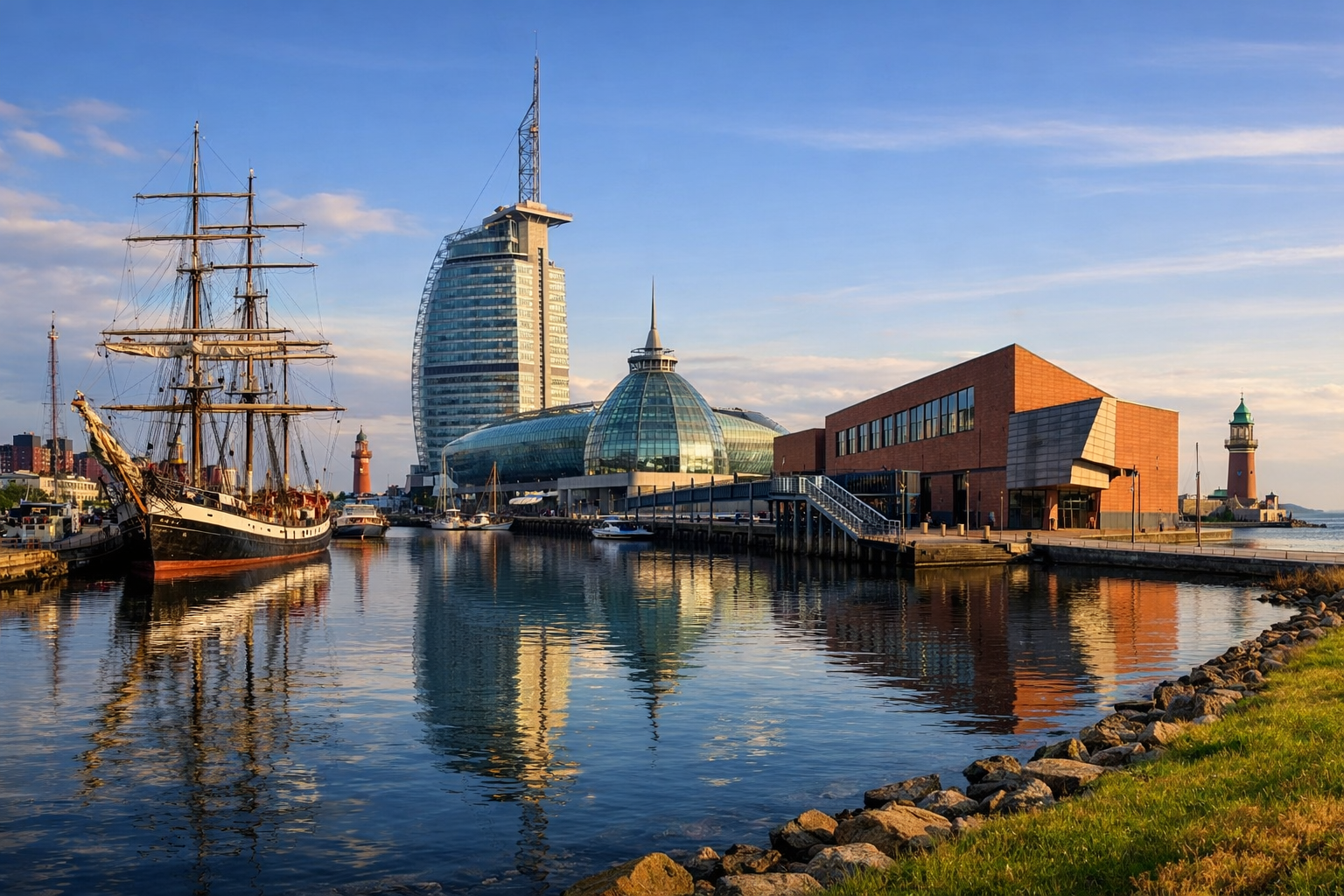
Bremerhaven port ships and the German Emigration Museum

Bremerhaven port ships and the German Emigration Museum

Bremerhaven brings Germany’s seafaring history to life with busy docks, towering ships, and a fresh North Sea atmosphere. At the German Emigration Center, personal stories of departure and hope turn the city’s port heritage into something deeply human.

🧭 DAY-BY-DAY ROUTE

Ready-made country and city routes with daily plans, sights, transport and accommodation. Buy PDF guides for independent travel.

🧭 DAY-BY-DAY ROUTE


Day 1 — Bremerhaven: Havenwelten, the port, and the German Emigration Center

  • 🚆 Transfer: Bremen → Bremerhaven by regional train takes about 35–45 minutes; from Bremerhaven central station it’s convenient to continue by city bus to the Havenwelten area, about 10 minutes, or by taxi in 5–10 minutes. If you arrive at Bremen Airport, first allow about 15 minutes on tram line 6 to Bremen Hauptbahnhof, then change to a train toward Bremerhaven.

  • 🚶 The first day is best devoted to the city’s most striking and cohesive district — Havenwelten, where Bremerhaven reveals itself as a northern port with modern architecture, wind from the Weser, quays, museum facades, and broad waterfront promenades. What makes this area especially pleasant is that the route here works almost without rushing: the main sights are close to one another, and the walk itself is built not only around museums, but around atmosphere. Along the water’s edge you’ll see marinas, excursion boats, museum buildings, and the silhouettes of port infrastructure, while the maritime scale of the city is constantly felt nearby — a city that for centuries lived through shipping, emigration, fishing, and world trade. Start slowly: head to the waterfront, walk along the New Harbor, look at the moored vessels, pause for coffee, and simply let your eyes adjust to this northern setting where glass, steel, and water combine with a very powerful historical memory.

  • 🏛️ The main stop of the day is the German Emigration Center, Deutsches Auswandererhaus, at Columbusstraße 65, 27568 Bremerhaven. It is one of the region’s strongest and most emotional museums, and it truly deserves no less than 3–4 hours without trying to “rush through” it. The museum is devoted to the stories of people who left from here for the New World in the 19th and 20th centuries, as well as to the broader themes of emigration and immigration. The most valuable thing here is not just documents and display cases, but the carefully staged dramaturgy of the space: the visitor literally follows the path of a person leaving their homeland, passing through the port, waiting, inspection, boarding, the ocean crossing, and arrival in a new country. The exhibition is built around real biographies, so the impression feels deeply personal: numbers and dates suddenly become destinies, family separations, hope, fear, and determination. The place creates a rare effect — it is at once historical, human, and very modern in the way it presents the material.

  • 🌊 After the museum, give yourself a break to rest by the water for at least 45–60 minutes. This is a good moment for lunch in the Havenwelten area or for a quiet walk around the harbor without a packed program. Bremerhaven is best experienced not at a “check-the-sight-off-the-list” pace, but through the rhythm of a northern port city: seagulls, wind, little bridges, reflections of ships in the water, austere facades, and the distant line of the Weser. Toward evening, head up to the district’s waterfront viewpoints or simply walk along the promenade toward ATLANTIC Hotel Sail City and the surrounding area — it is especially beautiful here during golden hour, when the glass surfaces start catching the sunset light and the whole Havenwelten ensemble looks almost cinematic.

  • 🚶 If you still have energy, end the day with a short walk past Klimahaus and the outdoor port spaces. Even without adding a second major museum, the evening route here is very rewarding: light on the water, yachts in the marina, the silhouette of the Sail City tower, bridges, and passersby create that distinctly North German urban landscape that makes this place worth visiting for at least two days. Spending the night in one of the Havenwelten hotels makes perfect sense, so the next day you can continue on foot without wasting energy on extra transfers.


Day 2 — Bremerhaven: ships, the maritime museum, waterfronts, and the old fishing harbor

  • 🚶 Start the second day calmly, without an early departure: after the intense emigration museum, it’s better to switch to the city’s maritime theme. The starting point is Deutsches Schifffahrtsmuseum, the German Maritime Museum, at Hans-Scharoun-Platz 1, 27568 Bremerhaven. This museum complements the previous day especially well because it shifts the focus away from the personal destinies of migrants and toward maritime civilization itself, without which Bremerhaven is impossible to understand. Here the history of shipping, trade and exploration routes, technology, maritime science, and shipbuilding unfolds. Even for travelers who do not usually see themselves as “museum people,” the place often works thanks to the scale of the subject: the sea is read here as a force that shaped the economy, the map of the world, and the way of life of entire generations.

  • ⛴️ After the museum, be sure to set aside time for a walk among the port locations and ships in the open air. One of Bremerhaven’s strengths is that the urban environment itself works as an extension of the museum experience: harbors, quays, historic vessels, modern marinas, and promenade deck views come together into a living stage set of a maritime city. Don’t rush — it is sensible to allow at least 3 hours for the combination of “museum + harbor walk + photos + coffee break.” Visually, this is one of the strongest sections of the entire route: metal structures, lines of masts, wooden deck details, the smell of water and salty wind, passing ships, and a wide sky create a rare sense of openness that many European cities lack.

  • 🐧 From here, you can continue to Zoo am Meer at H.-H.-Meier-Straße 7, 27568 Bremerhaven, or choose a calmer city rhythm and limit yourself to a long walk along the water. The seaside zoo is interesting above all for its location and northern theme: it is very well integrated into the coastal landscape, and a walk here feels not like a classic large zoo, but like a compact maritime addition to a day on the waterfront. If you want more urban history, an alternative is Historisches Museum Bremerhaven at An der Geeste, 27570 Bremerhaven — it is easy to reach by bus in about 10–15 minutes or by taxi in around 10 minutes.

  • 🍽️ In the second half of the day, it is worth heading to the Fischereihafen district — the old fishing harbor, which adds another, less polished but very authentic side of Bremerhaven to the route. From Havenwelten, it is sensible to allow around 15–20 minutes by taxi or approximately 25–35 minutes including waiting time and the bus ride. Here the atmosphere becomes less museum-like and more working-port in character: warehouses, waterfronts, old industrial motifs, maritime gastronomy, and the feeling of a real city rather than only a tourist zone. This is an ideal place for the final dinner: it is here that trying fish and seafood feels especially fitting, and finishing the route not in a rush but with a long pause for food and rest.

  • 🌆 End the trip with a sunset walk by the water or a return to Havenwelten if you want to see the evening port once more. Over two days, Bremerhaven opens up in a very complete way: on the first day through the human stories of emigration and the museum’s powerful emotional presentation, on the second through ships, maritime culture, port views, and the rougher, more genuine texture of a northern city. This pace remains realistic: no frantic dashes, with enough time for transport, rest, lunch, and immersion in each key location.

Flight tickets

eSIM for travel

Buy PDF guide

Buy PDF guide — 4.28 USD

PDF — 4.28 USD