
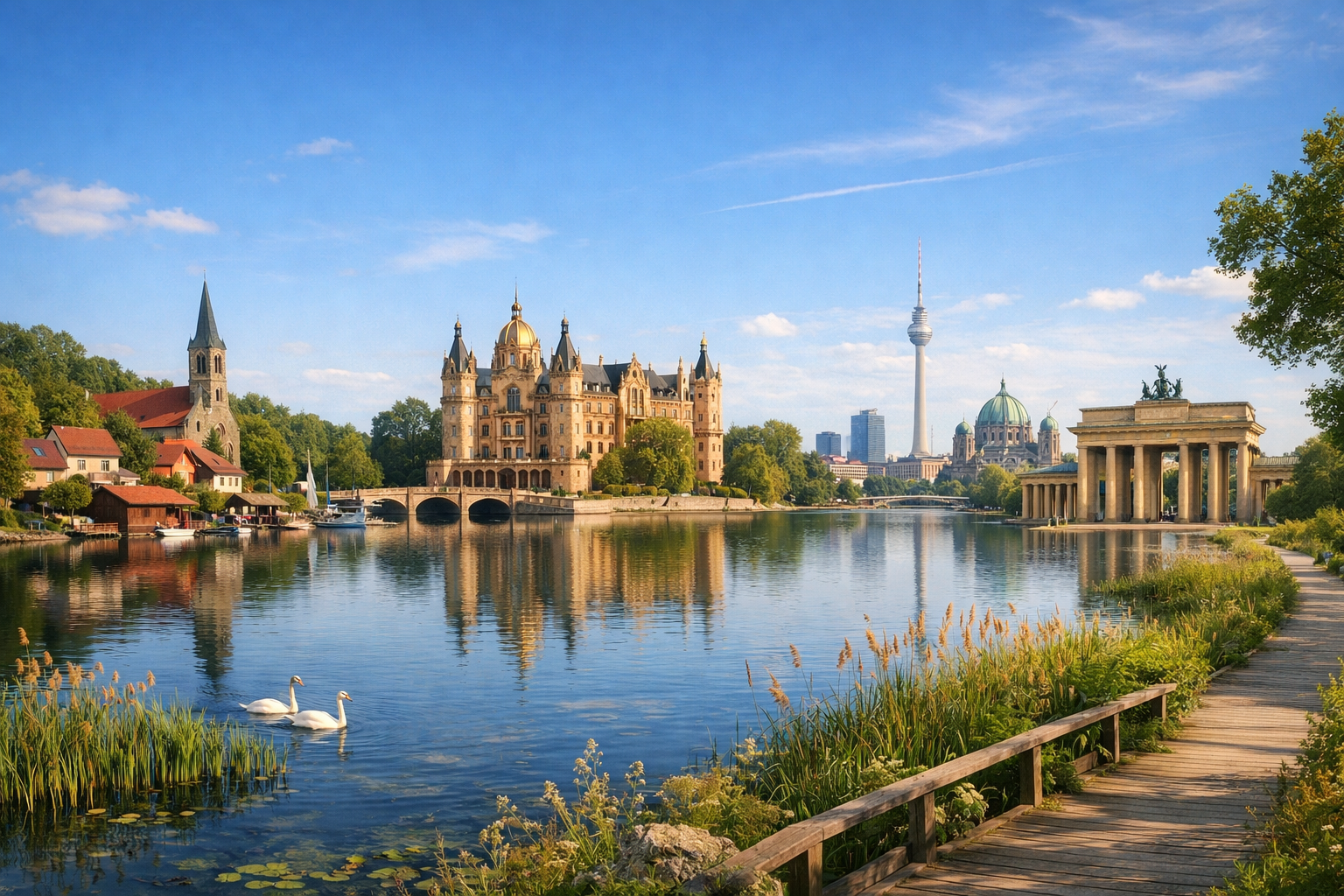
Day 1 — Potsdam: Sanssouci, New Palace, and the historic center
🚆 Transfer: Berlin Hbf → Potsdam Hbf by regional train RE1 — about 25–30 minutes. From Potsdam station to the entrances of Sanssouci Park, it’s usually worth allowing another 10–15 minutes by tram/bus or a short taxi ride. This is one of those routes where there’s no need to rush: the logistics are simple, and the day itself is best built around a long walk with breaks for coffee and views.
🚶 Sanssouci Park is not just a park area, but an entire theatrical world of the Prussian monarchy, where architecture, terraces, vineyard slopes, fountains, and axial vistas come together into an almost cinematic setting. Here you especially feel how Potsdam lived by the idea of a “royal summer retreat”: not heavy capital-city pomp, but elegant leisure among gardens, pavilions, and walking alleys. Sanssouci Palace itself is intimate, rococo, almost private compared with Europe’s grand residences, and that is exactly its charm. It doesn’t overwhelm with scale; instead, it invites you to slow down, look at the line of terraces, the green cascades, the city in the distance, and the gentle rhythm of the park, which seems made for unhurried travel.
🚶 Continue the day toward the New Palace. The contrast between Sanssouci and the New Palace is one of the most beautiful dramas of this route: if Sanssouci feels like a personal refuge, the New Palace is openly ceremonial and majestic. This is the language of status, power, and representation. Along the way, it’s convenient to allow 2.5–3.5 hours for a walk through the park with stops, photos, short rests on benches, and possibly a visit to one or two interiors with tickets. In the warm season, a free shuttle runs inside the park between Grünes Gitter and the New Palace, which is especially convenient if you don’t want to walk the whole stretch back on foot.
🚶 After the palace-and-park part, return to Potsdam’s historic center and leave the evening for the Alter Markt area and the Dutch Quarter. In the center, Potsdam surprises not only with its stately architecture, but also with an almost Mediterranean feeling of space: light facades, open squares, towers, domes, reflections in the water, and a more relaxed rhythm than in Berlin. The Dutch Quarter is especially lovely in the evening, when the brick houses turn warm terracotta, the streets fill with the soft light of shop windows, and the walk becomes a beautiful finale to the first day. For this evening, it makes sense to allow another 2–3 hours without a rigid plan: it’s pleasant here simply to wander, have dinner, and absorb the atmosphere.