
Buy PDF guide

Buy PDF guide — 29.99 USD

PDF — 29.99 USD

BULGARIA

BULGARIA

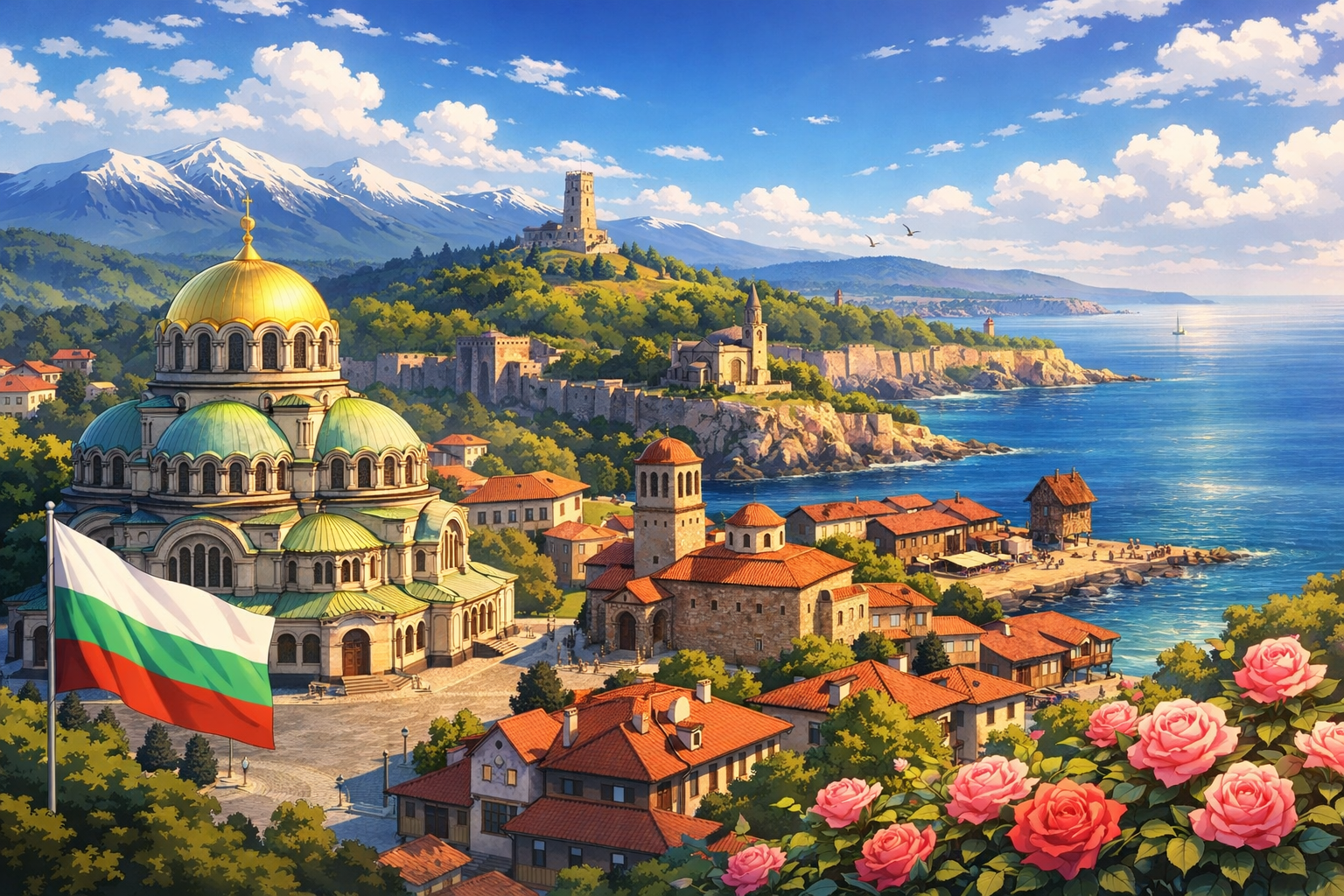
From Sofia’s lively boulevards to Plovdiv’s Roman theater, Bulgaria blends deep history with modern verve. Explore Veliko Tarnovo’s fortress-crowned hills, then head east to Varna’s beaches and the cobbled lanes of Nessebar on the Black Sea.

🧭 DAY-BY-DAY ITINERARY

Ready-made country and city routes with daily plans, sights, transport and accommodation. Buy PDF guides for independent travel.

🧭 DAY-BY-DAY ITINERARY


Day 1 — Sofia: the historic heart and Alexander Nevsky Cathedral

  • 🚶 Start with the bright square by the Cathedral of St. Alexander Nevsky—white stone, golden domes, and the ringing of bells create a sense of space and calm right in the center of the capital. Walk along the “yellow cobblestones” of Tsar Osvoboditel Boulevard to the monument to the Tsar Liberator, and stop by the National Gallery “Kvadrat 500” (nearby, behind the cathedral)—inside, in spacious halls, Bulgarian art sits alongside galleries from Europe, Asia, and Africa. On the way you’ll notice stone façades, arcades, and cafés with terraces—Sofia is easy to read on foot: wide avenues, low-rise buildings, lots of greenery. In the evening—dinner around Graf Ignatiev Street, then a stroll to the Ivan Vazov National Theatre and the city garden: the stage in the classical building is softly lit, street musicians play nearby, and the air smells of warm banitsa pastry.


Day 2 — Sofia: archaeology, mineral baths, and Borisova Gradina

  • 🚶 In the morning—the National Archaeological Museum in a former Ottoman madrasa: Thracian gold, ancient gravestones, Byzantine reliefs—a quick cross-section of the Balkans. Then—the Sofia History Museum in the building of the Central Mineral Baths: display cases with costumes, a plan of the old city, tram cars, and halls about royal dynasties. After that—a leisurely walk along the city’s most beloved park axis: Borisova Gradina. Poplar alleys, Ariana Lake, stadiums, and bike paths—an ideal spot before dinner. If you still have energy—drop by the Museum of Socialist Art: a sculpture park with monumental works from the era, the red star from the Party House, and a hall of posters—an intriguing look at the 20th century.

Day 3 — Sofia → Rila Monastery (a day trip to the mountains)

  • 🚐 It’s convenient to get there by shuttle/tour (≈1h45–2h one way) or by direct bus from the “Ovcha Kupel” bus station (departure around 10:20, arrival ~13:00; return trip ~15:00). Time on site is about 2 hours: enough to walk around the black-and-white striped arcades, 17th–19th century frescoes, the tall Hrelyo Tower, and the little river bridges. Rila Monastery is the heart of Orthodox Bulgaria in the Rila Mountains: the air is resinous and crisp, and the walls are a painted textbook of biblical scenes. Return to Sofia by evening.

Day 4 — Sofia: Boyana and Vitosha

  • 🚶 Morning—Boyana Church (UNESCO): a tiny stone church hiding in a garden at the foot of Vitosha preserves frescoes from 1259—lifelike faces of saints, princes, and donors. A couple of blocks away is the National History Museum with panoramic windows toward the mountain and collections from the Neolithic to the 19th century (the Panagyurishte gold, ethnography, antique costumes). In the afternoon—a light hike on the lower trails of Vitosha (to Boyana Waterfall, if the weather allows). In the evening—dinner in the Lozenets neighborhood or along Vitosha Boulevard.

Day 5 — Transfer: Sofia → Plovdiv and getting to know Kapana

  • 🚆 Transfer: Sofia → Plovdiv. BDZ train: ~2h35–3h (several direct services a day); bus ~2–2h30. After arrival—check in and walk around the Kapana district: street art, craft shops, coffee places, and wine bars; in the evening—a first look at the Old Town, where cobblestone streets cascade down the hillside.

Day 6 — Plovdiv: the Old Town, the Roman theatre, and the Bishop’s Basilica

  • 🚶 Plovdiv is the “city of seven hills,” where antiquity lives within the fabric of the modern city. In the morning, visit the Ancient Theatre of Philippopolis—one of the best-preserved stages of the Roman Empire, still hosting open-air concerts. Walk down to the eastern sector of the Roman Stadium on the pedestrian Knyaz Alexander I Street—under glass you can see the steps and arches of the stands. In the afternoon—the Bishop’s Basilica of Philippopolis: a new museum built over the excavation with two layers of mosaics—birds, geometry, and shimmering stone, assembled in a huge bright pavilion. In the evening—Tsar Simeon’s Garden and the “Singing Fountains”: on summer evenings there are light-and-music shows.

Day 7 — From Plovdiv: Bachkovo Monastery and Asen’s Fortress

  • 🚌 Morning—Bachkovo Monastery (11th century): galleries, a refectory with paintings, a wonder-working icon of the Virgin Mary; stalls selling honey and baklava along the alley. Then—Asen’s Fortress, soaring on a cliff above Asenovgrad: the Church of the Mother of God, views of the valley and the Rhodope switchbacks. Logistics are simple: from Plovdiv, take a bus to Asenovgrad/Bachkovo (frequent services), then a 10–15 minute taxi ride to the fortress or a short uphill walk from the parking lot. Return to Plovdiv by evening.

Day 8 — Transfer: Plovdiv → Veliko Tarnovo and sunset at Tsarevets

  • 🚌 Transfer: Plovdiv → Veliko Tarnovo by bus ~3–4 hours (2–4 departures a day via Gabrovo/Stara Zagora with Etap/Union Ivkoni/Global Biomet). In the evening—walk to the viewpoints by Tsarevets Fortress: stone walls, battlements, and the palace hill glow at sunset, and the loop of the Yantra River embraces the old town.

Day 9 — Veliko Tarnovo: Tsarevets Fortress and “Tsarevgrad Tarnov”

  • 🚶 A full day for the medieval capital of the Second Bulgarian Empire. Start with Tsarevets: gates, towers, the ruins of the royal palace, the Cathedral of the Holy Mother of God with modern frescoes—walking the bastions and paths takes 2–3 hours. Then—the Multimedia Visitor Centre “Tsarevgrad Tarnov” (sometimes called a “wax museum”): inside are coronation scenes, craft workshops, and episodes of sieges; the “living history” format works great for both adults and children. In the evening, stop by Samovodska Charshiya—the crafts street with coffee shops and little stores.

Day 10 — Nearby: Arbanasi and the Church of the “Forty Martyrs”

  • 🚶 In the morning—the museum village of Arbanasi on the plateau above Tarnovo: stone manor houses, garden courtyards, domed churches with frescoes; the Konstantsaliev House and the churches of Archangels Michael and Gabriel capture the spirit of a wealthy 17th-century Balkan village. After lunch—return to the city and visit the Church of the “Holy Forty Martyrs” at the foot of the hill: columns with ancient inscriptions of the Asen dynasty rulers, commemorative events in Bulgarian history—a place of strength and memory.

Day 11 — Transfer: Veliko Tarnovo → Varna. The Sea Garden and sunset on the promenade

  • 🚌 Bus transfer ~3–3h30 to Varna (frequent direct services by Global Biomet/Etap). Check in, then head to the large Sea Garden: shady alleys above the shore, arcade entrances, views of the port and the beach promenade. Varna breathes the sea: salty air, seagulls, yachts, and cozy cafés along Primorski Boulevard.

Day 12 — Varna: the Archaeological Museum and the beach/Aladzha

  • 🚶 Morning — Archaeological Museum: “The Gold of Varna” (a world-famous treasure from the 5th millennium BCE), ancient sarcophagi and mosaics — a must. Afternoon — the beach, a stroll along the seaside promenade, or a trip to the rock-hewn Aladzha Monastery (≈12–17 km north, in the Golden Sands Nature Park): cells carved into a karst cliff, forest and silence. Evening — fresh fish in a tavern with a view of the bay.

Day 13 — Transfer: Varna → Nessebar and the Old Town (UNESCO)

  • 🚌 Transfer: Varna → Nessebar by bus ~1h30–2h (there are direct services and frequent buses to Sunny Beach with a transfer in Nessebar). Old Nessebar is stone streets on a narrow peninsula, sea on both sides, the ruins of the ancient Basilica of Eleusa and dozens of medieval churches with brick-and-stone ornamentation. Be sure to stop by the Archaeological Museum and the remains of the fortress walls at the entrance to the causeway. Watch the sunset from the western waterfront — the sun sinks behind the mainland, and boats bob at the pier.

Day 14 — Nessebar: warm sea, churches, lanes. Evening — transfer to Sofia

  • 🚶 Morning — free time: beach and swimming or a walk through the old quarters (Church of Christ Pantokrator and St. John Aliturgetos, lanes with black-timber houses). Afternoon — tasting Black Sea wines and seafood. Evening — depart for Sofia by direct bus (~6–6h40) or transfer to Burgas and a fast BDZ train to Sofia (~5h55–6h20).

Flight tickets

eSIM for travel

Buy PDF guide

Buy PDF guide — 29.99 USD

PDF — 29.99 USD