
Buy PDF guide

Buy PDF guide — 6.43 USD

PDF — 6.43 USD

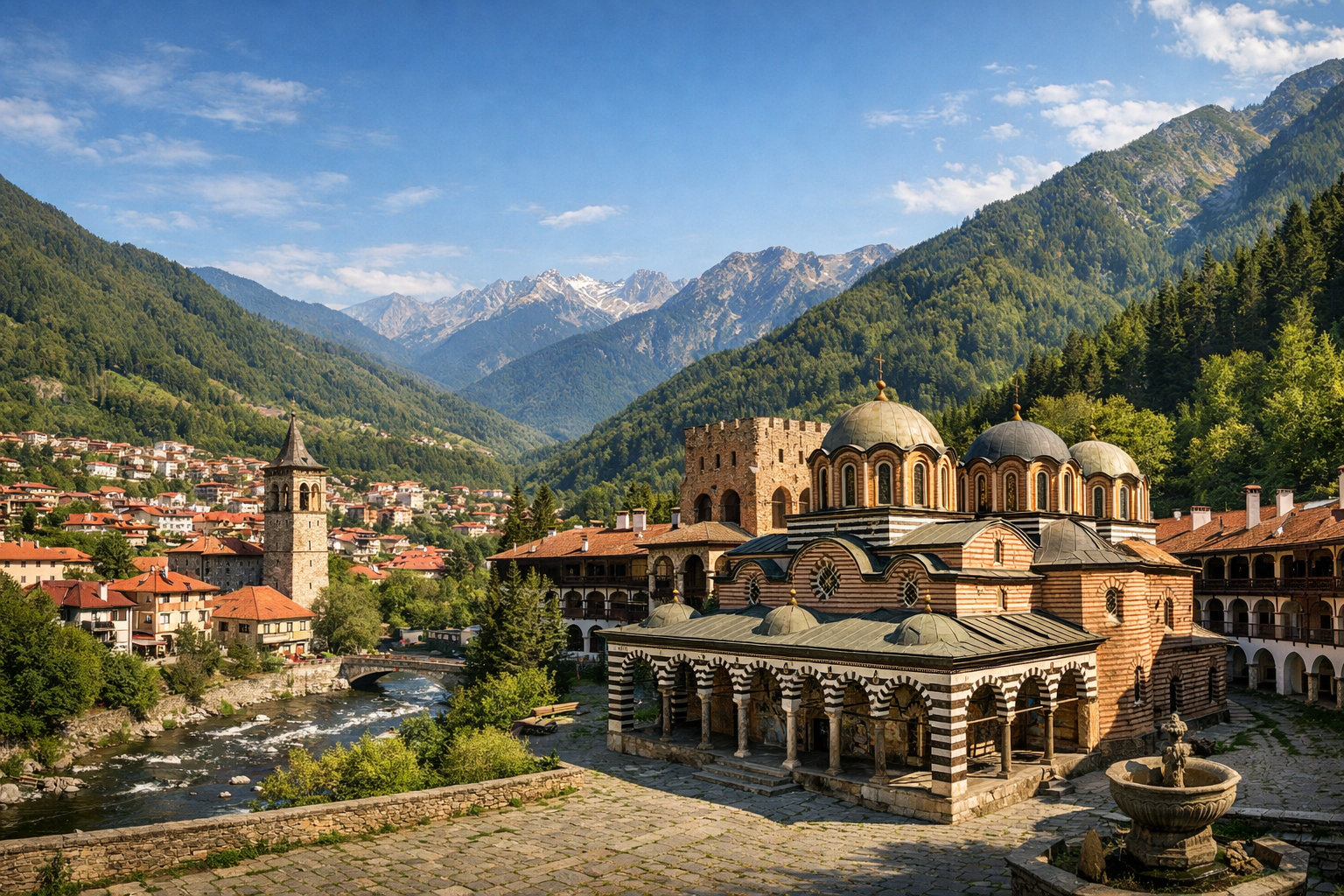
Blagoevgrad - Rila Monastery city mountains and shrine

Blagoevgrad - Rila Monastery city mountains and shrine

Blagoevgrad is the perfect gateway to one of Bulgaria’s most iconic treasures, the stunning Rila Monastery. Surrounded by dramatic mountain scenery and timeless shrines, this region blends spiritual heritage with fresh alpine beauty.

🧭 DAY-BY-DAY ROUTE

Ready-made country and city routes with daily plans, sights, transport and accommodation. Buy PDF guides for independent travel.

🧭 DAY-BY-DAY ROUTE


Day 1 — Blagoevgrad: Varosha, the center, and a calm city rhythm

  • 🚆 If you fly into Sofia, the logical base for this short route is Blagoevgrad itself. From Sofia, it’s convenient to get here by intercity bus or rental car; the trip usually takes about 1 hr 40 min to 2 hr 10 min depending on traffic and your exact starting point. That makes the city an excellent starting point for a 3-day route without exhausting transfers.

  • 🚶 Blagoevgrad is one of the most pleasant cities in southwestern Bulgaria for slow travel: it’s not overloaded with tourists, yet it combines a lively urban atmosphere, old quarters, a university vibe, and proximity to the mountains. The best first day here is not to try to “see everything,” but to ease into the rhythm of the place with a walk through the center and the Varosha quarter. Varosha is the historic heart of the city, where modern streets gradually give way to quieter lanes, stone houses, old facades, and that soft Balkan texture in which you can feel the Ottoman period, the Bulgarian National Revival, and the local southern unhurried pace. It is especially nice to walk here without rushing: looking at the details of window frames, wooden balconies, staircases, flowers in the courtyards, and occasional views of the surrounding slopes.

  • 🏛️ It’s definitely worth visiting the Regional Historical Museum of Blagoevgrad. This is not just a “box-ticking museum,” but an important place that brings together the archaeology, ethnography, history, and natural context of the whole region. After it, the city feels much deeper: you no longer see just a charming Bulgarian center, but a territory through which ancient roads, cultures, religious influences, and trade connections once passed. If you have time left, add the City Art Gallery or a walk along the entrance to old Varosha — this kind of day works best as a gentle introduction.

  • 🌆 It’s best to leave the evening for the center of Blagoevgrad: cafés, a light dinner, a walk along the pedestrian streets, and a calm night’s sleep before an early departure to Rila Monastery. For a comfortable pace, don’t overload the program — tomorrow will be the main spiritual and visual highlight of the whole trip.


Day 2 — Rila Monastery: shrine, museum, and the road into the heart of Rila

  • 🚗 Transfer: Blagoevgrad → Rila Monastery — about 40 km and usually around 50–60 minutes by car. By public transport, the trip is longer and less flexible: most often it means an early bus toward the town of Rila and then a connection/local transfer, so for a short 3-day route it’s more practical to plan for a taxi, transfer, or car.

  • 🚶 Rila Monastery is the place many people come to this part of Bulgaria for in the first place, and quite rightly so. It lies deep in the valley of the Rilska River, among forests and mountain slopes, so the road itself already works as emotional preparation: the urban environment dissolves, the asphalt disappears into greenery, the air becomes cooler, and the landscape gradually takes on an almost pilgrim-like sense of focus. When the monastery appears after the bends in the road, the impression is always stronger than expected: within a severe mountain frame, a powerful architectural ensemble suddenly appears with arcades, striped facades, an inner courtyard, and a church that looks solemn, picturesque, and surprisingly harmonious all at once.

  • ⛪ Founded in the 10th century by Saint Ivan of Rila, the monastery became one of Bulgaria’s main spiritual symbols and a place where the country’s history is felt not in dry dates, but almost physically. Here it’s important not just to walk quickly through the courtyard and take photos, but to give yourself time to contemplate. The inner courtyard, the arcades of the residential buildings, Hrelyo’s Tower, the rhythm of the galleries, dark wooden details, mountain air, and the ringing of bells create a very special atmosphere — strict and warm at the same time. Even with many visitors, the monastery amazingly preserves a sense of inner silence.

  • 🕍 The monastery museums deserve special attention. This is where the second depth of the place is revealed: manuscripts, church utensils, objects of monastic daily life, and famous masterpieces of religious art turn the visit from a beautiful excursion into a real immersion in Bulgaria’s cultural memory. If you love details, allow at least 1–1.5 hours for the museum. After that, it’s good to pause for coffee or a simple lunch near the monastery, and then walk through the courtyard once more without rushing — after the museum, the space begins to “speak” in a completely different way.

  • 🥾 If you have the energy and the weather is good, you can add a short nature accent: a small drive or walk toward the mountain part of the valley, without turning the day into a full trekking trip. For a three-day route, it is more important to keep the balance than to try to go too far. In the evening, return to Blagoevgrad the same way; for the return trip, it is again sensible to allow about an hour plus extra time for stops and rest.

Day 3 — Blagoevgrad and the mountains: Bachinovo, the Water Museum, and a gentle finale

  • 🚶 The final day is best devoted to the natural side of Blagoevgrad, so the route ends not in the rhythm of “pack your suitcase and leave,” but with a beautiful exhale. Bachinovo Park is ideal for this — a large green area near the city, visited by both locals and guests. After the monumentality of Rila Monastery, Bachinovo feels like a place of rest and recovery: forest paths, water, open space, a family-friendly atmosphere, fresh air, and a soft sense of the mountains being close by. It is a very good contrast to the previous day.

  • 🌿 Bachinovo Park is great because it does not require heroics: you can get there by taxi in 10–15 minutes from the center, or walk/ride there if you prefer a more active rhythm. A walk along the alleys and water, a coffee break, unhurried photos, and simply contemplating the forest setting — this is exactly what makes a short route feel complete. Here it is easy to feel why Blagoevgrad works well as a base: just a few minutes from the city streets, a completely different, greener and more relaxed Bulgaria begins.

  • 💧 If you want to add an unusual urban stop, drop by the Water Museum. It’s not the most hyped place, but these are often the places people remember best: they connect the city’s history, the natural environment, and the engineering everyday life that a tourist usually doesn’t notice. Combined with the park and the museum from the first day, it gives the feeling that you saw not only the “main postcard of the region,” but also the very fabric of local life.

  • 🕯️ Before leaving, you can walk once more through the center of Blagoevgrad or stop by the Varosha area again with a different perspective — after the monastery and the mountains, it feels different, warmer, and deeper. This kind of finale makes the route feel complete: city, shrine, mountains, and silence come together in a compact but very coherent journey without fuss or overload.

Flight tickets

eSIM for travel

Buy PDF guide

Buy PDF guide — 6.43 USD

PDF — 6.43 USD