
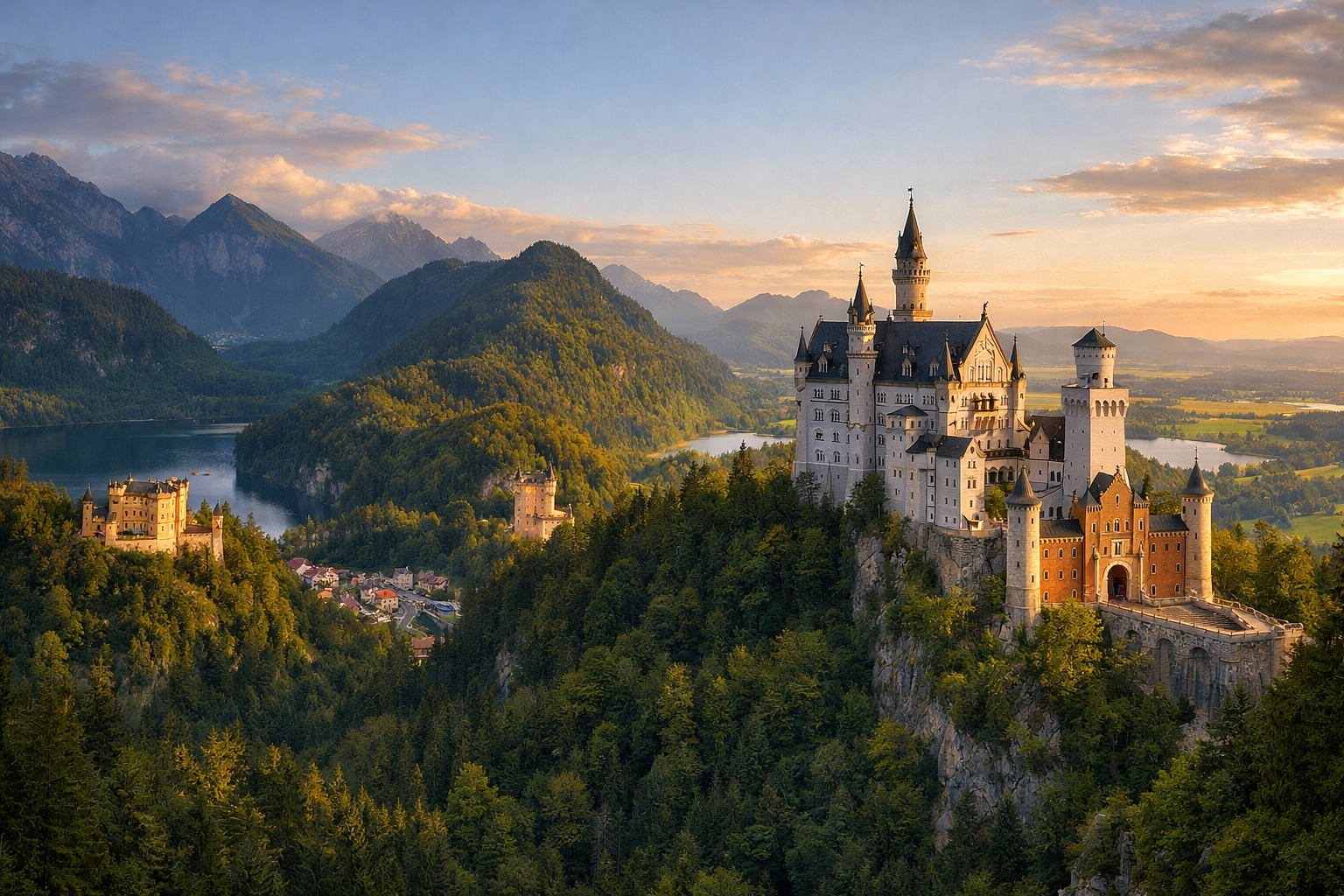
Day 1 — Füssen and Hohenschwangau: lakes, royal views, and an evening by Alpsee
🚆 Transfer: from Munich to Füssen by regional train — usually about 2 hours, then from Füssen station to the Hohenschwangau Neuschwanstein Castles stop by bus — about 10–15 minutes. From Munich Airport, it is convenient to first take the S-Bahn S1/S8 to the city center, which takes about 35 minutes, and then transfer to a train toward Füssen.
🏨 After arrival, it is best to leave your luggage at a hotel in Hohenschwangau or Füssen and not try to squeeze both castles into a tight schedule right away. The first day here works perfectly as a gentle immersion into the landscape: no rush, with proper time for the journey, coffee, check-in, and rest after transportation. If you stay in Hohenschwangau, you will literally be at the foot of the royal slopes; if in Füssen, you will get a bit more urban atmosphere, restaurants, and conveniences around the station.
🚶 Hohenschwangau is not just a “village by the castles,” but a rare place where dramatic Alpine nature and royal history come together almost theatrically. Between the mountains, forests, and the mirror-like surface of Alpsee, an entire world of Ludwig II is built here: on one side rises Neuschwanstein, like a backdrop to a romantic legend, and on the other stands the warmer, more lived-in and historically vibrant Hohenschwangau, where the future king spent his childhood. Even a walk through the village itself gives that very effect of “fairytale Bavaria”: the sound of bells, views of the slopes, horse-drawn carriages, trails to viewpoints, and constantly changing light over the mountains.
🏛️ In the second half of the day, it is convenient to visit the Museum of the Bavarian Kings — a modern and very well-designed museum on the shore of Alpsee that helps you not just look at the castles as a beautiful picture, but understand the Wittelsbach dynasty, the ambitions of the Bavarian monarchs, and the personal mythology of Ludwig II. The museum is located at Alpseestraße 27, 87645 Hohenschwangau. The exhibition is especially good because it does not compete with the landscape, but seems to continue it: large windows, light, and views of the water and mountains make the visit not a dry “museum block,” but part of the overall impression of the region.
🚶 Then it is worth spending time on a walk along Lake Alpsee. This is one of those Alpine bodies of water where nature needs no exaggeration: dark green water, dense forests, moist mountain air, and the silhouettes of castles above the slopes create a feeling of almost cinematic unreality. It is pleasant not to hurry here: walk part of the lakeside trail, pause on a terrace by the water, or simply sit and let your eyes rest after the journey. It is worth allowing at least 1.5–2 hours of relaxed time for this route, without rushing.
🚶 If you still have energy, you can finish the day with a short walk through the historic center of Füssen. The old town is much less “postcard-like” in the mass-tourism sense than the castles, but that is exactly why it is charming: colorful facades, Baroque details, quiet streets, the Lech River, and the feeling of a southern German town that existed long before the tourist cult around Neuschwanstein appeared. Evening is ideal here for dinner and an early sleep: the next day is best planned with an early start, so you can do the main route without crowds and with enough time for the ascent.