
Buy PDF guide

Buy PDF guide — 15.00 USD

PDF — 15.00 USD

Austria and Germany. Cycling tour through the Inn Valley: from Innsbruck to Passau. Difficulty: easy or moderate. Season: May - September

Austria and Germany. Cycling tour through the Inn Valley: from Innsbruck to Passau. Difficulty: easy or moderate. Season: May - September

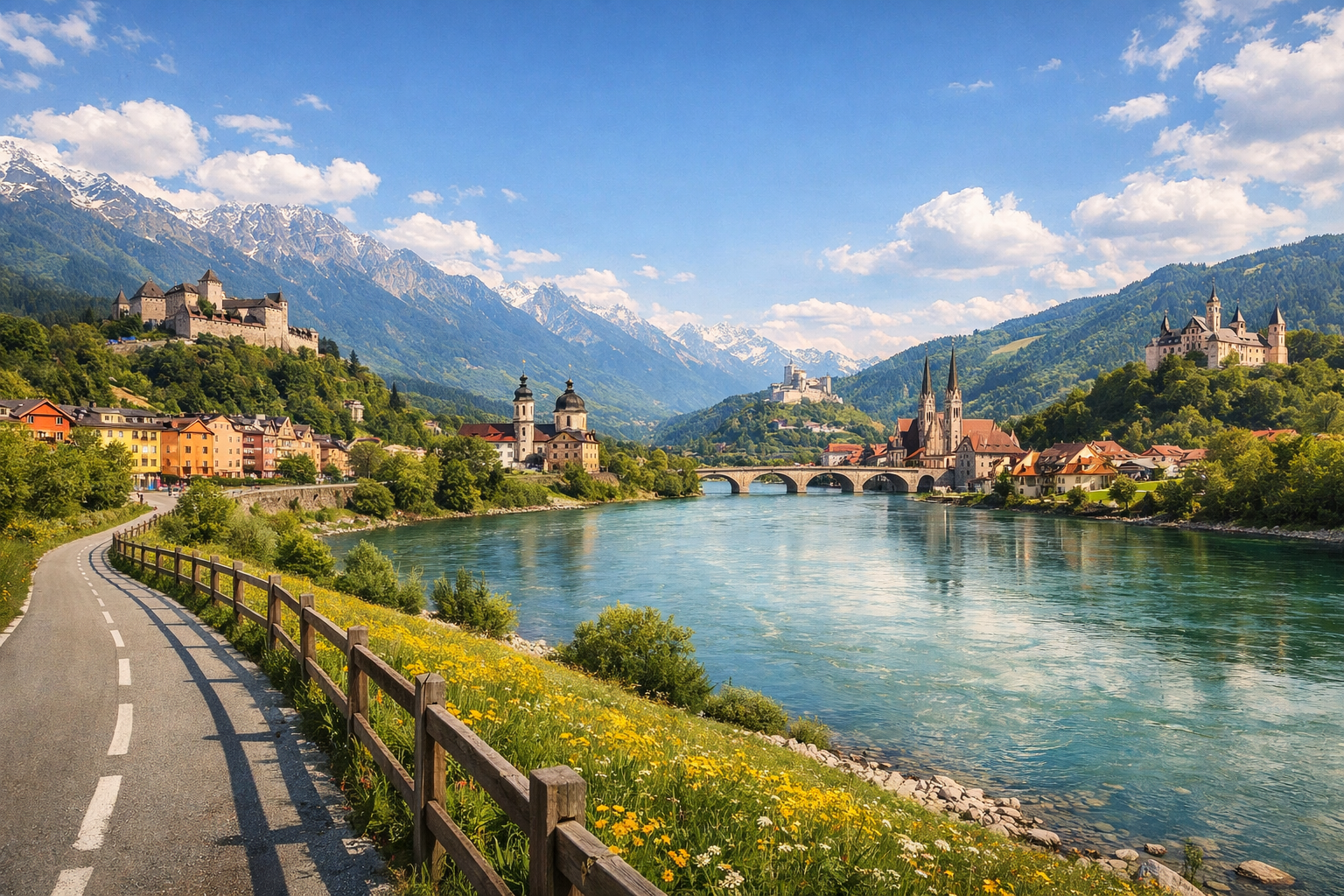
Pedal from the Alps to the riverside charm of Passau on a scenic ride through Austria and Germany. Following the Inn Valley from Innsbruck via pretty Tyrolean towns, Kufstein and Rosenheim to the spa landscapes near Bad Füssing, this easy to moderate tour is ideal from May to September.

🚲 ROUTE BY DAY

Ready-made country and city routes with daily plans, sights, transport and accommodation. Buy PDF guides for independent travel.

🚲 ROUTE BY DAY


Day 1 — Innsbruck → St. Johann in Tirol: a gentle start from the Tyrolean valley

  • 🚲 Start in Innsbruck, finish in St. Johann in Tirol. Approximately 48–55 km, riding time 3–4.5 hours, elevation gain about 250–450 m depending on the chosen detours and approaches to town centers. The main line of the day follows the Innradweg along the Inn through Hall in Tirol and then on safe cycle paths and secondary roads, followed by a link toward the valley of the Kitzbühel Alps. The surface is mostly asphalt and good cycle gravel, with some urban promenades and quiet local streets. Difficulty: moderate, but without harsh mountain passes. Main stops: the old town of Hall in Tirol, river sections near Schwaz/Brixlegg, a short break in Wörgl or Kirchbichl before heading toward St. Johann. Water and food are easy to refill in Innsbruck, Hall, Schwaz, and Wörgl; there are rest areas along the river, but it is better to carry at least 1.5 liters of water per person. Staying overnight in St. Johann in Tirol makes sense: it has a convenient center, shops, restaurants, and infrastructure for active travelers. Road nuances: the first kilometers in the city require a calm departure via cycling infrastructure and attentiveness on bridges; after rain, gravel riverside sections may be slower. The day is realistic for a typical cycle tourist because almost the whole route runs through the valley, the distance is comfortable, and services are frequent.


Day 2 — St. Johann in Tirol → Kufstein: alpine views and a fortress above the Inn

  • 🚲 Start in St. Johann in Tirol, finish in Kufstein. Approximately 38–45 km, riding time 2.5–3.5 hours, elevation gain about 150–250 m. This is one of the calmest days of the tour: you ride through wide green valleys and villages at the foot of the Wilder Kaiser, gradually returning to the Inn and its cycling route. Surface: mostly asphalt cycle paths, local roads with low traffic, and some compacted gravel. Difficulty: easy or easy with moderate sections. Main stops: villages in the Leukental/Sölllandl valley, panoramic sections before Kufstein, and Festung Kufstein as the main highlight of the day. Water and food are easy to get in St. Johann before departure and then in cafés along the way; in Kufstein there is already a full choice of supermarkets and dinner options in the old town. It is best to stay in Kufstein itself or near the center so you can go up to the fortress without rushing and stroll along the promenade in the evening. Road nuances: near central Kufstein there are busier urban sections, so it is better to follow the official cycle signage and not cut through highway interchanges. The day is realistic for an ordinary traveler because it is short and leaves time for rest, laundry, visiting the fortress, and minor bike maintenance.

Day 3 — Kufstein → Rosenheim: crossing from Austria into Germany through the Inn Valley

  • 🚲 Start in Kufstein, finish in Rosenheim. Approximately 58–64 km, riding time 4–5 hours, elevation gain about 150–250 m. After Kufstein, the route becomes noticeably smoother and is very well suited to an independent cycle trip: you cross the border between Austria and Germany without complicated logistics, riding along the Innradweg through riverside meadows and settlements in Upper Bavaria. Surface: asphalt, with some smooth gravel on levees and river sections, plus short quiet rural roads. Difficulty: easy to moderate. Main stops: Ebbs as a pleasant early break, riverside stretches near Oberaudorf/Flintsbach, and the approach into Rosenheim with a beautiful urban finish. Kufstein, Oberaudorf, and the small Bavarian towns along the way are good for water and food; in hot weather the open riverside sections have almost no shade, so it is better to start early. Staying overnight in Rosenheim is convenient: it is a full-service base with a railway station, workshops, shops, and a wide choice of cafés. Road nuances: in Germany some cycle paths may run parallel to local roads or pass through urban areas; it is important to follow route signs and avoid high-speed roads. The day is realistic because the profile is flat, the distance fits a normal touring day, and the border crossing happens naturally, without stress or dangerous sections.

Day 4 — Rosenheim → Wasserburg am Inn: baroque Bavaria and the loop of the old town

  • 🚲 Start in Rosenheim, finish in Wasserburg am Inn. Approximately 32–40 km, riding time 2.5–3.5 hours, elevation gain about 100–180 m. This is a shorter day with a cultural focus: after leaving Rosenheim, you once again follow calm sections of the Inn Valley and gradually approach one of the most picturesque towns of the whole route — Wasserburg, where the old center is dramatically enclosed by a bend in the river. Surface: asphalt and good riverside cycle paths, with some rural sections carrying light traffic. Difficulty: easy. Main stops: the historic center of Rosenheim before departure, river meadows and villages along the way, and the old town of Wasserburg am Inn with its pastel-colored houses and views of the river bend. As for water and food, the day is simple: it is convenient to have breakfast in Rosenheim, take a coffee break in one of the villages, and leave the main lunch for the finish. Staying overnight in Wasserburg is ideal for a slow evening walk through the center and recovery for your legs. Road nuances: both Rosenheim and Wasserburg have pedestrian zones where it is sometimes better to dismount; after rain, riverside sections may have puddles and fine sand. The day is realistic because it is short and leaves a reserve of strength for the longer transfer on the following day.

Day 5 — Wasserburg am Inn → Bad Füssing: a long but very logical river day

  • 🚲 Start in Wasserburg am Inn, finish in Bad Füssing. Approximately 68–72 km, riding time 4.5–6 hours, elevation gain about 180–280 m. This is the longest day of the tour, but it makes sense: the route follows a wide valley, without mountain passes, along a continuous combination of the Innradweg and local cycle routes through Bavarian and Austrian borderland rural landscapes. Surface: mainly paved cycle paths and secondary roads, with some firm gravel near levees and recreational areas. Difficulty: moderate. Main stops: Mühldorf am Inn as a convenient long break with shops and cafés, the natural stretches of the lower Inn, and the calm spa-town approach into Bad Füssing. Water should be refilled regularly — at least twice during the day; in May and September the temperatures are usually more comfortable, while in July–August the open flat sections can be hot and muggy. Staying overnight in Bad Füssing is especially pleasant if you want thermal recovery after a long distance. Road nuances: headwinds may be noticeable on long levees, and some sections are less shaded; it is not a good idea to ride this day too late, especially if thunderstorms are forecast. The day is realistic for a typical cycle tourist because the profile is mostly flat, traffic is calm, and the length is balanced by an early start and a long thermal break at the finish.

Day 6 — Bad Füssing → Schärding → Bad Füssing: a spa day with a loop ride to the Austrian bank

  • 🚲 Start and finish in Bad Füssing. Approximately 34–42 km, riding time 2.5–3.5 hours, elevation gain about 120–180 m. This day is intentionally designed as a loop to preserve the 7-day structure without artificially long transfers and to let the body recover before the final arrival in Passau. The route leads to Schärding — one of the most beautiful small towns in Upper Austria — and then returns to the spa base along calm borderland roads and cycle paths. Surface: asphalt, promenades, stretches of quiet rural roads, with possible short gravel sections on recreational trails. Difficulty: easy. Main stops: central Bad Füssing, the baroque façades of Schärding, and riverside and meadow views along the Inn. Water and food are easy to replenish in both town locations; this is a good day for a long lunch, replacing an inner tube, adjusting the brakes, or charging an e-bike battery. Overnight stays remain in Bad Füssing: convenient because you do not need to repack and can spend the evening in the thermal baths. Road nuances: in border towns watch for pedestrian zones and enter old centers slowly; in rain, cobblestones may be slippery. The day is realistic because it gives you a proper rest while still remaining a real independent cycling day.

Day 7 — Bad Füssing → Passau: finish at the three rivers

  • 🚲 Start in Bad Füssing, finish in Passau. Approximately 30–38 km, riding time 2.5–3.5 hours, elevation gain about 100–180 m. The final day is short and very pleasant: you follow the lower Inn toward Passau, where river landscapes gradually give way to an urban panorama, and the final approach brings that true feeling of completing a major river route. Surface: mostly asphalt paths and calm local roads, with some urban cycle routing. Difficulty: easy. Main stops: natural stretches in the Lower Inn valley, viewpoints before entering Passau, and Veste Oberhaus or the old town embankments after check-in. You can take water in Bad Füssing in the morning and ride calmly to Passau, where services are already abundant. It is best to stay overnight in Passau near the center or the railway station so that it is convenient either to continue along the Danube or return by train. Road nuances: in Passau itself the streets are more urban, with bridges, tourist traffic, and cobblestones; it is better to arrive during the day rather than toward evening so you can get oriented calmly and avoid pushing through pedestrian zones. The day is realistic because it is short, almost without topographic stress, and leaves time to enjoy the finish instead of fighting for kilometers.

Flight tickets

eSIM for travel

Buy PDF guide

Buy PDF guide — 15.00 USD

PDF — 15.00 USD