
Buy PDF guide

Buy PDF guide — 6.43 USD

PDF — 6.43 USD

Art Montreal galleries street art museums

Art Montreal galleries street art museums

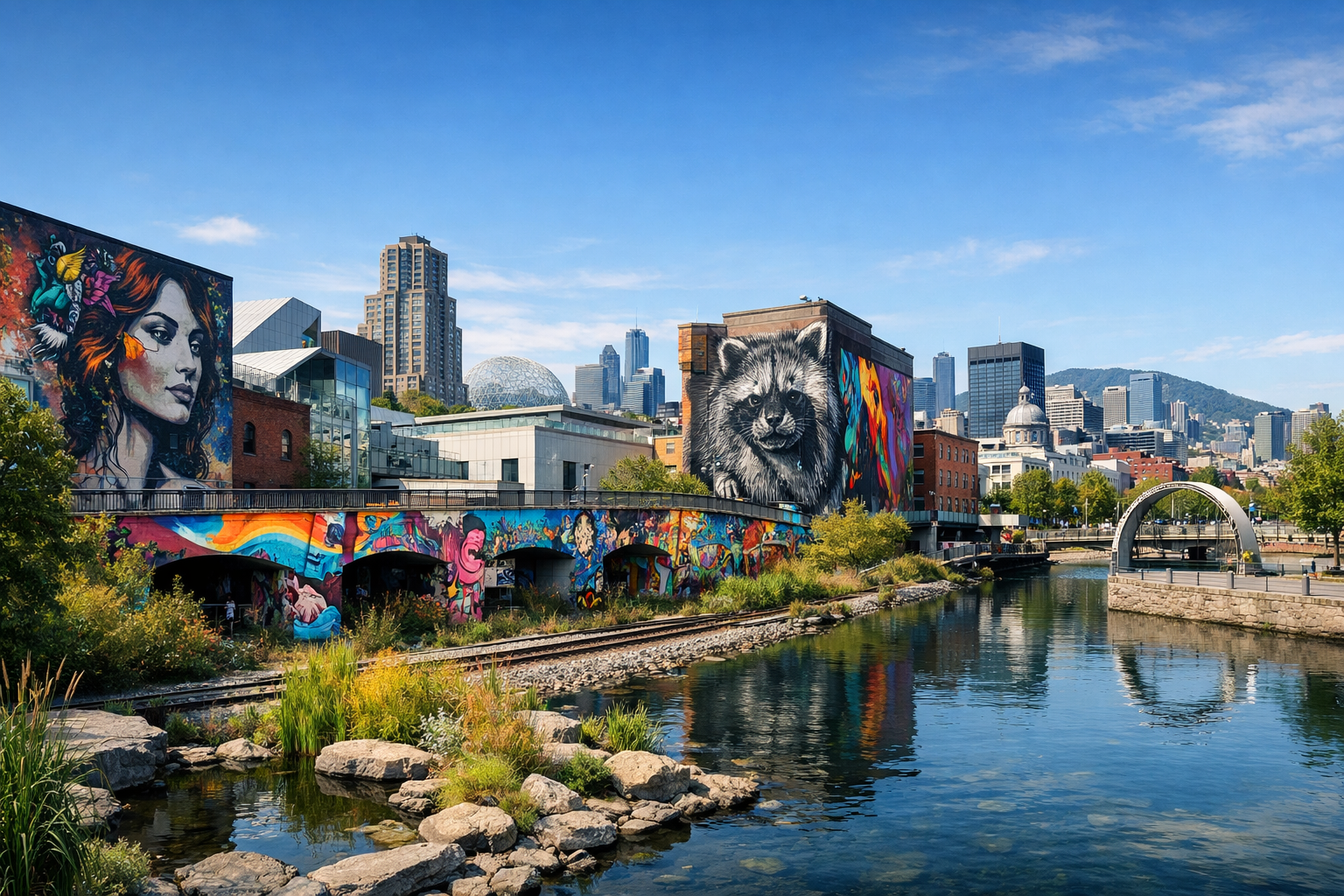
Montreal is a city where art spills from gallery walls onto the streets, blending world-class museums with bold murals and creative energy. Wander from downtown to Saint-Laurent and the Plateau, then on to the Quartier des Spectacles and Old Montreal for a vivid mix of contemporary culture and historic charm.

🧭 DAY-BY-DAY ROUTE

Ready-made country and city routes with daily plans, sights, transport and accommodation. Buy PDF guides for independent travel.

🧭 DAY-BY-DAY ROUTE


Day 1 — Downtown and Montreal’s museum classics

  • 🚶 The first day is best devoted to Montreal’s artistic “foundation”: start in the Golden Square Mile area and at the Montreal Museum of Fine Arts. It is one of the city’s main cultural institutions, and this is exactly where it is easy to find a balance between European tradition, Canadian art, and Quebec’s contemporary visual scene. After the museum, give yourself a pause for coffee and a short rest in the quarter around Sherbrooke Street West: the area is elegant, calm, and very photogenic, with the feeling of an old, self-assured Montreal. Then slowly head down toward the center and Place Ville Marie, where the Musée d’art contemporain de Montréal is currently operating temporarily: the transition from a classical museum to contemporary art is felt literally at the level of the urban environment — from museum grandeur to glass, movement, and the business rhythm of downtown. Allow about 7–8 hours for the whole day’s route, including two museums, lunch, and unhurried breaks. Walks between the main points usually take 15–30 minutes, and if you want to save energy, the STM metro and buses let you quickly shorten any segment. In the evening, it is nice to end the day in Quartier des Spectacles: the lighting, plazas, cultural posters, and the feeling of a living city make this finale feel very natural.


Day 2 — Street art: Boulevard Saint-Laurent and Plateau-Mont-Royal

  • 🎨 This is a day of open air, color, and urban energy. Start closer to the southern part of boulevard Saint-Laurent and move north, without trying to “rush through” the route too quickly: this is where Montreal especially reveals itself as a city of murals, festival street culture, and visual freedom. The area around MURAL Festival has long been perceived as a huge open-air gallery: building facades, side walls, alleys, and unexpected corners come together into a rich art route. It is very important to walk slowly and leave time to look at the details — in Montreal, murals rarely function as just a “bright backdrop”; they are often connected with the city’s local identity, music, language, and cultural memory. After the main walk along Saint-Laurent, it makes sense to go deeper into Plateau-Mont-Royal: here the atmosphere becomes a little more residential, relaxed, and “local,” but the art does not disappear — it simply dissolves into the everyday urban fabric. For this day, it is realistic to allow 6–7 hours, including lunch, a couple of coffee stops, and at least 45–60 minutes to rest in a park or on a terrace. The walking part can easily take 4–5 hours, but it is convenient to break it up with short bus rides. If you still have energy, in the evening you can make a short detour to Mile End or return to your favorite murals in the golden hour before sunset — that is when the walls and colors read especially beautifully.

Day 3 — Public art, Quartier des Spectacles, and Old Montreal

  • 🏛️ The final day is worth structuring as a more “composed” and cinematic route: from public art and the urban stage to the historic texture of Old Montreal. In the morning, start in Quartier des Spectacles and around Place des Arts, where contemporary cultural infrastructure combines with urban art objects, plazas, and a lively pedestrian environment. This is not only a district of theaters and events, but also a good place to feel how Montreal turns art into part of an everyday route rather than an isolated museum experience. Then you can walk toward the Quartier Latin and connect the stroll with public art pieces and a calmer urban atmosphere. After lunch, head into Old Montreal: the architecture here sharply changes the rhythm of the trip, and after two days of contemporary visual culture, the city’s stone, almost European depth reads especially well. Along the way, it is convenient to set aside 30–45 minutes for rest, because the contrast between dense cultural quarters and the old port core is something you will want to experience without rushing. The whole day usually takes about 7 hours: 3–4 hours of walking, 1–2 short museum or exhibition stops of your choice, lunch, and several breaks. In the evening, the best way to finish is with a leisurely walk along the Old Port waterfront or by returning downtown for dinner — that way Montreal comes together into a complete picture: intellectual, streetwise, musical, and very alive.

Flight tickets

eSIM for travel

Buy PDF guide

Buy PDF guide — 6.43 USD

PDF — 6.43 USD