
Buy PDF guide

Buy PDF guide — 8.57 USD

PDF — 8.57 USD

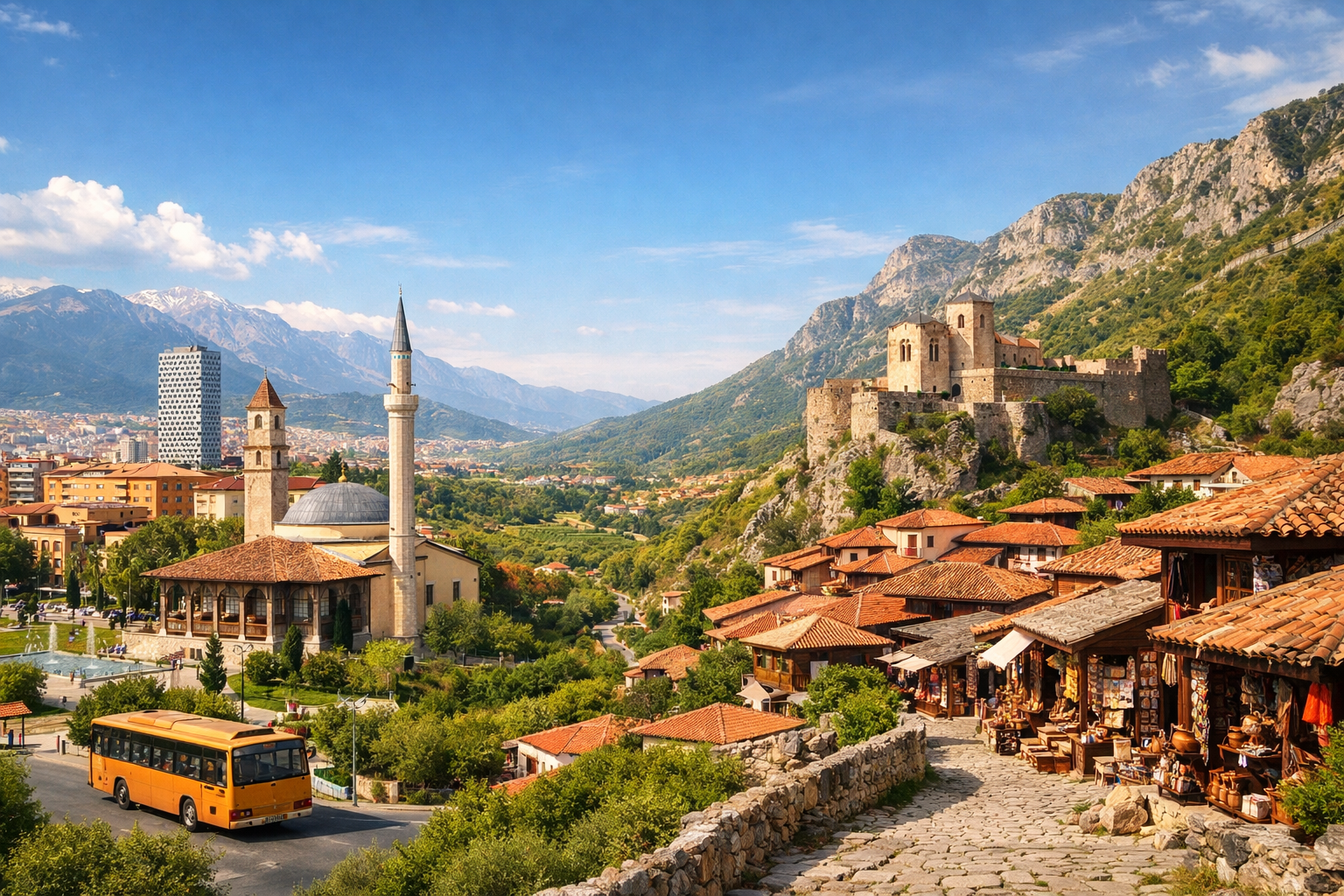
Albania, Tirana and Kruja. A budget introduction to the vibrant capital, the Kruja fortress, local markets, and Albanian cuisine; travel by bus, accommodation in a hostel or guesthouse. Difficulty: easy. Season: April - June, September - October.

Albania, Tirana and Kruja. A budget introduction to the vibrant capital, the Kruja fortress, local markets, and Albanian cuisine; travel by bus, accommodation in a hostel or guesthouse. Difficulty: easy. Season: April - June, September - October.

Discover Albania on an easy, budget-friendly escape that pairs vibrant Tirana with the historic charm of Kruja. Wander colorful streets, explore the hilltop fortress, browse lively local markets, and enjoy hearty Albanian cuisine, all with simple bus connections and cozy hostel or guesthouse stays.

🧭 DAY-BY-DAY ROUTE

Ready-made country and city routes with daily plans, sights, transport and accommodation. Buy PDF guides for independent travel.

🧭 DAY-BY-DAY ROUTE


Day 1 — Tirana: Skanderbeg Square, Et'hem Bey Mosque, and the rhythm of the center

  • 🚍 If you arrive in Tirana via Nënë Tereza Airport, the most budget-friendly and straightforward way to reach the center is the official Tirana–Airport bus. It runs 24/7, usually every full hour, and the trip to the center takes about 30–40 minutes. This is especially convenient on the first day: you do not need to figure out transfers right after your flight, and the stop near the heart of the city lets you check in and drop off your bags quickly.

  • 🚶 Start your introduction at Skanderbeg Square — it is not just the central square, but a large open urban space where modern Tirana is felt especially well: southern, noisy, young, and at the same time surprisingly centered around its history. Here, ministry buildings, the National Historical Museum, Et'hem Bey Mosque, the opera house, broad pedestrian areas, and a constant flow of locals coexist side by side. The square works particularly well as a starting point for the route: it helps you quickly “read” the character of the city, where Ottoman, Italian, socialist, and contemporary layers literally stand next to each other.

  • 🕌 Et'hem Bey Mosque is one of the main historical landmarks in the center and a rare monument that survived very different eras of Albanian history. Its elegant paintings and relatively intimate scale create not a ceremonial but a human impression: this is not a giant capital-city shrine, but rather an important symbol of urban memory. Even if you only view it from the outside, it reads beautifully as a marker of old Tirana and pairs well with a slow walk around the square.

  • 🏛️ Then stop by the National Historical Museum, located right on the square. For a short trip, this is one of the best ways to quickly build an overall picture of the country in your mind: from ancient Illyrian roots to the period of resistance, the Ottoman era, the national revival, and the 20th century. If you do not want to spend half a day in the museum, choose an “overview visit” format of 1.5–2 hours and leave the rest of the time for the city.

  • 🍽️ In the evening, head to the Pazari i Ri district — the New Bazaar. This is one of the liveliest and most pleasant areas of Tirana, where market logic exists side by side with cafés, inexpensive restaurants, fruit stalls, and everyday street life. It is easy to arrange your first introduction to Albanian cuisine here on a budget: grab some byrek, try qofte, fërgesë, seasonal salads, homemade pickles, olives, and a simple local dessert. The atmosphere is especially good at sunset, when the district fills with conversation, light, and the smells of cooking.

  • 💤 It is best to spend the night in central Tirana so you do not waste extra money and energy on late rides. For this route, it is recommended to avoid night driving and any spontaneous trips outside the city after dark: on a compact itinerary, a calm night's sleep and an early start the next day are far more valuable.


Day 2 — Tirana: Bunk’Art 2, House of Leaves, and everyday urban life

  • 🚶 The second day is best devoted to the Tirana that reveals itself not only through beautiful facades, but also through difficult memory. Start with Bunk’Art 2 in the city center — it is one of the most powerful museums for understanding Albania in the 20th century. The space is designed as an immersion into an era of control, fear, ideology, and internal isolation, which the country went through during the dictatorship. The visit does not feel like a dry lecture: the underground rooms, corridors, and documentary materials create a physical sense of a time when the state sought to control every sphere of life.

  • 🏛️ After that, it makes sense to continue to House of Leaves — a museum connected with the history of secret surveillance and intelligence services. It operates in central Tirana and works especially well paired with Bunk’Art 2: if the first provides emotional immersion, the second helps you understand exactly how the machinery of surveillance and pressure was organized. It is not the most “entertaining” museum, but for a short route it makes your impression of the capital deeper and more honest.

  • ☕ After the museum block, it is useful to take a break in one of the central cafés. Tirana is generally great because even a budget traveler does not feel excluded from city life here: coffee culture is very lively, espresso breaks are natural, and the street environment has an ease that keeps the city from becoming tiring. The rest of the day is best spent without overload: walk along nearby streets and look at the contrast of old houses, modern facades, and broad boulevards.

  • 🛍️ If you want a bit more markets and everyday life, you can return to the New Bazaar area or stop by small shops and bakeries along the way. For a budget format, this is one of the best ways to feel the city: not through expensive venues, but through ordinary products, pastry displays, homemade cheeses, fresh vegetables, nuts, and an unhurried street rhythm.

  • 🍲 For dinner, try putting together as local a table as possible without unnecessary pretension: vegetable appetizers, grilled meat or tavë, bread, yogurt-based sauces, and something seasonal. Tirana does not always impress with monumentality, but it quickly charms with simplicity and life — which is exactly why it is especially good for a budget introduction.

Day 3 — Krujë: the old bazaar, fortress, and museums

  • 🚐 In the morning, leave Tirana for Krujë. The most sensible budget option is the official intercity route via the bus/minibus terminal, checking the departure on eTransport, and then taking a daytime ride toward Krujë. For the trip from Tirana’s terminal to Krujë, you should allow about 1 hour, plus the time needed to get to the terminal itself and a small buffer for waiting. It is better to leave in the morning and not push this route into the evening: that way the trip will be calmer, and the climb to the old town will take place in comfortable daylight.

  • 🏘️ Krujë is one of those places where the scale is small, but the historical concentration is very high. Even as you climb toward the old bazaar, it becomes clear why people come here even on a short trip: the town feels like a stone balcony over the plain, and its historic center retains an almost theatrical unity. The old bazaar of Krujë is a long, slightly rising street with artisan shops, carpets, copperware, wooden souvenirs, textiles, and traditional goods that do not look like museum décor here, but like a continuation of the local way of life.

  • 🏰 Krujë Fortress is the main core of the trip. It is here that the figure of Skanderbeg and the memory of resistance to the Ottoman Empire are felt especially strongly. The fortress grounds do not impress with their size, but they make an impression through their combination of history, panoramas, and density of meaning. The fortress territory itself is suited to a leisurely walk: you can look at the old walls, remains of structures, inner courtyards, and distant views in which medieval history seems to stay alive.

  • 🏛️ The Skanderbeg Museum inside the fortress is an essential stop for understanding why Krujë occupies such a place in the Albanian imagination. Even if you are not a fan of military history, the museum offers a clear narrative about the national hero, sieges, politics, and the symbolism of resistance. On a short route, this visit should not be skipped: without it, Krujë remains just a beautiful fortress, but with it, it turns into one of the country’s key historical nodes.

  • 🏠 The Ethnographic Museum of Krujë complements the impression in a completely different tone. If the Skanderbeg Museum speaks about struggle and statehood, the ethnographic museum shows everyday life, the home, family life, craft, and the structure of traditional living. This is especially valuable on a short journey: one day in Krujë gives you both big history and a human scale.

  • 🍽️ For lunch, choose simple local cuisine near the fortress or down by the bazaar. In Krujë, home-style dishes work especially well: grilled meat, vegetables, beans, fresh bread, cheese, olives, and seasonal salads. After a full day, you can stay overnight in a guesthouse in Krujë so you do not have to hurry back and can see the evening town in a quieter atmosphere.

Day 4 — Krujë → Tirana: a calm morning, return, and a final urban note

  • 🌄 It is best to make the morning in Krujë unhurried. When the main daytime groups have not yet arrived, the old bazaar and the climb to the fortress feel completely different: quieter, softer, almost intimate. This is a good moment for final photos, a short walk through the artisan shops, and buying something truly local — for example, a small textile, ceramic item, or handmade piece.

  • 🚐 Plan your return to Tirana during the day, again using official transport and checking the current departure in advance. For the return trip, it is wise to allow not only about an hour for the ride itself, but also extra time for boarding, waiting, and city traffic on arrival. This approach is especially important in Albania: there are schedules, but it is more comfortable to travel without tight last-minute connections.

  • 🚶 After returning to Tirana, leave time for a final walk through the center without museums or mandatory stops. It is precisely at the end of the trip that the small details are best perceived — the colorful facades, the rhythm of the streets, street cafés, the local habit of sitting over coffee for a long time, the mix of Balkan relaxation and capital-city busyness. This is one of those cases where the city is remembered not for a single postcard view, but for its overall mood.

  • 🛒 If you want to round out the culinary impressions, head again to the market or to a simple canteen/café with local food. For a budget finale, pastries, vegetable dishes, soup, grilled meat, cheese, and fruit are perfect. This route does not aim to embrace all of Albania, but it gives a very coherent introduction: the capital shows the country’s modern nerve, while Krujë reveals its historical depth.

  • ⚠️ A practical rule for the whole route: use official transport, avoid night driving, keep an eye on your belongings on buses, at markets, and near transport hubs, and do not head into remote mountain areas without preparation or a local guide. For this 4-day trip, this is especially appropriate: the route is already full, and safety and predictability matter more here than extra adventure.

Flight tickets

eSIM for travel

Buy PDF guide

Buy PDF guide — 8.57 USD

PDF — 8.57 USD